Trump’s AI Gambit Amid Stalled Iran Conflict; Meta’s $18B Settlement and Oil Resilience
قمار هوش مصنوعی ترامپ در بحبوحه بنبست جنگ؛ جریمه ۱۸ میلیاردی متا و احیای صادرات نفت
President Trump turns to AI-generated 'heroic' imagery to distract from a struggling regional strategy, while Meta agrees to a record $18 billion settlement. Meanwhile, Qatar and Kuwait bypass Hormuz tensions to restore 70% of oil exports.
At time of publishing
USD
201,500
Toman
Gold 18K
21.69M
Toman / gram
Bitcoin
$79,566
US Dollar
Tether
200,315
Toman
Trump’s AI "Slopper" Strategy Amid Stalled Iran Conflict
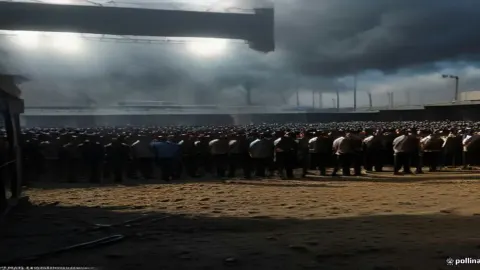
President Donald Trump has increasingly turned to AI-generated imagery on social media, depicting himself alongside historical figures like George Washington and Abraham Lincoln. This tactical shift comes as his administration struggles to find a decisive end to the ongoing conflict with Iran, which has seen his approval ratings dip to historic lows. By flooding his platforms with these "heroic" digital renders, Trump aims to bypass traditional media scrutiny and maintain a direct, albeit artificial, connection with his base. Critics have dubbed him the "AI slopper in chief," noting that these images often appear when tough questions regarding the war's cost and duration are raised.
This development is particularly significant for Iranian observers as it signals a presidency more focused on optics and narrative control than on immediate policy breakthroughs. As the war remains in a state of flux—announced, prosecuted, and then reopened according to the president's own social media feed—the lack of a concrete diplomatic or military resolution continues to weigh on regional stability. The uncertainty reflected in these digital gambits mirrors the volatility in the foreign exchange market, where the USD recently edged up from 200,400 to 201,500 Toman (+0.5%).
Energy Resilience: Qatar and Kuwait Bypass Hormuz Tensions
In a major development for global energy security, Qatar and Kuwait have successfully restored approximately 70% of their pre-war oil export volumes. Despite the continued risks associated with the Strait of Hormuz, these nations have adopted sophisticated ship-to-ship transfer tactics in the Gulf of Oman to circumvent the primary chokepoint. Before the current regional escalation, these two countries were moving nearly 2 million barrels per day; their return to high-volume exports suggests that the initial shock of the maritime blockade is being systematically mitigated by regional players through alternative logistics.
For the Iranian market, this restoration of supply is a double-edged sword. While it reduces the immediate risk of a global energy price spike that could further fuel domestic inflation, it also demonstrates that regional neighbors are finding ways to operate effectively without relying on the security of the Strait. This shift in logistics could have long-term implications for Iran's geopolitical leverage in the Gulf. Currently, the market is responding with cautious stability, as Gold 18k/gram rose slightly from 21,626,113 to 21,688,443 Toman (+0.3%), while the Emami coin remained flat at 216,000,000 Toman.
Meta’s $18 Billion Settlement and the Himalayan Catastrophe
On the global tech front, Meta has agreed to pay a staggering $18 billion over the next decade to settle lawsuits related to teen addiction on Facebook and Instagram. This settlement, one of the largest in corporate history, mandates strict new limits on how the platforms interact with younger users. The move follows years of allegations that Meta’s algorithms were intentionally designed to be addictive, causing documented harm to the mental health of children. This landmark decision will likely set a new global standard for social media regulation and corporate accountability, forcing tech giants to prioritize safety over engagement metrics.
Meanwhile, a humanitarian crisis is unfolding in the Himalayas, where devastating floods have left over 1,000 people missing across Nepal and the Tibet region. Rescuers are currently scouring valleys for survivors after a torrent of mud and ice swept away entire villages and bridges. With at least 335 confirmed dead, the scale of the disaster is overwhelming local resources. This catastrophe highlights the increasing vulnerability of high-altitude regions to extreme weather events, a trend that continues to disrupt regional trade routes and adds to the global sense of climate-driven instability.

The Growing Divide: US CEO Pay Hits 614x Worker Average
An analysis by the Institute for Policy Studies has revealed a staggering widening of the wealth gap in the United States. CEOs at the 100 lowest-paying S&P 500 corporations now earn an average of 614 times more than their median workers. Between 2019 and 2025, executive compensation surged by 41.4%, significantly outpacing the 20.7% wage growth seen by average employees during the same period. This data highlights a deepening economic divide that continues to fuel populist sentiment and political volatility in the West, complicating the domestic landscape for the current administration.
For global investors and those tracking the US dollar's strength, this trend underscores the internal social pressures facing the American economy. While corporate profits remain high, the extreme disparity in wealth distribution creates long-term risks for consumer stability and social cohesion. As the US remains embroiled in international conflicts, these domestic economic frictions may limit the government's capacity to manage external crises without facing significant internal backlash. This economic backdrop contributes to the cautious sentiment seen in the crypto markets, with Bitcoin currently testing resistance at $79,566.
Watch
Oil tanker STRUCK in Hormuz as Trump vows to continue Iran war 'as long as necessary'
Fox News
Frequently Asked Questions
Why is Donald Trump using AI-generated images on social media?
How are Qatar and Kuwait exporting oil if the Strait of Hormuz is contested?
What are the terms of Meta's $18 billion settlement?
The Geopolitical Significance of the Strait of Hormuz
The Strait of Hormuz, a narrow waterway connecting the Persian Gulf to the Gulf of Oman and the Arabian Sea, stands as one of the world's most critical geopolitical choke points. Despite its modest width—only about 21 nautical miles (39 km) at its narrowest point—it serves as the sole maritime passage for a significant portion of the world's seaborne oil and liquefied natural gas (LNG) exports. Its strategic location makes it indispensable for energy-rich nations like Saudi Arabia, Iran, Iraq, Kuwait, Qatar, and the UAE to access international markets.
Annually, billions of barrels of crude oil and petroleum products, along with vast quantities of LNG, transit through this strait. Estimates from the U.S. Energy Information Administration suggest that over 20% of the world's total petroleum liquids consumption, and roughly a third of the world's LNG, passes through Hormuz. Any disruption to this vital artery—whether due to regional conflict, piracy, or political instability—can send immediate shockwaves through global energy markets, leading to sharp spikes in oil prices and significant economic uncertainty worldwide.
Iran, bordering the northern side of the strait, holds a unique strategic position, capable of influencing or even threatening to close the passage in times of heightened tension. This leverage has historically been a key factor in regional conflicts and international diplomacy, particularly concerning the "Iran conflict" mentioned in the news. The ability to disrupt shipping through Hormuz is a powerful, albeit risky, card in geopolitical negotiations, underscoring the strait's role as a flashpoint for international security and economic stability. Understanding the Strait of Hormuz is therefore crucial for comprehending global energy dynamics and the intricate balance of power in the Middle East.