Cuban Dissident Stirs Miami Maelstrom as Anthropic Unveils Self-Improving AI and Russia Ramps Up Hybrid Rhetoric
تنش در میامی با ورود مخالف کوبایی؛ رونمایی انتروپیک از هوش مصنوعی خوداصلاحگر و تشدید لفاظیهای ترکیبی روسیه
Luis Manuel Otero Alcántara's arrival in Miami ignites a debate over the purity of dissent, while Anthropic researchers reveal a breakthrough in AI systems that can correct their own behaviors. Simultaneously, Western officials warn of escalating Russian hybrid tactics against NATO members.
At time of publishing
USD
201,500
Toman
Gold 18K
21.56M
Toman / gram
Bitcoin
$77,743
US Dollar
Tether
201,478.238
Toman
The Miami Maelstrom: A Dissident’s Complicated Welcome
The arrival of Luis Manuel Otero Alcántara in Miami has proven that the geography of political exile is often as treacherous as the prison cells left behind. The Cuban dissident, a former political prisoner who became a global symbol of resistance, landed in Florida not to a hero's welcome, but to a storm of scrutiny. After reportedly sharing whiskey with his captors before his release—a detail that has polarized the Cuban diaspora—Alcántara is now unpacking thousands of paintings while navigating the sharp tongues of exiles who demand ideological purity. This friction highlights the deepening complexity of geopolitical dissent; where the line between survival and betrayal is increasingly blurred by the harsh realities of long-term incarceration and the politics of perception.
For global observers and policymakers, this saga is more than a personal drama. It reflects the shifting dynamics of US-Cuba relations and the broader efficacy of sanctions and diplomatic pressure. As Alcántara attempts to reintegrate into a community that once championed him from afar, his struggle underscores the difficulty of maintaining a unified front against authoritarian regimes when the survivors of those regimes do not fit the idealized mold of a martyr. The controversy in Miami serves as a reminder that the human element of geopolitics is often far messier than the policy papers drafted in Washington or Havana, impacting how future dissident movements are funded and supported.

Anthropic and the Dawn of Self-Improving AI
In the tech corridors of Silicon Valley, a significant milestone has been reached that could redefine the trajectory of artificial intelligence. A researcher from Anthropic recently provided a glimpse into systems capable of self-improvement, specifically targeting misaligned behaviors. By utilizing automated systems to monitor and correct performance across ten specific benchmarks, the AI was able to enhance its own accuracy and safety protocols without the usual degradation in overall performance. This represents a pivot from human-led fine-tuning to a model where the machine identifies its own flaws and rectifies them, potentially accelerating the path toward more autonomous and reliable general intelligence.
This breakthrough carries immense implications for the global economy and the tech market. If AI can independently optimize its performance, the cost of developing sophisticated models could plummet, while the speed of deployment increases exponentially. However, it also raises the stakes for AI safety. The ability of a system to "improve" itself implies a level of agency that necessitates even more robust guardrails. For investors, this signals that the AI boom is entering a more mature, albeit more unpredictable, phase where the competitive advantage lies not just in data volume, but in the architectural sophistication of self-correction mechanisms.

Russia’s Hybrid Rhetoric and the NATO Shadow
Moscow is currently engaged in a high-stakes game of verbal escalation, according to Western officials who have observed a sharp increase in aggressive rhetoric directed at NATO. While these officials believe that Russia is still keen to avoid a direct, conventional military conflict with the alliance, the threat of "hybrid activity"—ranging from cyberattacks and disinformation to industrial sabotage—has reached a fever pitch. This strategy allows the Kremlin to exert pressure and sow instability within Western democracies without crossing the threshold that would trigger a collective military response under Article 5. It is a war of nerves designed to test the resolve of European capitals as the conflict in Ukraine remains deadlocked.
For global markets, this persistent state of hybrid warfare creates a "risk premium" that is difficult to quantify. Energy infrastructure, undersea cables, and financial networks are all potential targets in this gray-zone conflict. As Russia ramps up its threats, the focus for NATO members has shifted toward resilience and domestic security. This geopolitical tension continues to influence commodity prices and defense spending, ensuring that even in the absence of a hot war, the economic landscape remains on a semi-permanent war footing. The challenge for the West is to deter these invisible attacks without escalating into the very catastrophe both sides claim they want to avoid.
Local Market Pulse and Infrastructure Incidents
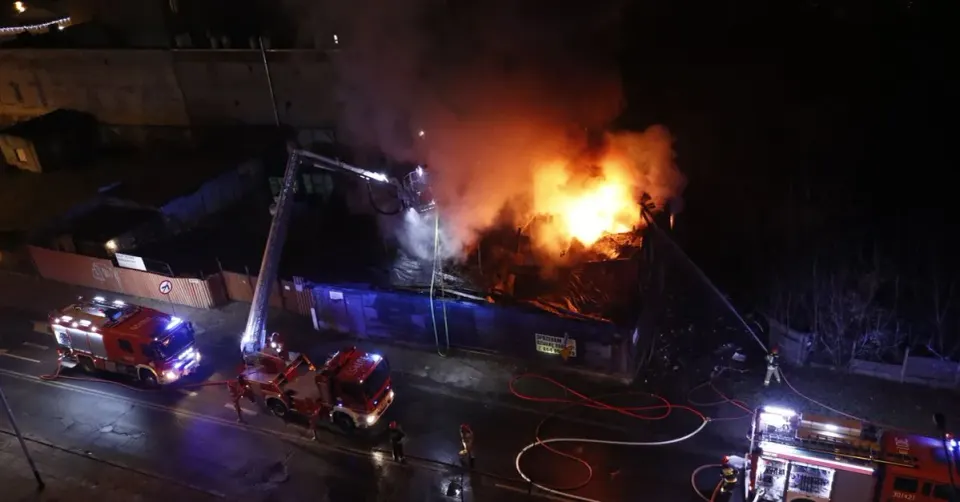
Closer to home and in the logistics hubs of Europe, the markets are processing a mix of infrastructure shocks and diplomatic posturing. In London, a massive fire at a waste facility near Wembley Stadium forced the evacuation of a nearby Amazon warehouse and disrupted major rail lines. While the fire was eventually contained by 125 firefighters, the disruption to one of the world’s most critical logistics providers during a sensitive economic period highlights the fragility of modern supply chains. Meanwhile, in Tehran, Foreign Minister Abbas Araghchi has utilized the 'Minab School' exhibition to frame Iran's narrative on human rights, inviting foreign observers to see what he terms "true human rights," a move clearly aimed at countering Western diplomatic pressure.
In the financial markets, the Iranian Toman has remained remarkably stable despite the external noise. The USD sell rate held steady at 201,500 Toman (+0.0%), while Gold 18k per gram saw a slight decline, moving from 21,711,528 to 21,561,475 Toman (-0.7%). This stability in the currency market, contrasted with the volatility in gold and the ongoing geopolitical friction, suggests a market that is currently in a wait-and-see mode, anchored by local intervention and a lack of immediate new triggers in the regional conflict. For the average consumer, the slight dip in gold prices offers a minor reprieve, though the broader economic outlook remains tethered to the outcome of ongoing international tensions.
Frequently Asked Questions
Why is the Cuban dissident Luis Manuel Otero Alcántara facing criticism in Miami?
What makes Anthropic's latest AI development a 'breakthrough'?
What is 'hybrid activity' in the context of Russia-NATO tensions?
How has the London fire affected global logistics?
Hybrid Warfare: Blending Conventional and Non‑Conventional Tactics
Hybrid warfare is a strategic approach that fuses traditional military force with non‑military tools such as cyber attacks, disinformation, economic pressure, and proxy militias. The concept gained prominence after Russia’s 2014 annexation of Crimea, where Russian forces operated in “little green men” uniforms while a parallel campaign of propaganda and cyber intrusion unfolded. By keeping the line between war and peace blurry, a hybrid adversary can achieve political objectives without triggering a full‑scale conventional response from NATO or other alliances.
Key components of hybrid warfare include: * Conventional forces – regular troops, artillery, and air power used sparingly to avoid escalation. * Irregular actors – local militias, mercenaries, or separatist groups that provide deniability. * Cyber and information operations – hacking, denial‑of‑service attacks, and the spread of false narratives through social media. * Economic levers – sanctions, trade restrictions, or the manipulation of energy supplies to weaken an opponent’s resilience. These elements are coordinated in a way that each reinforces the others, creating a synergistic effect that is harder to counter than any single tool alone.
NATO has responded by developing a dedicated Hybrid Warfare Centre of Excellence and by emphasizing “whole‑of‑government” approaches that involve defense ministries, intelligence agencies, and civilian institutions. The goal is to detect early signs of hybrid activity, share intelligence across member states, and build societal resilience against disinformation. Understanding hybrid warfare is essential for policymakers, businesses, and citizens alike, as the tactics are increasingly employed in conflicts far beyond the European theater, from the Middle East to the Indo‑Pacific.