
Ghalibaf Mocks US Fuel Crisis as Toman Recovers; Boris Johnson Narrowly Escapes Russian Strike Near Polish Border
تمسخر بحران سوخت آمریکا توسط قالیباف همزمان با تقویت تومان؛ نجات معجزهآسای بوریس جانسون از حمله روسیه
Iranian Parliament Speaker Mohammad Bagher Ghalibaf has utilized a 'Simpsons' clip to highlight record-high US gas prices, even as the Toman sees a 1.8% recovery against the dollar. Meanwhile, a Russian drone strike targeted a train carrying former UK PM Boris Johnson near the Polish border, escalating geopolitical risks.
At time of publishing
USD
229,600
Toman
Gold 18K
23.42M
Toman / gram
Bitcoin
$77,338
US Dollar
Tether
226,999
Toman
The Simpson Strategy: Ghalibaf Reacts to $10 Gas in America
In a move that blends international diplomacy with pop-culture satire, Iranian Parliament Speaker Mohammad Bagher Ghalibaf has shared a clip from the American animated series The Simpsons to comment on a Bloomberg report regarding record-high fuel prices in the United States. The report indicated that fuel at certain American gas stations has reached a staggering $9.99 per gallon. By using a widely recognized Western cultural export, Ghalibaf appears to be targeting both a domestic and international audience, framing the current economic volatility in the West as a sign of systemic instability. This rhetorical shift comes at a time when the Iranian government frequently seeks to distract from internal inflationary pressures by highlighting the struggles of 'adversary' nations.
However, the irony of the timing is not lost on market observers. While Ghalibaf points toward American fuel lines, the domestic Iranian market is experiencing its own significant volatility. Today, the USD/IRR exchange rate moved from 233,800 down to 229,600, representing a 1.8% appreciation for the Toman. While this recovery is welcomed by some, it is often viewed by economists as a temporary correction within a broader inflationary trend. The government's focus on external crises like the US fuel price spike serves as a narrative tool to manage public expectations and bolster the image of the 'Resistance Economy' during periods of extreme regional tension.
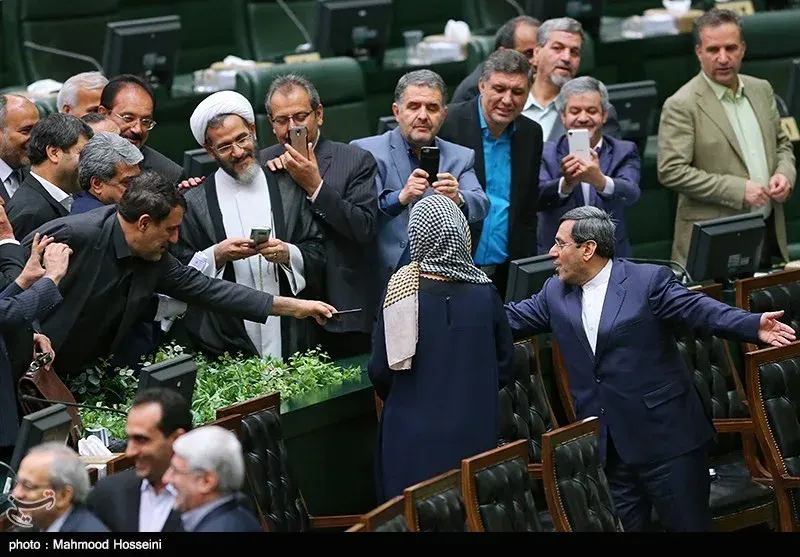
Near Miss: Boris Johnson and the Polish Border Strike
Geopolitical tensions reached a fever pitch today as a Russian drone strike hit a Ukrainian locomotive shortly after it had transported former UK Prime Minister Boris Johnson and former CIA Director David Petraeus. The attack occurred near the Polish border, a critical gateway for diplomatic and military support into Ukraine. Johnson, who was unharmed, characterized the strike as a display of 'warped logic' by Vladimir Putin, questioning the tactical value of hitting a stationary locomotive. Ukrainian officials, including Foreign Minister Andrii Sybiha, were more blunt, describing the event as 'terror knocking directly on the doors of the EU and NATO.'
This incident marks one of the closest brushes with direct conflict between Russian forces and high-ranking Western figures since the escalation of the war. The proximity of the strike to the Polish border—a NATO member—has reignited fears of an accidental or intentional escalation that could trigger Article 5. For global markets, this uncertainty is keeping the 'risk premium' high. Despite the Toman's slight gain today, the global price of gold remains elevated at $4,349.70 per ounce, as investors continue to seek safe-haven assets in the face of unpredictable military maneuvers in Eastern Europe.
Sweden’s Political Shift: A Warning for Europe
In Northern Europe, the political landscape is undergoing a seismic shift as exit polls from the Swedish general election project a victory for the centre-left opposition bloc with 51.3% of the vote. While the left appears poised to take power, the real story lies in the surge of the far-right Sweden Democrats. This trend mirrors recent electoral results in Germany’s Saxony-Anhalt, where the Alternative für Deutschland (AfD) made significant gains. The rise of anti-immigration and Euro-skeptic parties across the continent is complicating the European Union’s unified stance on foreign policy, including its approach to Middle Eastern diplomacy and sanctions regimes.

For the Iranian diaspora and the broader regional economy, these shifts in European governance are critical. A move toward right-wing populism in Europe often correlates with tighter immigration controls and a more transactional approach to international trade. If Sweden and other Nordic nations follow the path of increased nationalism, the diplomatic channels that have historically mediated between Tehran and the West could become even more constrained. This political fragmentation in the West provides a complex backdrop for Iran’s ongoing efforts to diversify its trade through groups like BRICS.
Market Watch: Toman Recovers as AI Giants Call for a Pause
Back in the financial markets, the Toman's 1.8% gain was mirrored by a similar 1.8% drop in the price of 18k gold, which fell to 23,419,825 Toman per gram. The Emami gold coin also saw a 1.5% decrease, settling at 236,000,000 Toman. These movements suggest a brief period of profit-taking or a temporary cooling of local demand for hard assets. Meanwhile, in the equity markets, McDonald’s has emerged as a point of interest for value investors, yielding 3%—its highest in over six years. Analysts are debating whether the Dow giant is a 'value trap' or an undervalued opportunity as consumer spending habits shift globally under the weight of inflation.
In the technology sector, a surprising consensus is forming among AI leaders. Figures like Sam Altman of OpenAI, Dario Amodei of Anthropic, and Elon Musk have joined calls for an intentional 'slowdown' in AI development to address safety concerns. Even former President Barack Obama has urged the Democratic party to make AI safeguards a central policy agenda. This push for regulation comes as OpenAI reportedly begins to challenge Wall Street’s junior bankers with automated analytical tools, a move facilitated by partnerships with firms like Morgan Stanley. For the crypto market, where Bitcoin is currently trading at $77,338, the intersection of AI and blockchain remains a key narrative for the coming year.
Frequently Asked Questions
چرا قالیباف از کلیپ سیمپسونها برای واکنش به قیمت بنزین استفاده کرد؟
جزئیات حمله روسیه به قطار بوریس جانسون چه بود؟
تغییرات قیمت دلار و طلا در بازار امروز ایران چگونه بود؟
Understanding Currency Exchange Rates and Their Determinants
Currency exchange rates are fundamental to the global economy, dictating the value of one nation's currency in relation to another's. Essentially, an exchange rate tells you how much of one currency you can get for a unit of another. For instance, the USD to IRR (US Dollar to Iranian Rial/Toman) rate indicates how many Rials or Tomans are needed to purchase one US Dollar. These rates are not static; they constantly fluctuate due to a complex interplay of economic, political, and social factors, directly impacting international trade, investment, and the everyday purchasing power of citizens.
Several key factors drive these fluctuations. Interest rate differentials between countries, for example, can make a currency more attractive to foreign investors seeking higher returns, thus increasing its demand and value. Inflation rates also play a crucial role; a country with persistently high inflation typically sees its currency depreciate over time as its purchasing power erodes. Furthermore, a nation's economic performance, measured by indicators like GDP growth, employment rates, and trade balances, significantly influences investor confidence and, consequently, currency strength.
Beyond purely economic metrics, political stability and geopolitical events are powerful determinants. Uncertainty, conflict, or the imposition of international sanctions can severely undermine investor confidence, leading to capital flight and a sharp depreciation of the domestic currency. Conversely, periods of political calm or successful policy implementation can strengthen a currency. For economies like Iran's, where the Toman (an informal but widely used unit for the Rial) often experiences significant volatility, these geopolitical and sanction-related pressures are particularly impactful, making any "recovery" a complex event influenced by a multitude of internal and external forces.
The real-world implications of fluctuating exchange rates are profound. For individuals, a depreciating currency means imports become more expensive, potentially fueling domestic inflation and reducing purchasing power. For businesses, it affects the cost of raw materials, the competitiveness of exports, and the profitability of international transactions. Understanding these dynamics is crucial for anyone trying to make sense of global economic news, from a country's fuel crisis to the value of its local currency.
Topics
Related Articles