Trump’s 'Annihilation' Threat Collides with 'Very Good' Talks as Gold Prices Retreat in Tehran
تهدید به «نابودی» ترامپ در کنار مذاکرات «خیلی خوب»؛ عقبنشینی قیمت طلا در بازار تهران
President Trump oscillates between threats of total destruction and praise for three-hour diplomatic meetings with Iranian mediators, while Tehran's gold market sees a 1.8% correction.
At time of publishing
USD
231,200
Toman
Gold 18K
23.49M
Toman / gram
Bitcoin
$86,148
US Dollar
Tether
227,907
Toman
The Paradox of Trumpian Diplomacy: Annihilation vs. Negotiation
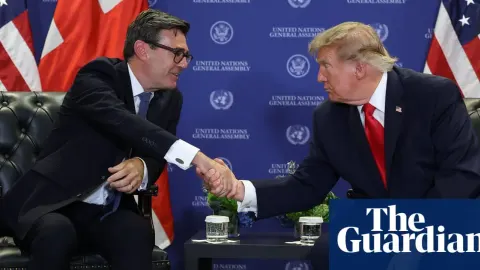
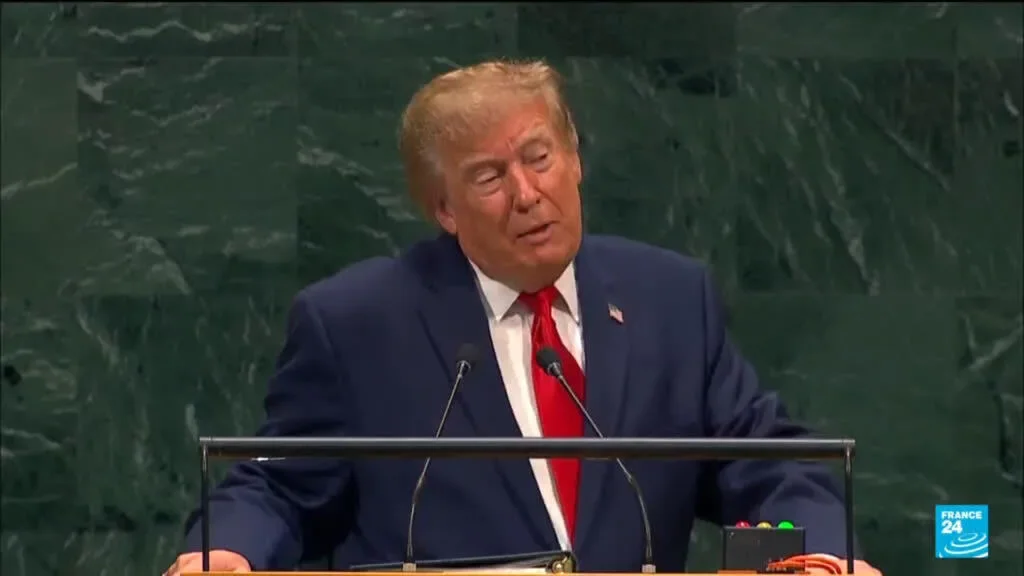
The diplomatic atmosphere at the United Nations General Assembly has reached a fever pitch as US President Donald Trump delivered a whiplash-inducing series of statements regarding Iran. The day began with the President threatening the "annihilation" of Iran, a rhetorical escalation that sent shockwaves through regional capitals. However, in a characteristic pivot, the afternoon concluded with a three-hour meeting between US and Iranian mediators, which Trump later described to reporters as "very good." This tactical volatility—alternating between maximum pressure threats and the promise of a "grand deal"—has become the hallmark of the current administration's approach to Tehran.
As President Masoud Pezeshkian prepares to address the assembly, the stakes for the Iranian economy remain tied to these diplomatic signals. While the rhetoric is aggressive, the fact that high-level mediators are spending hours in closed-door sessions suggests that a backchannel for de-escalation remains active. For the Iranian public, these headlines are more than just political theater; they are the primary drivers of market sentiment, dictating whether the Toman will find a new floor or face another round of inflationary pressure due to potential sanctions adjustments.
Market Reaction: Gold Corrects as Toman Holds Steady
Despite the aggressive rhetoric from Washington, the Iranian domestic markets have reacted with surprising composure, or perhaps a degree of exhaustion-driven skepticism. The US Dollar (USD) in the Tehran free market saw a marginal decline, moving from 231,500 to 231,200 Toman, a negligible decrease of 0.1%. This stability suggests that traders are waiting for the actual outcome of the UNGA speeches rather than reacting to early-morning social media or press pool threats. The market appears to be pricing in the possibility that the "annihilation" talk is a negotiating tactic rather than a precursor to immediate military action.
However, the gold market told a more active story of correction. Gold 18k per gram dropped from 23,927,697 to 23,489,080 Toman, marking a significant 1.8% decline within 24 hours. Similarly, the Emami coin fell from 237,500,000 to 235,500,000 Toman (-0.8%). This retreat in gold prices, even as global spot gold remains near historic highs at $4,319, likely reflects a local cooling period after recent speculative surges. Investors may be rotating out of safe-haven assets as the "very good" description of the US-Iran talks provides a temporary sigh of relief for the local currency.

Global Debt and the 'Staircase' to Economic Instability
Beyond the Middle East, the International Monetary Fund (IMF) has issued a stinging warning to the world’s largest economies. IMF Managing Director Kristalina Georgieva warned that spiraling debt costs in the US and UK are becoming unsustainable, describing the current trajectory of global debt as a "staircase, but not to heaven." This warning comes at a critical time when interest rates remain elevated to combat persistent inflation, making the servicing of national debts increasingly expensive. For the global economy, this means less fiscal space for governments to react to future shocks, such as energy crises or geopolitical conflicts.
For Iranian observers, the health of the US and UK economies is directly linked to the strength of the dollar and the global appetite for risk. If the US is forced to grapple with a debt crisis, the resulting volatility could lead to unpredictable swings in commodity prices, including oil. Georgieva’s comments highlight a growing consensus among economists that the post-pandemic era of massive government spending must end, or the world faces a decade of stagnant growth and high borrowing costs that will disproportionately affect developing nations and those under economic sanctions.
Information Warfare: The New Frontline in the UK and Australia
In the realm of technology and governance, the United Kingdom has announced the creation of a National Centre for Information Defence. Managed by the intelligence agencies and law enforcement, the unit aims to "detect, attribute, and disrupt" disinformation campaigns, particularly those fueled by AI and foreign actors like Russia. While the UK government insists this will not target domestic political dissent, civil liberties groups remain wary. This move signals a broader global trend where the information environment is being treated as a formal theater of war, requiring state intervention to maintain social stability.
Simultaneously, the United States has rebuked Australia over its proposed limits on social media algorithms. The US Embassy suggested that allowing users to opt-out of algorithmic feeds could amount to a form of censorship or interference with business models. This friction between two close allies highlights the growing tension between national security concerns over "information warfare" and the commercial interests of Big Tech. For the average user, these policy shifts mean the digital experience is becoming increasingly regulated, with governments and corporations battling over who controls the flow of information to the public.

Watch
US President Trump threatens "annihilation" of Iran despite successful talks • FRANCE 24 English
FRANCE 24 English
Frequently Asked Questions
چرا قیمت طلا در تهران با وجود تهدیدهای ترامپ کاهش یافت؟
هشدار صندوق بینالمللی پول درباره بدهی آمریکا چه تاثیری بر ایران دارد؟
مرکز دفاع اطلاعاتی بریتانیا دقیقاً چه کاری انجام میدهد؟
Understanding Geopolitical Risk Premium
Geopolitical Risk Premium refers to the additional compensation investors demand for holding an asset in an environment characterized by political instability, international tensions, or uncertainty. Essentially, it's the extra return required to offset the perceived higher risk of potential disruptions to markets, supply chains, or overall economic stability stemming from global political events. When geopolitical tensions escalate, this premium typically rises, prompting investors to seek out "safe-haven" assets, while assets perceived as riskier, or those directly exposed to the conflict, may see their values decline.
This concept is clearly illustrated by the behavior of assets like gold and local currencies. Gold, often considered the quintessential safe-haven asset, tends to appreciate during periods of heightened geopolitical uncertainty as investors flock to its perceived stability and intrinsic value. Conversely, the currency of a nation embroiled in or threatened by conflict often depreciates due to capital flight and a general loss of confidence. The headline, mentioning a "Trump’s 'Annihilation' Threat" alongside "Gold Prices Retreat in Tehran," offers a nuanced example. An initial threat would typically increase geopolitical risk, driving gold prices up. However, the subsequent mention of "Very Good' Talks" suggests a de-escalation of perceived risk, causing the geopolitical risk premium to fall, and consequently, leading to gold prices retreating from their highs.
Understanding the geopolitical risk premium is crucial for investors, policymakers, and even ordinary citizens. For investors, it helps in making informed decisions about portfolio allocation during volatile times. For policymakers, it highlights how diplomatic actions and international relations directly impact economic stability and market sentiment. For citizens, it provides insight into why their local currency might weaken or strengthen, or why the price of essential commodities might fluctuate, even seemingly unrelated to domestic economic fundamentals. It underscores the interconnectedness of global politics and financial markets, demonstrating that perceived risks, not just actual events, can profoundly shape economic realities.