Netanyahu's UN Speech Sparks Protests; AI Novelist Debates Literary Integrity
سخنرانی نتانیاهو در سازمان ملل جنجال آفرید؛ نویسنده رمان هوش مصنوعی درگیر جدل ادبی
Protests erupted globally following Benjamin Netanyahu's inflammatory address at the UN, leading to arrests and a mass walkout. Meanwhile, the literary world grapples with accusations of AI authorship in a celebrated novel, raising questions about creativity and integrity.
At time of publishing
USD
233,700
Toman
Gold 18K
23.73M
Toman / gram
Bitcoin
$83,961
US Dollar
Tether
233,442.326
Toman
Netanyahu's UN Speech Ignites Global Protests and Walkouts
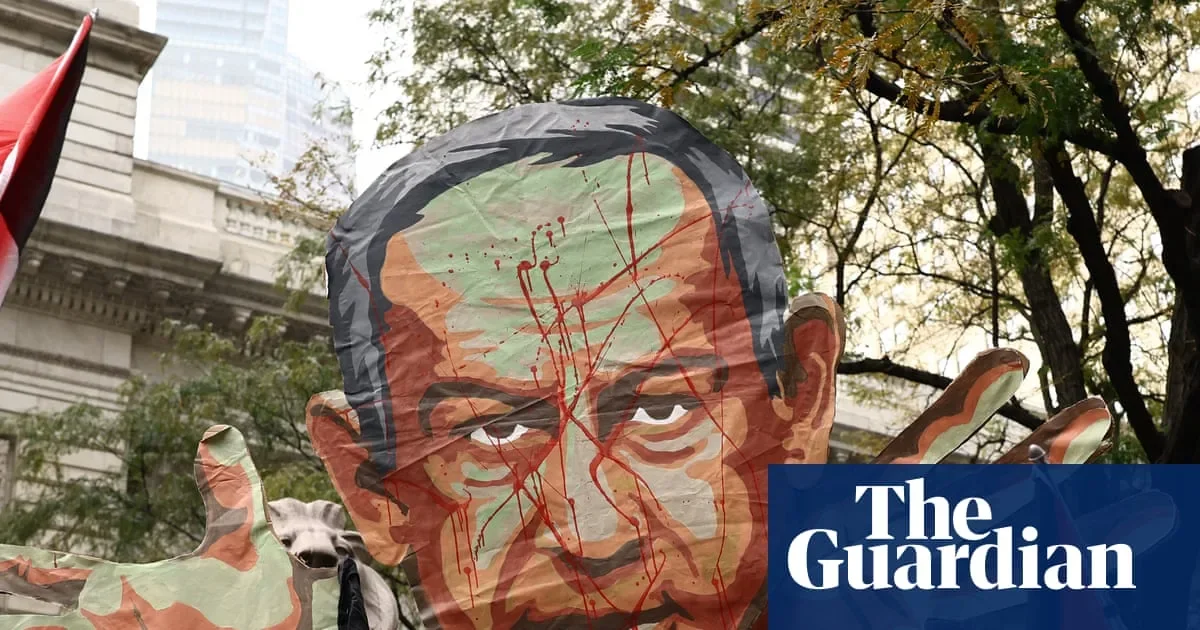
Benjamin Netanyahu's address to the United Nations General Assembly has triggered widespread protests, with over 100 arrests reported in New York, including notable figures like Susan Sarandon and Chelsea Manning. Inside the UN hall, the Israeli Prime Minister faced a significant walkout as he began his speech. Netanyahu's remarks, which he described as the 'opposite of a genocide' in Gaza, and his labelling of New York Mayor Zohran Mamdani as antisemitic, have further intensified international scrutiny and condemnation.
This event underscores the deep divisions in global opinion regarding the ongoing conflict and Netanyahu's political stance. The protests highlight a growing international outcry against Israeli actions, while the walkout within the UN assembly itself signals a significant diplomatic snub. The fallout from this speech is likely to have ramifications for Israel's international relations and its diplomatic efforts moving forward, potentially impacting regional stability and global perceptions of the conflict.
AI Authorship Debate Rocks Literary World
The prestigious French literary scene is embroiled in controversy following accusations that the award-shortlisted novel "It Was Either That Or Die" by Haitian-Canadian author Thélyson Orélien may have been significantly aided, or even written, by artificial intelligence. The novel, lauded as a hit of the literary season, has been pulled from the shortlist of a prominent prize, sparking a fierce debate about authorship, originality, and the evolving role of AI in creative fields.
This incident raises profound questions about the future of literature and artistic integrity. As AI tools become more sophisticated, the lines between human creativity and machine generation blur. The literary community is now confronting the challenge of establishing clear guidelines and ethical frameworks to address AI-generated or AI-assisted works, ensuring fair competition and preserving the value of human authorship. The implications extend beyond literature, touching upon broader discussions about intellectual property, artistic merit, and the definition of creativity in the age of advanced AI.

AI Investment Surges as Nscale Secures $3.36B Funding Ahead of IPO
British AI company Nscale has announced a substantial $3.36 billion in convertible financing, positioning itself for a significant U.S. initial public offering. The funding round, which saw participation from major investors including Third Point and Nvidia, is earmarked to accelerate Nscale's ambitious expansion of its AI data center infrastructure. This influx of capital signals strong market confidence in Nscale's growth trajectory and the broader AI sector.
The substantial investment highlights the fervent investor appetite for AI-focused companies, particularly those involved in the foundational infrastructure required for advanced AI development. The convertible nature of the financing provides flexibility for both the company and its investors, potentially converting into equity at a later stage. As Nscale prepares for its IPO, this financial backing provides a robust foundation to scale its operations and compete in the rapidly evolving AI landscape, potentially influencing market dynamics and the competitive environment for AI cloud services.

Crypto Scams Persist: $16 Million 'Pig Butchering' Case Unfolds
Law enforcement has charged a man in connection with a sophisticated "massive pig butchering" cryptocurrency scam that defrauded victims of an estimated $16 million. This case serves as a stark reminder of the persistent threats within the digital asset space, where bad actors continue to exploit vulnerabilities and trust for significant financial gain.
The "pig butchering" scam typically involves building a deceptive online relationship with a victim over an extended period before convincing them to invest in fraudulent cryptocurrency schemes. The sheer scale of this particular scam, involving millions of dollars, underscores the need for enhanced vigilance among investors and stricter regulatory oversight. As the cryptocurrency market matures, the prevalence of such elaborate scams necessitates continuous education for users and robust enforcement actions to protect individuals and maintain market integrity.
Frequently Asked Questions
Why did protests erupt after Benjamin Netanyahu's UN speech?
What is the controversy surrounding the novel 'It Was Either That Or Die'?
How much funding did Nscale secure and what will it be used for?
What is a 'pig butchering' crypto scam?
Understanding Convertible Financing in Startup Investments
In the fast-paced world of technology and startups, particularly in emerging fields like Artificial Intelligence (AI), companies often need to raise capital quickly to fund their growth and development. One of the most popular and flexible methods for early-stage funding is Convertible Financing, typically structured as a convertible note or a SAFE (Simple Agreement for Future Equity). This mechanism allows startups to secure initial investment in the form of debt, which is designed to convert into equity at a later stage, rather than being repaid in cash.
The primary reason for the widespread adoption of convertible financing is its ability to defer the often complex and time-consuming process of company valuation. For a nascent AI company, for instance, determining a precise valuation can be challenging due as its future potential is speculative. Convertible notes circumvent this by allowing investors to provide funds now, with the understanding that their investment will convert into shares during a subsequent, larger equity funding round (like a Series A), when the company's value might be clearer and more established.
Here’s how it generally works: an investor lends money to the startup. Instead of receiving interest payments and a principal repayment, the debt includes terms for its conversion into equity. Key terms often include a "conversion cap," which sets the maximum valuation at which the debt can convert, ensuring early investors don't overpay if the company's valuation skyrockets. Another common term is a "discount rate," which allows the early investor to convert their debt into equity at a lower price per share than new investors in the future equity round, rewarding them for their early belief and risk.
This method offers significant advantages for both founders and investors. For startups, it provides a quicker, simpler, and less expensive way to raise capital compared to a full equity round, allowing them to focus on product development and market penetration. Founders can also avoid immediate dilution and the contentious process of negotiating a valuation when their company is still in its infancy. For investors, convertible financing offers an opportunity to get into promising companies early, often with favorable terms that provide substantial upside potential if the company succeeds.
However, convertible financing also carries risks. Founders must be mindful of potential dilution during conversion if the company's valuation doesn't grow as expected, or if the terms of the note are heavily investor-friendly. For investors, the primary risk is that the startup might fail to secure follow-on funding or achieve significant growth, potentially rendering their investment worthless or delaying the conversion indefinitely. Despite these risks, its flexibility makes it a cornerstone of early-stage startup funding, especially in high-growth sectors like AI.