Trump Rules Out Pre-Election Strike on Iran as Tehran Strengthens Caucasus Ties
عقبنشینی موقت ترامپ از تنش نظامی و مانور دیپلماتیک تهران در قفقاز
Oil markets and the Iranian Toman see a brief reprieve after Donald Trump dismissed speculation of military action against Iran before the US midterms, while President Pezeshkian moves to secure Iran's northern borders through renewed coordination with Armenia.
At time of publishing
USD
267,400
Toman
Gold 18K
26.43M
Toman / gram
Bitcoin
$82,467
US Dollar
Tether
267,319
Toman
Diplomatic Maneuvers in the Caucasus: Pezeshkian’s Strategic Outreach
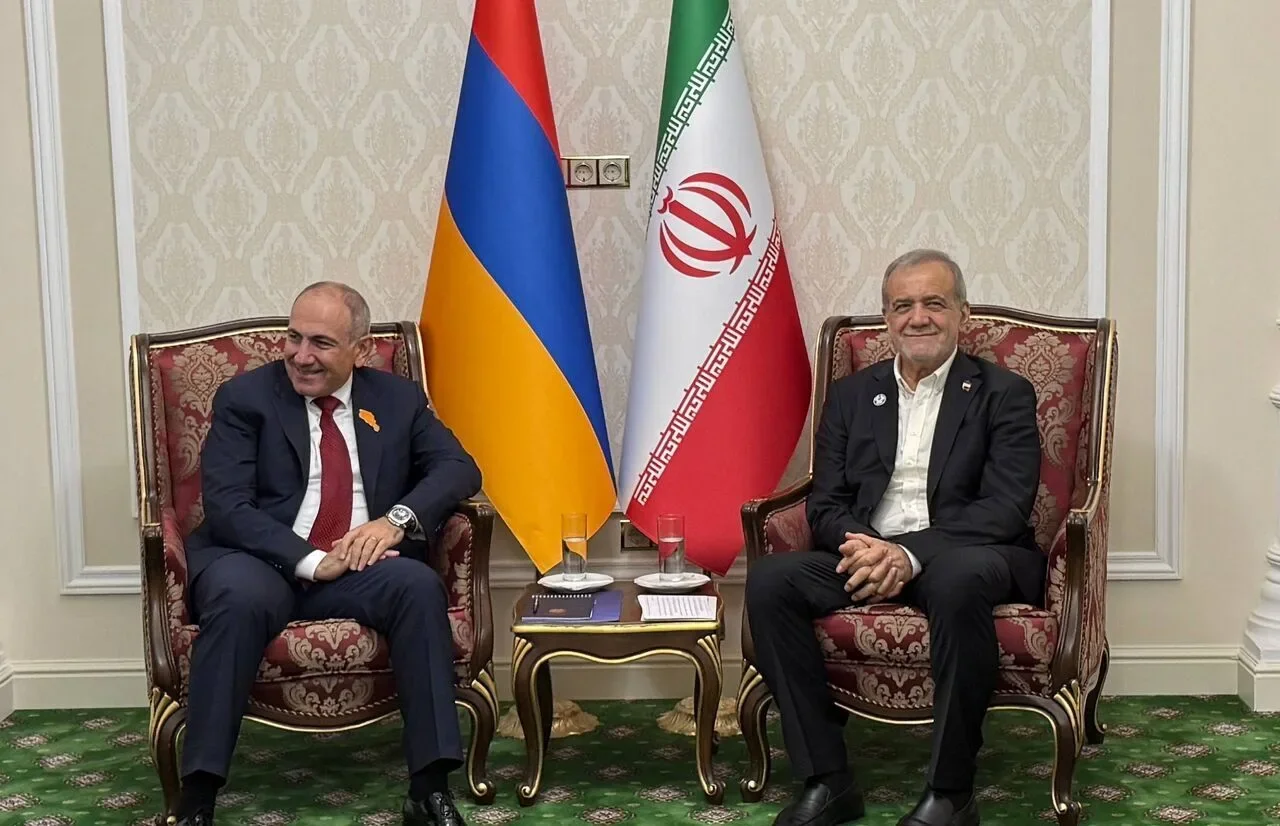
In a move to consolidate Iran's regional influence and secure its northern borders, President Masoud Pezeshkian has emphasized the critical need for sustained communication and coordination with Armenia. During a high-level diplomatic exchange reported by Iranian state media, Pezeshkian highlighted that building mutual trust is the cornerstone of Tehran's strategy in the South Caucasus. This push was mirrored by Foreign Minister Abbas Araghchi, who held a detailed phone conversation with his Armenian counterpart, Ararat Mirzoyan, to align their positions on regional security and transit corridors.
This diplomatic offensive comes at a time when Iran is increasingly wary of shifting geopolitical boundaries in the Caucasus, particularly concerning the Zangezur corridor and the influence of external powers. By reinforcing ties with Yerevan, the Pezeshkian administration is attempting to ensure that Iran remains a central player in regional trade routes. For the domestic audience, this focus on regional stability is a signal of the government's intent to protect transit interests that are vital for an economy still struggling under the weight of international sanctions. However, as with many state-led initiatives, the actual implementation of these 'mutual trust' measures remains to be seen in the face of competing interests from Baku and Moscow.
Trump’s Pre-Election De-escalation and the Toman’s Response
Global markets reacted with a sigh of relief following statements from Donald Trump indicating that the United States would not pursue military strikes against Iran before the upcoming midterm elections. Trump’s dismissal of pre-election military action has directly impacted the 'war premium' that had been baked into energy prices and regional currency markets. In Tehran, the USD/IRR rate showed a slight cooling, moving from 267,700 to 267,400 Toman, a minor but symbolic decrease of 0.1%. This suggests that while systemic economic issues persist, the immediate fear of a kinetic conflict has temporarily subsided, allowing the Toman to find a narrow trading range.
Why this matters for the average Iranian reader is the direct link between geopolitical rhetoric and the cost of living. The volatility of the Toman is often tied to the perceived risk of escalation; Trump's pragmatic pause for the sake of domestic US politics provides a window of relative predictability. However, this is widely viewed as a tactical delay rather than a shift in long-term strategy. Investors remain cautious, as evidenced by the gold market where 18k gold actually rose by 0.5% to 26,432,429 Toman per gram, indicating that many are still hedging against future uncertainty despite the temporary lull in military threats.
Crypto Markets Under Pressure: BTC Tests $81,000 Support
The cryptocurrency sector is facing a challenging October as institutional interest appears to be cooling. Recent data shows that Bitcoin and Ether ETFs have seen combined outflows swelling toward the $1 billion mark this month. On Thursday alone, Bitcoin ETFs shed $244 million, while Ether funds continued an eight-session losing streak. This institutional retreat has pushed Bitcoin down to the $82,467 level, with analysts closely watching the $81,000 support zone. If this level fails to hold, the market could see further liquidations, adding to the $1 billion in positions already wiped out recently.
For Iranian crypto traders, who often use Tether (USDT) as a hedge against Toman devaluation, this downturn presents a complex scenario. While the global price of BTC is falling, the USDT price in Tehran remains high at 267,319 Toman, closely tracking the free-market dollar. The 'yield pressure' mentioned by global analysts refers to the rising attractiveness of traditional bonds, which is sucking liquidity out of risk assets like crypto. As long as the US Federal Reserve maintains a hawkish stance and ETF outflows continue, the dream of a 'Uptober' rally seems to be fading, replaced by a cautious wait-and-see approach among both retail and institutional players.
---
UK Politics: Labour Fends Off Green Surge in Key Byelection
In the United Kingdom, the Labour Party has successfully defended its seat in the Holborn and St Pancras byelection, a result that provides significant breathing room for the party leadership. Sagal Abdi-Wali secured 45% of the vote, defeating Green Party leader Zack Polanski. The election was a high-stakes test for Labour’s ability to hold onto its urban, progressive base while navigating internal divisions. For Andy Burnham and other senior Labour figures, this victory is a validation of their current strategy, though the 33% share won by the Greens suggests that environmental and left-wing critiques of the government are gaining serious traction.

This political stability in a major G7 economy has indirect implications for global market sentiment. As the UK navigates its post-Starmer era, the ability of the ruling party to maintain control without succumbing to radical shifts helps stabilize the British Pound, which is currently selling for 354,100 Toman in Tehran. While a byelection in North London might seem distant, the health of the UK's political institutions remains a key indicator for international investors who look for stability in Western markets amidst the broader chaos of the Middle East and the volatility of the US election cycle.
Watch
Trump aims to 'reassure' Republicans he won't take military action in Iran before midterms
NBC News
Frequently Asked Questions
چرا اظهارات ترامپ باعث کاهش قیمت دلار در تهران شد؟
وضعیت حمایت ۸۱ هزار دلاری بیتکوین چقدر حیاتی است؟
هدف ایران از نزدیکی به ارمنستان در این مقطع چیست؟
Understanding Geopolitical Risk and Its Market Impact
Geopolitical risk refers to the potential for international relations, political instability, and conflicts to disrupt global stability and, consequently, financial markets. Events such as the prospect of military action, shifts in diplomatic alliances, or domestic political upheavals in key regions can create significant uncertainty. This uncertainty often leads investors to reassess risk, reallocate capital, and adjust their expectations for economic growth and corporate earnings, impacting everything from currency valuations to commodity prices and even emerging digital assets.
One of the most immediate effects of heightened geopolitical risk is often seen in currency and commodity markets. When tensions rise, investors typically seek "safe-haven" assets, which are investments expected to retain or increase in value during periods of market turbulence. Gold, for instance, frequently sees increased demand, driving up its price, as it's perceived as a reliable store of value. Conversely, currencies of nations directly involved or heavily exposed to the conflict may weaken significantly, as capital flees to perceived safer economies. The stability of a currency like the Iranian Rial (IRR) against the U.S. Dollar (USD) would be highly sensitive to such regional developments.
Beyond traditional assets, geopolitical events also reverberate through broader financial markets, including the burgeoning cryptocurrency space. While often seen as uncorrelated, even digital assets like Bitcoin are not entirely immune. Increased global uncertainty can lead to a general "risk-off" sentiment, where investors reduce exposure to all perceived risk assets, including cryptocurrencies, potentially causing outflows from investment vehicles like Bitcoin ETFs. This phenomenon reflects a broader investor tendency to prioritize capital preservation over growth during times of heightened global instability, regardless of the asset class.
In essence, geopolitical risk acts as a powerful, unpredictable force in the global economy. Its influence can manifest rapidly, triggering immediate price movements, but also have long-term implications for trade routes, supply chains, and international investment flows. Understanding this dynamic is crucial for anyone trying to decipher market trends, as political developments often precede and dictate economic shifts, making headlines about international relations far more than just political news—they are vital economic indicators.