Houthi Missile Strike Hits Aden Airport While Trump Waives Russia Sanctions Amid Regional Diplomatic Surge
حمله موشکی به فرودگاه عدن همزمان با تعلیق تحریمهای روسیه توسط ترامپ و سفر عراقچی به بغداد
Regional tensions have escalated following a Houthi missile attack on Aden International Airport, narrowly missing a civilian flight. Meanwhile, a major shift in US policy sees President Trump waiving new Russia sanctions, while Iranian officials intensify diplomatic efforts in Iraq and the UN.
At time of publishing
USD
264,400
Toman
Gold 18K
26.29M
Toman / gram
Bitcoin
$81,506
US Dollar
Tether
263,019
Toman
Houthi Missile Strike Hits Aden Airport: A Dangerous Escalation
In a dramatic escalation of regional hostilities, Yemen's Iran-aligned Houthi movement has claimed responsibility for a missile strike targeting Aden International Airport. According to reports from the Aden Security Department, two missiles struck the facility on Friday, specifically aiming at what the group described as a weapons depot and military command headquarters. The timing of the attack was particularly perilous, as a Yemenia Airways flight bound for Cairo was reportedly on the tarmac preparing for takeoff when the explosions occurred. This direct threat to civilian aviation infrastructure marks a significant hardening of the Houthi stance, moving beyond maritime targets to critical land-based hubs.
The Houthis' willingness to strike a primary civilian and logistics hub like Aden suggests a calculated move to disrupt the Southern Transitional Council's stronghold and signal their long-range capabilities. While the group often frames these attacks as responses to external aggression, the proximity to civilian casualties in this instance raises the stakes for international monitors. For observers in Iran, this development is closely watched as it directly impacts regional security perceptions and can influence the risk premium attached to local markets. Any broadening of the conflict in Yemen typically correlates with increased volatility in the broader Middle East, affecting everything from shipping insurance to currency sentiment.

Trump Policy Shift: Waiving Russia Sanctions for National Interest
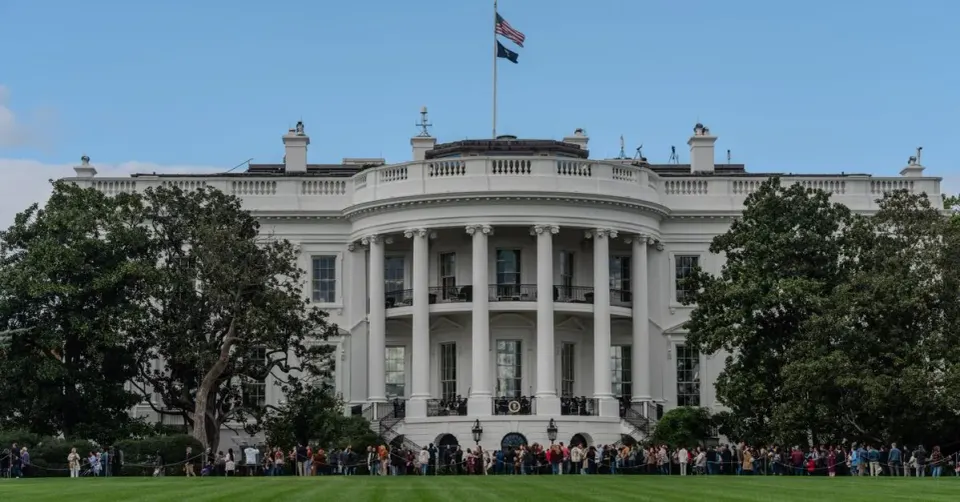
In a move that has surprised both allies and detractors, President Donald Trump has issued waivers for several key components of a newly enacted US law designed to penalize Moscow for its ongoing war in Ukraine. The White House stated that parts of the legislation were deemed contrary to US national interests, allowing the administration to bypass specific punitive measures. This decision comes at a pivotal moment when the global sanctions regime is already under immense pressure from shifting geopolitical alliances. Trump’s administration argued that maintaining flexibility is essential for future diplomatic maneuvering, though critics suggest this could weaken the unified Western front against Russian aggression.
This shift in Washington’s approach to sanctions has broader implications for other heavily sanctioned nations, including Iran. When the US demonstrates a willingness to waive penalties for one major power, it creates a precedent that market participants and diplomats analyze for signs of broader policy softening. While the Russia-Ukraine context is unique, the mechanism of presidential waivers is a tool that could theoretically be applied to other theaters. For now, the global markets are digesting this as a sign of a more transactional and less dogmatic US foreign policy, which may alter how trade and energy flows are managed in the coming months.
Iranian Diplomacy and the Global Energy Crisis Narrative
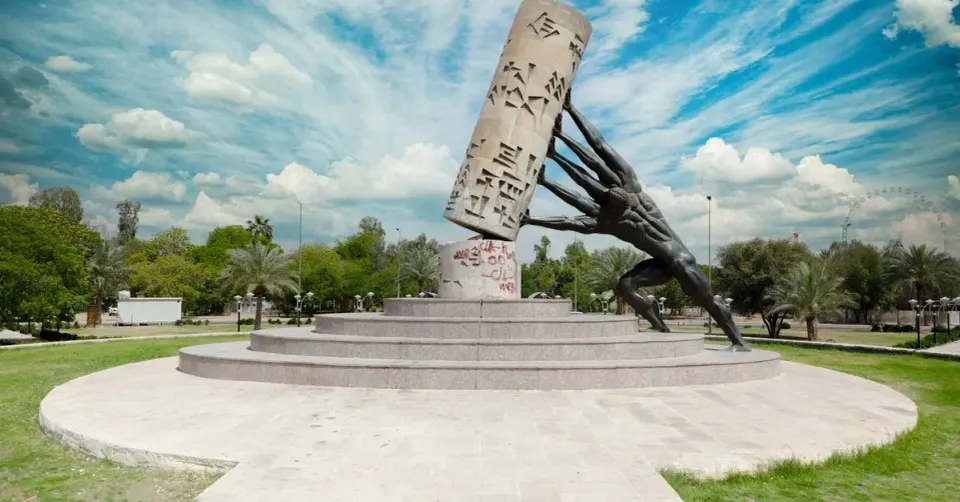
On the diplomatic front, Iranian Foreign Minister Abbas Araghchi has arrived in Baghdad to lead a high-level delegation at the 52nd Session of the Council of Foreign Ministers of the Organization of Islamic Cooperation (OIC). This visit is part of a broader push by Tehran to consolidate regional support and address the escalating conflicts in West Asia. Concurrently, at the United Nations in New York, Iran’s Chargé d’Affaires Gholamhossein Darzi urged the Security Council to act decisively against Israel, claiming that its activities pose a grave threat to international peace. This multi-pronged diplomatic effort reflects Tehran's attempt to frame itself as a regional stabilizer while navigating intense external pressure.
Adding to this narrative, Saeid Tavakoli, the head of the National Iranian Gas Company (NIGC), claimed during a meeting in Moscow that US and Israeli "aggression" are the primary drivers of the current global energy crisis. According to state media reports, Tavakoli called for stronger regional cooperation to safeguard energy supplies, effectively positioning Iran as a key player in energy security despite the heavy sanctions on its own exports. These statements, while aimed at a domestic and regional audience, highlight the ongoing ideological battle over who is responsible for global economic instability. In the local market, the US Dollar (USD) sell rate saw a minor decrease of 0.2%, moving from 265,000 to 264,400 Toman, while Gold 18k rose slightly by 0.3% to 26,289,302 Toman per gram, reflecting a cautious but stable reaction to these geopolitical headlines.
Technological Frontiers: Google’s Quantum Leap and Bitcoin
Beyond the geopolitical arena, a significant technological breakthrough has emerged from Google’s laboratories that could have long-term implications for the cryptocurrency market. Google announced that its new quantum chip, named Willow, has achieved a massive reduction in error rates—operating with 40 times fewer errors than previous iterations. This progress addresses one of the primary hardware bottlenecks in quantum computing. While current quantum computers are not yet capable of breaking the cryptographic foundations of Bitcoin, the rapid pace of development suggested by the Willow chip brings the theoretical "Quantum Threat" closer to reality. Experts suggest that Satoshi-era wallets, which lack modern post-quantum protections, could eventually be the most vulnerable.
Despite these long-term concerns, the immediate crypto market remains focused on traditional financial metrics. Bitcoin (BTC) is currently holding above the $81,000 mark, specifically at $81,506, even as ETF outflows have weighed on overall sentiment. The market seems to be balancing the excitement of technological progress against the reality of cooling institutional demand. For investors, the takeaway is dual-faceted: while the immediate price action is driven by liquidity and ETF flows, the underlying security architecture of digital assets will need to evolve to stay ahead of the quantum curve. As Google and others push the boundaries of computing, the race between encryption and decryption is entering a new, more accelerated phase.
Frequently Asked Questions
چرا حمله به فرودگاه عدن اهمیت زیادی دارد؟
دلیل تعلیق تحریمهای روسیه توسط ترامپ چیست؟
آیا پیشرفت کوانتومی گوگل واقعاً برای بیتکوین خطرناک است؟
Understanding Quantum Computing and Google’s Willow Chip
Quantum computing is a fundamentally different way of processing information that leverages the principles of quantum mechanics—superposition, entanglement, and interference. While classical bits are binary (0 or 1), quantum bits, or qubits, can exist in a combination of both states simultaneously. This property allows a quantum processor to explore many possible solutions at once, offering exponential speed‑ups for certain problems such as factoring large numbers, simulating molecular interactions, or optimizing complex networks.
Google’s latest quantum processor, Willow, is built on a two‑dimensional array of superconducting qubits that improves both coherence time and gate fidelity compared with its predecessor, Sycamore. The chip’s architecture uses a novel “quantum error‑mitigation” technique that reduces the impact of noise, a major obstacle that has limited practical quantum advantage. In benchmark tests, Willow demonstrated a 10‑fold reduction in error rates, bringing it closer to the threshold needed for fault‑tolerant quantum computing, where errors can be corrected on the fly.
Why does this matter for the broader economy? Quantum computers could revolutionize fields that rely on massive combinatorial calculations—cryptography, drug discovery, logistics, and financial modeling. For instance, breaking current RSA encryption would become feasible, prompting a shift toward post‑quantum cryptography. Likewise, pharmaceutical companies could simulate protein folding with unprecedented accuracy, slashing research timelines and costs. While still in the experimental stage, each hardware breakthrough, like Willow, narrows the gap between theory and real‑world applications.
However, the technology also raises policy and security challenges. Nations are racing to develop quantum capabilities, leading to a new kind of technological arms race. International standards bodies are already drafting guidelines for quantum‑resistant encryption, and governments are investing heavily in quantum research labs. Understanding the basics of quantum computing today equips citizens, investors, and policymakers to navigate the transformative impacts that chips like Willow may bring.
In short, Google’s Willow chip exemplifies how incremental improvements in qubit quality and error mitigation can accelerate the path to practical quantum advantage. As the field matures, the ripple effects will be felt across cybersecurity, pharmaceuticals, finance, and beyond—making quantum literacy an essential skill for the next decade.