
France Courts Gulf States Amid Mideast Tensions; AMD Boosts Xbox Graphics
فرانسه به دنبال روابط با کشورهای عربی در بحبوحه تنشهای خاورمیانه؛ AMD گرافیک ایکسباکس را ارتقا میدهد
France is intensifying its diplomatic outreach to Gulf states, leveraging decades of economic and defense ties amidst escalating regional conflicts. Meanwhile, AMD is set to enhance gaming experiences on Xbox consoles with its latest graphics technology.
At time of publishing
USD
263,800
Toman
Gold 18K
26.46M
Toman / gram
Bitcoin
$82,454
US Dollar
Tether
261,178
Toman
France Deepens Gulf Ties Amidst Regional Turmoil
France is actively reinforcing its long-standing relationships with key Gulf states, a strategic move underscored by recent diplomatic engagements. Former French Ambassador to the UAE and Saudi Arabia, François Gouyette, highlighted that these ties are historically built upon a foundation of economic development, oil supply agreements, and robust defense partnerships. This renewed focus comes at a critical juncture, with France experiencing domestic unrest and the Middle East facing escalating conflict. President Emmanuel Macron's engagement with the Gulf monarchies aims to address France's energy security concerns while simultaneously reaffirming its commitment to regional stability through military cooperation.
Gouyette emphasized that France's role as a crucial partner involves providing military assistance, which he frames as an expression of strategic solidarity rather than direct involvement in conflicts. This diplomatic push is designed to secure energy supplies and maintain France's influence in a region vital to global economic stability. For Iran and its regional allies, France's strengthened ties with Gulf nations could signify a shift in geopolitical alliances and potentially impact energy markets and defense postures in the wider Middle East.
AMD Brings Next-Gen Graphics to Xbox and Handhelds
Advanced Micro Devices (AMD) is set to significantly enhance the gaming experience on Microsoft's Xbox consoles and various handheld devices with the upcoming rollout of its FidelityFX Super Resolution (FSR) 4.1 technology. This advanced upscaling solution promises to deliver improved visual fidelity and performance, allowing games to run at higher frame rates and resolutions without a proportional increase in hardware demands. The technology will initially be available for Radeon RX 6000-series GPUs and is expected to be integrated into upcoming handhelds and more powerful console iterations.
The integration of FSR 4.1 into the Xbox ecosystem, including the Series S and X consoles, signals AMD's commitment to pushing the boundaries of gaming performance across multiple platforms. This move is particularly significant for the burgeoning handheld gaming market and for gamers seeking the best possible visual experience. For the tech industry and gamers alike, this development represents a step forward in making high-fidelity gaming more accessible and efficient, potentially influencing future hardware development and game design strategies.

Russia's Gain from US-Iran Crisis
Russian Foreign Minister Sergey Lavrov has publicly backed Tehran amidst the ongoing US-Iran tensions, reaffirming Moscow's strategic alliance with its sanctioned partner. However, analysts are questioning the extent of Russia's true benefit from this crisis, suggesting that the conflict, which Iran seeks to end, has inadvertently filled Russia's own coffers. This dynamic highlights a complex geopolitical landscape where alliances are tested, and the consequences of regional instability can create unexpected economic advantages for external powers.
The ongoing crisis, characterized by sanctions on Iran and heightened military posturing, has seen a surge in global energy prices. This price inflation directly benefits Russia, a major energy exporter, by increasing its revenue streams. While Iran aims for de-escalation and stability, the prolonged conflict indirectly bolsters Russia's economic position on the global stage. This situation presents a paradox: Russia supports its ally diplomatically while profiting from the very instability that alliance is designed to navigate, potentially complicating diplomatic efforts for a swift resolution.
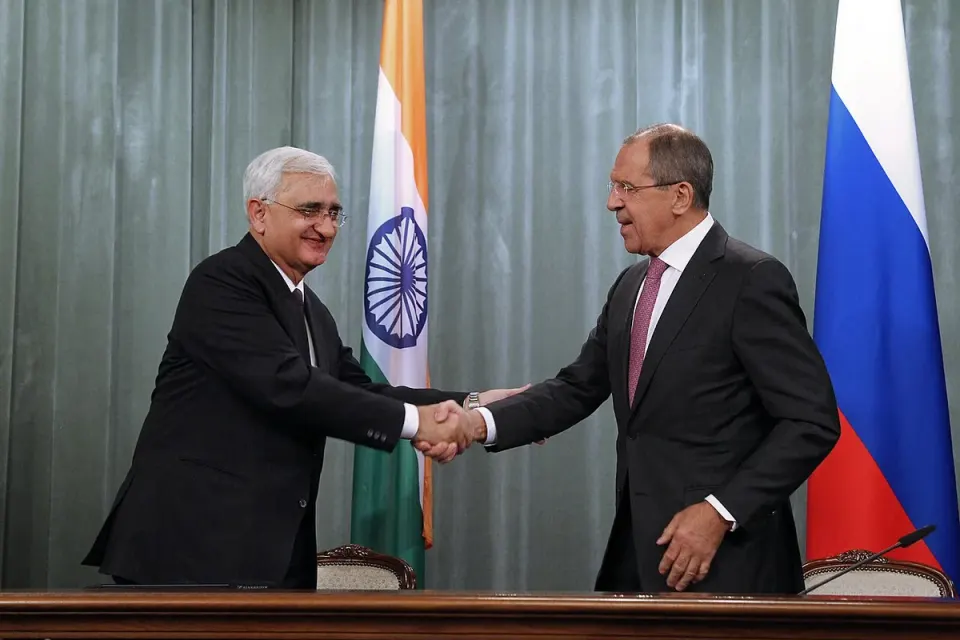
, GODL-India]
Rubio in India to Bolster Economic Ties Amidst Shifting Alliances
U.S. Secretary of State Marco Rubio is in India to strengthen bilateral economic ties, engaging with prominent Indian business leaders in Mumbai. This visit occurs against a backdrop of evolving geopolitical dynamics, with the U.S. continuing negotiations for a significant trade deal with India. The outreach underscores Washington's strategic interest in deepening its economic partnership with India, a rapidly growing Asian economy, as global alliances continue to reconfigure.
Rubio's discussions with India's business elite are aimed at fostering investment and exploring new avenues for collaboration, particularly in sectors crucial for technological advancement and economic growth. The U.S. seeks to leverage India's market potential and manufacturing capabilities, while India looks to secure favorable trade terms and access to U.S. markets. This engagement is critical for both nations as they navigate a complex international trade environment and seek to counterbalance the influence of other major global economic powers.

Frequently Asked Questions
What is the strategic significance of France's renewed engagement with Gulf states?
How will AMD's FSR 4.1 update impact gaming?
What is Russia's role in the US-Iran crisis?
Why is the US Secretary of State visiting India?
Understanding AMD's FidelityFX Super Resolution (FSR) 4.1
FidelityFX Super Resolution (FSR) is AMD’s answer to the growing demand for higher frame rates without sacrificing visual fidelity. Modern games push GPUs to their limits, especially at 4K or high refresh‑rate monitors, and developers often resort to rendering at a lower resolution then upscaling the image. FSR provides a hardware‑agnostic, shader‑based upscaling pipeline that works on a wide range of GPUs, including older Radeon cards and even competing NVIDIA hardware.
The core of FSR is a spatial upscaling algorithm that analyzes the rendered image and intelligently reconstructs missing detail. Early versions (FSR 1.0) used a simple edge‑enhancement filter, while later releases introduced temporal data (FSR 2.0) that leverages information from previous frames to improve stability and reduce flicker. By operating entirely in the shader stage, FSR avoids the need for dedicated AI accelerators, making it more accessible for consoles and budget PCs.
FSR 4.1, announced in early 2024, refines the upscaling process with a new “sharpness‑preserving” filter and better handling of high‑contrast edges. The update also adds native support for the Xbox Series X|S, allowing game developers to ship titles that run at 1440p internally and output at 4K with minimal performance loss. Early benchmarks show a typical 20‑30 % frame‑rate boost compared with native rendering, while visual differences remain subtle for most players.
Beyond the technical gains, FSR 4.1 illustrates a broader industry trend: the shift toward software‑driven performance solutions that can be deployed across diverse hardware ecosystems. As consoles, PCs, and cloud‑gaming platforms converge, technologies like FSR enable developers to reach a larger audience without fragmenting the experience with multiple graphics pipelines.
Topics
Related Articles