UK’s Manchester Pivot and the 1.5 Billion Barrel Oil Shield: A New Map for Global Trade
چرخش صنعتی بریتانیا و سپر نفتی ۱.۵ میلیارد بشکهای؛ نقشهای نو برای بازارهای جهانی
Britain’s push for northern reindustrialization signals a shift in global trade hubs, while CENTCOM reports massive oil protection efforts in the Strait of Hormuz. Meanwhile, Tehran markets see a rise in gold and USD prices amid shifting regional security narratives.
At time of publishing
USD
271,600
Toman
Gold 18K
26.43M
Toman / gram
Bitcoin
$80,312
US Dollar
Tether
271,812
Toman
The Manchester Shift: Britain’s New Industrial Frontier
A group of over 90 Labour MPs has issued a stark warning to the UK government: the ambitious plan to reindustrialize Britain is doomed to fail unless it is driven from the newly established "No 10 North" in Manchester. This movement, spearheaded by Greater Manchester Mayor Andy Burnham and Louis Haigh, argues that the central civil service in London lacks the localized skills and regional insight necessary to revitalize the UK’s industrial capacity. The push for a Manchester-centric growth strategy is not just a domestic political squabble; it represents a fundamental shift in how Western economies are attempting to decouple from globalized supply chains and return to localized production.
For international observers and those in the Iranian market, this signal is crucial. As the UK looks inward to rebuild its manufacturing base, trade priorities and investment flows are likely to shift. This "re-industrialization" trend often precedes more protectionist trade policies or a reallocation of capital away from emerging markets toward domestic infrastructure. If the UK successfully decentralizes its economic engine, it could serve as a blueprint for other nations struggling with stagnant growth, potentially altering the long-term demand for raw materials and energy exports from the Middle East.

The Hormuz Oil Shield and Tehran’s Market Response
In a significant geopolitical update, Admiral Brad Cooper of U.S. Central Command (CENTCOM) announced that U.S. forces have successfully facilitated the movement of over 1.5 billion barrels of oil through the Strait of Hormuz since the onset of regional tensions. This massive operation involved the support of over 3,000 commercial vessels in the last six months alone. While the U.S. military frames this as a mission of stability and "standing shoulder to shoulder" with Gulf partners, the heavy military presence in Iran’s backyard continues to be a primary driver of market volatility in Tehran. The narrative of a "secured" strait is often a double-edged sword, providing physical safety for cargo while maintaining high diplomatic friction.
This friction is clearly reflected in today's domestic price action. In Tehran, the USD sell rate has moved from 269,500 to 271,600 Toman, marking a 0.8% increase in the last 24 hours. Gold has seen even sharper movement, with 18k gold rising from 26,063,068 to 26,432,429 Toman per gram, a 1.4% jump. This "risk-off" sentiment suggests that despite the reported success of oil escorts, local investors remain wary of the long-term stability of the region. The rise in gold and the Emami coin (which rose 1.1% to 270,000,000 Toman) highlights a persistent flight to safety as the military footprint in the Persian Gulf remains heavy.
The Retirement Shock: A Lesson in Inflation and Wealth Gaps
A recent report highlighting a massive wealth gap between spouses—where one partner saved $2.2 million for retirement while the other saved only $80,000—has sparked a broader conversation about financial literacy and the hidden costs of inflation. While the story originates from the U.S. markets, the underlying lesson is painfully relevant for Iranian households. In an environment where the local currency is under constant pressure, the difference between "saving" and "investing" becomes the difference between a secure future and a financial crisis. The shock expressed by the wealthier spouse underscores how easily financial assumptions can collapse without active communication and planning.
For the Iranian reader, $80,000 might seem like a significant sum in Toman, but in the context of global purchasing power and a decade of retirement, it is increasingly viewed as insufficient. This story serves as a reminder that holding stagnant assets—whether in Toman-denominated bank accounts or low-yield savings—is a losing strategy against the current global inflation backdrop. As Bitcoin remains muted around the $80,312 mark and local gold prices climb, the necessity of diversifying into hard assets has never been more apparent to preserve the value of one’s life work.

Frequently Asked Questions
چرا قیمت طلا در بازار تهران امروز بیش از دلار رشد کرد؟
تأثیر انتقال قدرت اقتصادی بریتانیا به منچستر بر بازارهای جهانی چیست؟
گزارش سنتکام درباره اسکورت نفت چه پیامی برای بازار انرژی دارد؟
The Strategic Chokepoint: Why the Strait of Hormuz Shapes Global Oil Markets
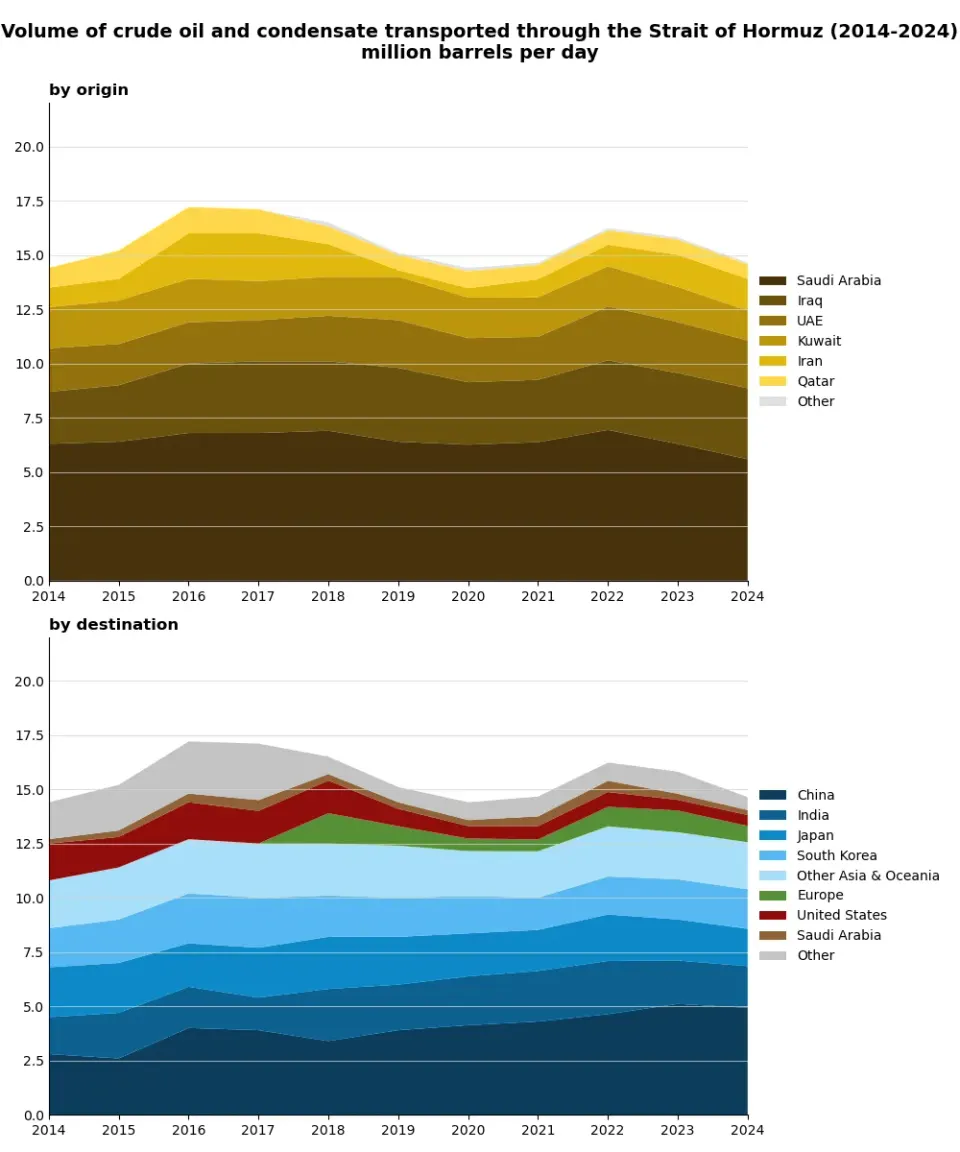
The Strait of Hormuz, a narrow waterway between Oman and Iran, is one of the world’s most critical maritime chokepoints. At its narrowest point the channel is only about 21 nautical miles wide, yet roughly a fifth of the world’s daily oil consumption—about 20‑25 million barrels—passes through it each day. This concentration means that any disruption, whether from geopolitical tension, piracy, or technical accidents, can instantly ripple through global oil prices and supply chains.
The United States Central Command (CENTCOM) monitors the strait closely because it is a strategic gateway for oil exported from the Persian Gulf, especially from Saudi Arabia, Kuwait, and the United Arab Emirates. CENTCOM’s naval presence, including patrols and escort missions, aims to deter threats and ensure the free flow of commerce. Historical incidents, such as the 2019 attacks on oil tankers and the 2020‑21 “Houthi” missile threats, illustrate how quickly perceived risks can trigger price spikes and prompt strategic stockpiling by nations.
Economically, the strait’s importance is reflected in the concept of “supply risk premium.” When traders price oil futures, they embed a risk premium that compensates for the possibility of a sudden supply cut. This premium can be seen in the spread between Brent crude (which reflects North Sea production) and Dubai/Oman grades (which are more directly linked to Gulf exports). A temporary closure of the strait would force a rapid shift to alternative routes, such as the longer Cape of Good Hope, raising transportation costs and further inflating prices.
For policymakers, the strait underscores the need for diversified energy sources and strategic reserves. Countries with large consumption, like the United Kingdom, maintain strategic petroleum reserves precisely to buffer against such geopolitical shocks. Understanding the strait’s role helps explain why re‑industrialisation strategies in places like Manchester are often paired with discussions about energy security and the volatility of oil‑linked inflation.
In sum, the Strait of Hormuz is not just a geographic feature but a linchpin of the global energy system. Its stability—or lack thereof—directly influences oil prices, inflation expectations, and even retirement savings that are exposed to commodity‑linked assets. Monitoring developments there remains a priority for investors, governments, and anyone concerned with the broader economic outlook.