Legal Blow to Trump Ally and Israel’s Election Deadlock: Gold Hits Record Peaks Amid Global Uncertainty
ابطال حکم دادستان منتخب ترامپ و بنبست انتخاباتی در اسرائیل؛ طلا در بازارهای جهانی رکورد زد
A US judge has ruled a key Trump-appointed prosecutor is serving illegally, adding to political tension ahead of the Fed's interest rate decision. Meanwhile, Israel faces a historic political deadlock as Netanyahu loses his majority, driving gold prices to new heights.
At time of publishing
USD
270,400
Toman
Gold 18K
26.42M
Toman / gram
Bitcoin
$80,883
US Dollar
Tether
270,422
Toman
The Legal and Economic Crossroads in the United States
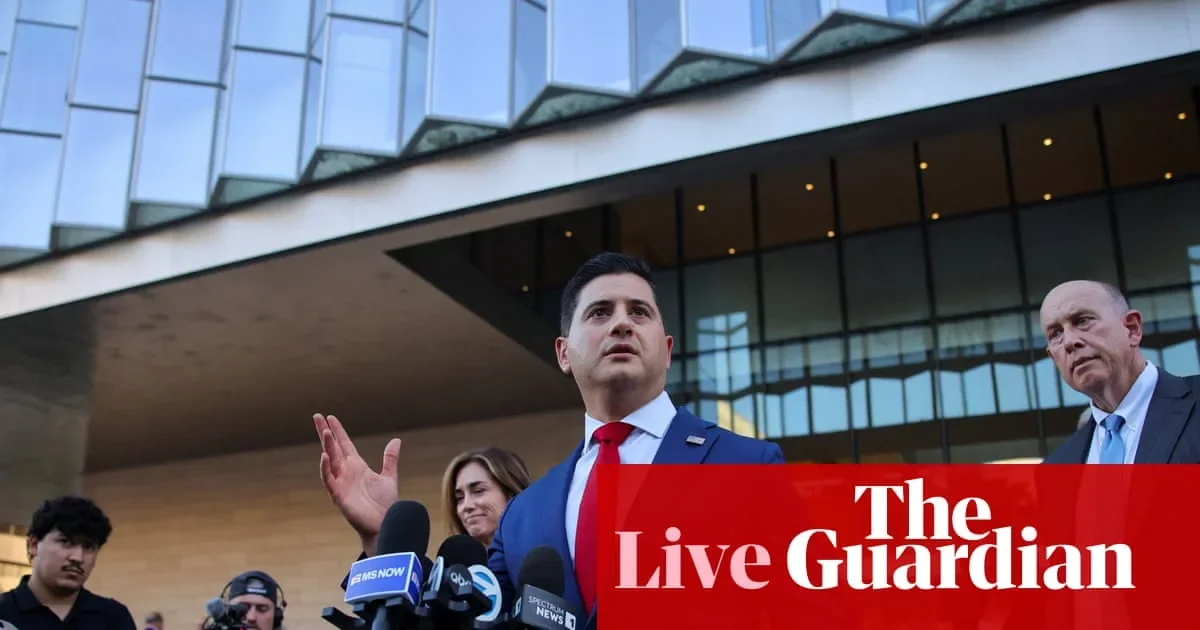
In a significant legal development that has sent ripples through the American political landscape, a federal judge has ruled that a Trump-appointed US prosecutor in Los Angeles is not serving legally. The ruling centers on Bill Essayli, an ally of the former president, whose appointment has been challenged on procedural grounds. The Department of Justice has already signaled its intent to appeal the decision, but the timing is particularly sensitive. This legal battle occurs just as the United States approaches critical midterm elections, highlighting the deep institutional friction between the current administration and appointees from the previous era. For investors, this adds a layer of domestic political risk that complicates the broader economic forecast.
Simultaneously, the US Federal Reserve is gathering for its final rate-setting meeting before the elections. Despite intense political pressure, the Fed is widely expected to leave interest rates unchanged at some of the highest levels seen in two decades. Inflation remains the primary concern; while the target is 2%, the annualized rate has stubbornly hovered above 3% for most of the year. This 'higher for longer' interest rate environment is a double-edged sword. It aims to cool inflation but also keeps borrowing costs high for consumers and businesses alike, contributing to a cautious mood in global equity markets. The intersection of legal instability in the judiciary and a rigid monetary policy creates a backdrop of uncertainty that often drives capital toward safe-haven assets like gold.

---
Israel’s Political Deadlock and the Shift in Regional Power
As of Wednesday afternoon, the political future of Israel remains shrouded in uncertainty as 84% of the ballots from Tuesday’s election have been counted. The results suggest a dramatic shift: Prime Minister Benjamin Netanyahu’s right-wing bloc and the main opposition led by Gadi Eisenkot are both projected to fall short of the 61-seat majority required to form a government. This deadlock indicates that neither side has a clear mandate to lead, potentially plunging the country into a prolonged period of coalition horse-trading or even a subsequent round of elections. One of the most striking outcomes is the surge in support for Palestinian parties, which are now positioned to play a kingmaker role in the Knesset, a development that could fundamentally redraw Israel’s political landscape.
For the broader Middle East, this domestic paralysis in Israel has profound implications. Netanyahu’s loss of a stable majority suggests a weakening of the hardline policies that have defined his recent tenure. Neighboring countries, including those involved in the regional conflict with Iran, are watching closely. The rise of Palestinian parties and the potential for a more fragmented government could alter Israel's approach to regional security and diplomacy. For the markets, geopolitical instability in the Levant usually translates to a risk premium on oil and gold. As the possibility of a stable government fades, the 'fear factor' increases, explaining why we are seeing gold prices push toward historic highs during this counting period.

---
Market Reaction: Gold Surges as the Toman Weakens
The combination of US political drama and the Israeli election stalemate has provided a powerful tailwind for precious metals. Globally, gold has shattered expectations, climbing to a staggering $4,056.50 per ounce. This rally is mirrored in the Iranian domestic market, where the price of 18k gold rose from 26,160,025 to 26,416,270 Toman (+1.0%) over the last 24 hours. The Emami coin followed suit, increasing from 266,500,000 to 268,000,000 Toman (+0.6%). When global uncertainty peaks, the Iranian market historically reacts with a swift flight to gold, as it remains the most trusted hedge against both local currency devaluation and international volatility.
In the currency markets, the Iranian Toman experienced a slight decline in value against the US Dollar. The USD sell rate moved from 269,600 to 270,400 Toman (+0.3%). While this movement is relatively modest compared to the surge in gold, it reflects a persistent inflationary pressure and a cautious outlook among local traders. The fact that Tether (USDT) is trading slightly above the physical dollar at 270,422 Toman suggests that digital asset demand remains a primary vehicle for capital flight and liquidity. As the Fed's decision looms and the Israeli coalition talks begin, we expect the Toman to remain under pressure, with gold likely maintaining its upward trajectory as long as the geopolitical 'deadlock' persists.
Frequently Asked Questions
چرا قیمت طلا در بازار ایران امروز ۱ درصد رشد کرد؟
آیا نتانیاهو میتواند دوباره دولت تشکیل دهد؟
تأثیر حکم دادگاه علیه دادستان منتخب ترامپ بر بازار چیست؟
چرا فدرال رزرو نرخ بهره را کاهش نمیدهد؟
Gold as a Safe Haven Asset Amidst Global Uncertainty
In times of geopolitical tension, economic instability, or significant market volatility, investors often flock to assets perceived as reliable stores of value, known as "safe havens." Among these, gold stands out as the quintessential safe haven asset. Unlike stocks or bonds, whose values are intrinsically tied to corporate performance or government solvency, gold's value is often seen as independent and enduring. This unique characteristic makes it particularly attractive when traditional financial markets face headwinds, offering a perceived refuge from the storm.
The appeal of gold as a safe haven stems from several key factors. Historically, it has been recognized as a universal currency and a tangible store of wealth, maintaining its purchasing power across centuries and diverse cultures. Its scarcity, durability, and intrinsic value, coupled with the absence of counterparty risk (meaning its value doesn't depend on the solvency of any single entity), bolster its reputation. When global uncertainty rises, as suggested by the keywords like "Israel Election Deadlock" and general "Global Uncertainty," the demand for gold typically increases, driving its price upwards as investors seek to protect their capital from potential devaluation or market crashes.
Furthermore, gold's relationship with interest rates, particularly those set by central banks like the Federal Reserve, is crucial. Gold is a non-yielding asset; it doesn't pay dividends or interest. Therefore, when real interest rates (nominal rates minus inflation) are high, holding gold becomes less attractive compared to interest-bearing investments. Conversely, when real interest rates are low or expected to fall—often during periods of economic slowdown or when central banks are easing monetary policy—gold's appeal grows. This dynamic helps explain why gold prices can hit "record peaks" when global uncertainty is high and the future direction of interest rates is uncertain or trending downwards, making other investments less appealing. It also acts as a hedge against currency depreciation, a relevant factor for currencies like the "Toman Exchange Rate" amidst economic pressures.
Topics
Related Articles