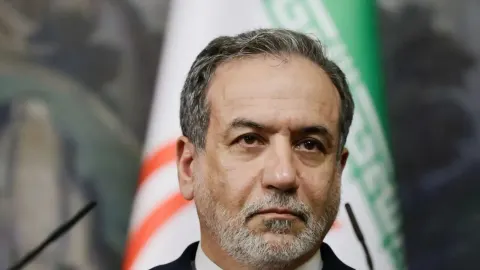
Iran's Leader Orders 'No-Limit' Response to Aggression Amid Global Tensions and Market Shifts
دستور «پاسخ بدون محدودیت» رهبر ایران در بحبوحه تنشهای جهانی و تحولات بازار
Iran's Supreme Leader has issued a strong directive for a swift and decisive military response to any new aggression, signaling a hardening stance in regional geopolitics. This comes as global economies grapple with rising threats, exemplified by a UK defense official's call for preparedness, while India's market sees a significant boost from Ambani's Jio IPO. Meanwhile, the Toman has shown a slight appreciation against the USD.
At time of publishing
USD
272,700
Toman
Gold 18K
25.39M
Toman / gram
Bitcoin
$77,380
US Dollar
Tether
272,600
Toman
Iran's Leader Issues Strong Warning Against Aggression
In a significant directive that underscores heightened regional tensions, Iran's Leader of the Islamic Revolution, Ayatollah Sayyid Mojtaba Hosseini Khamenei, has reportedly ordered senior Iranian military commanders to deliver a swift and decisive response to any new aggression against the country, explicitly stating "no geographical restrictions." This pronouncement, reported by IRNA, signals a hardening of Iran's stance amidst ongoing geopolitical complexities and perceived external threats. The directive aims to reinforce Iran's deterrence capabilities and project an image of unwavering resolve in safeguarding its national interests.
Such a potent declaration carries considerable weight, potentially escalating regional instability and influencing the broader geopolitical landscape. For the Iranian public, these statements often translate into increased uncertainty, impacting everything from daily confidence to economic expectations. In currency markets, the Toman has shown a slight appreciation against the USD in the last 24 hours, moving from 274,000 to 272,700, a decrease of 0.5%. This movement, however, occurs against a backdrop of fundamental geopolitical concerns that can quickly shift market sentiment.

US Midterm Elections and Their Echo in Iran Policy
Across the Atlantic, the upcoming US Senate midterm elections are drawing intense scrutiny, with Al Jazeera highlighting "rising prices and the Iran war" as pivotal issues shaping key races from Texas to Maine. The political landscape in the United States remains highly polarized, and the fight for control of the Senate could significantly redefine Washington's foreign policy trajectory, particularly concerning its engagement with Iran. A shift in power could introduce new strategies, ranging from renewed diplomatic overtures to intensified pressure campaigns.
The outcome of these elections holds direct implications for Iran, potentially influencing the future of international sanctions, trade relations, and regional dynamics. For ordinary Iranians, the uncertainty surrounding US policy decisions directly impacts their economic prospects and daily lives, affecting everything from access to global markets to the stability of local prices. The potential for a change in US approach adds another layer of complexity to an already volatile regional environment, making the midterms a closely watched event in Tehran.
Global Unease Prompts UK Preparedness Call
A stark illustration of mounting global anxieties comes from the UK, where Defence Secretary Wes Streeting revealed he began stockpiling food and water weeks ago in anticipation of a national emergency. As reported by The Guardian, Streeting emphasized rising threats to the UK and advocated for a significant increase in defense spending, with the Chancellor, John Healey, targeting 3% of GDP by 2030 and 3.5% by 2035 for defense. This proactive stance reflects a broader sentiment among Western nations of heightened vulnerability and the urgent need for robust national preparedness in an increasingly unpredictable world.
This move by a senior government official, while intended to reassure about national security, also underscores the pervasive sense of geopolitical instability fueled by ongoing conflicts and heightened international tensions. Such pronouncements can subtly influence public behavior, potentially leading to shifts in consumer spending and savings. Economically, a substantial reallocation of resources towards defense could impact other sectors, potentially contributing to inflationary pressures and altering investment flows in global markets as countries prioritize security over other expenditures.

India's Jio IPO: A Beacon of Market Growth
In a contrasting narrative of market dynamism, India's Reliance Jio has emerged as the nation's second-largest company, following a colossal $3.2 billion initial public offering (IPO) that marked India's biggest stock market debut to date. Al Jazeera highlighted this monumental achievement for Mukesh Ambani's telecom and digital services giant. This success is a testament to the robust growth and expansive potential within India's rapidly digitizing economy, driven by a massive domestic consumer base and aggressive market penetration strategies.
Jio's groundbreaking IPO represents a significant vote of confidence from investors in key emerging markets, offering a compelling counterpoint to the prevailing global economic uncertainties. It underscores the immense opportunities for wealth creation and technological advancement in economies with large, underserved populations embracing digital transformation. For international investors, Jio's rise signals the importance of diversification into high-growth sectors within stable, large-scale emerging markets, demonstrating that pockets of strong economic vitality continue to thrive amidst broader global anxieties.
UK Railway Disruptions Highlight Infrastructure Challenges
Closer to home for many European travelers, the UK is bracing for significant railway disruption over the upcoming Christmas holiday period, with 10 days of engineering work scheduled to close major stations like London Paddington and Birmingham New Street for five days. The Guardian reported that these closures will affect intercity trains to the west of England and Wales, extending into January. This extensive work, while crucial for modernizing and maintaining an aging rail network, underscores the persistent infrastructure challenges faced by many developed nations.
The scale and timing of these disruptions highlight the complex balancing act governments and transport authorities must perform between essential infrastructure upgrades and the convenience of millions of commuters and holiday travelers. Such widespread closures inevitably lead to economic consequences, impacting local businesses, tourism, and overall productivity during a peak commercial period. It serves as a stark reminder of how critical infrastructure investment and maintenance directly influence a nation's economic activity and the daily lives of its citizens.
Frequently Asked Questions
What exactly did Iran's Leader order regarding new aggression?
How might the US midterm elections affect Iran's geopolitical standing?
What is the significance of the UK Defence Secretary's stockpiling advice?
What does Jio's IPO success mean for emerging markets?
How has the Toman performed against the USD in the last 24 hours?
Currency Devaluation: Geopolitics, Sanctions, and Economic Stability
Currency devaluation is a critical economic phenomenon where a nation's currency loses value relative to other major currencies. While sometimes a deliberate policy to boost exports, it is often an involuntary consequence of severe economic pressures. In the context of global tensions and national security concerns, as highlighted by Iran's geopolitical stance and the focus on the Toman exchange rate, understanding devaluation is crucial. It directly impacts a country's purchasing power, trade balance, and the daily lives of its citizens.
Geopolitical events and economic sanctions are powerful catalysts for currency devaluation. When a country faces threats of aggression, diplomatic isolation, or stringent sanctions, it often leads to capital flight, where investors withdraw funds, fearing instability. Foreign direct investment dries up, and the ability to export goods and services is hampered, reducing the inflow of foreign currency. This diminished demand for the local currency in international markets directly pressures its value downwards, causing it to depreciate against stronger, more stable currencies.
For the domestic economy, currency devaluation brings a host of challenges. The most immediate and noticeable effect is inflation, particularly for imported goods, which become significantly more expensive. This erodes the purchasing power of ordinary citizens, as their savings and wages buy less. Businesses relying on imported raw materials face higher costs, which are often passed on to consumers, further fueling inflation. The Toman exchange rate, for instance, reflects these intense pressures, showing how geopolitical decisions and international relations directly translate into economic hardship at home.
In times of such economic uncertainty and currency instability, people often seek "safe haven" assets to preserve their wealth. Gold is a classic example. Unlike fiat currency, which can be printed or devalued, gold is a tangible asset with intrinsic value, historically seen as a reliable store of wealth. This explains why "Gold Prices Iran" are often sensitive indicators of economic anxiety; as the national currency weakens, demand for gold typically rises, driving its price up as people hedge against inflation and the erosion of their savings.
Ultimately, currency stability is a cornerstone of national economic health and public confidence. The interplay between geopolitical decisions, national security postures, and economic tools like sanctions demonstrates how deeply intertwined a nation's foreign policy is with its domestic economic reality. Understanding these dynamics offers insight into the complex challenges faced by countries navigating global tensions and the profound impact on their citizens.
Topics
Related Articles