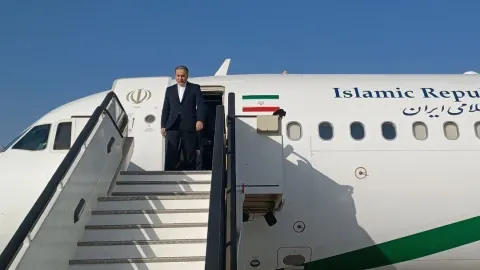
Tech Stocks Set for V-Shaped Bounce as Goldman Sachs Hikes Brent Oil Forecast to $105
پیشبینی بازگشت سریع سهام تکنولوژی همزمان با جهش قیمت نفت به ۱۰۵ دلار
Deutsche Bank signals a major tech rally is imminent despite recent volatility, while Goldman Sachs warns of $105 oil as regional conflicts disrupt global supply chains. In Tehran, the Toman continues its slide, with the US Dollar rising to 273,300 as market anxiety remains elevated.
At time of publishing
USD
273,300
Toman
Gold 18K
25.77M
Toman / gram
Bitcoin
$77,927
US Dollar
Tether
273,495
Toman
The Tech 'V-Shape' Returns: Deutsche Bank's Bullish Call
Equity markets are currently witnessing a peculiar disconnect between corporate performance and investor sentiment. According to a new analysis from Deutsche Bank, tech stocks have successfully executed five major V-shaped rebounds over the last 30 months. Despite recent jitters and a cooling of the AI-driven hype, the bank suggests that the sector is significantly oversold. Positioning among institutional investors is currently consistent with much slower earnings growth than what tech giants are actually delivering, creating a 'rubber band' effect that could snap back violently in the coming weeks.
This matters because the tech sector remains the primary engine of global liquidity. When tech rebounds, risk appetite generally increases across the board, often leading to a 'risk-on' environment that benefits assets like Bitcoin, which is currently hovering around $77,927. For the individual investor, this suggests that the current dip in global indices might be a strategic entry point rather than the start of a secular bear market, provided that earnings reports for the final quarter of 2026 continue to defy the broader economic gloom.
Energy Markets Brace for $105 Brent as Iraq Bypasses Hormuz
Global energy dynamics are shifting rapidly as the conflict in the Middle East enters a more entrenched phase. Goldman Sachs has officially revised its December forecast for Brent crude upward to $105 per barrel, a significant 17% jump from its previous estimate of $90. The bank cites heightened risks to supply security and the persistent threat to maritime routes as the primary drivers. This forecast comes even as some regional players attempt to normalize flows, suggesting that the 'war premium' is becoming a permanent fixture of the 2026 global economy.
Simultaneously, Iraq is taking drastic measures to insulate its economy from the chaos in the Strait of Hormuz. Baghdad has successfully boosted its crude oil exports via the Turkish port of Ceyhan to 500,000 barrels per day (bpd). By trucking Basrah crude to northern pipeline systems, Iraq is demonstrating that while the Strait remains a critical chokepoint, regional powers are finding expensive but necessary workarounds. However, these logistical pivots add to the final cost of energy, reinforcing the inflationary pressures that Goldman Sachs is now pricing into its triple-digit oil forecast.

The Real-World Cost: Aviation Cracks and Toman Volatility
The economic fallout of the regional conflict is no longer confined to energy and shipping; it is now hitting the service sector and consumer wallets. Ryanair, one of Europe’s largest budget carriers, warned today that it may be forced to freeze worker pay and significantly raise airfares if the current hostilities do not subside. The airline estimates its fuel bill could balloon by an additional €2 billion by 2028. This serves as a stark reminder that geopolitical instability has a direct path to the average consumer through increased transportation costs and supply chain surcharges.
In the local Iranian market, these global pressures are manifesting in a weakening currency. At 14:00 Tehran time on Monday, November 2, 2026 (۱۱ آبان ۱۴۰۵), the US Dollar rose from 271,800 to 273,300 Toman, a 0.6% increase within 24 hours. The Emami gold coin also saw a 1.0% jump, moving from 261,000,000 to 263,500,000 Toman. This domestic rally in gold and hard currency reflects a 'fear premium' as Iranians hedge against the potential for $105 oil to further destabilize regional trade and trigger another wave of imported inflation.
Geopolitical Tensions and the US Midterm Factor
As the world watches the Middle East, the upcoming US midterm elections are casting a long shadow over global markets. Bitcoin's current price action, holding steady at the $78,000 mark, is largely a reflection of traders waiting for the results of this political showdown. Historically, US elections introduce a period of heightened volatility followed by a relief rally, and 2026 appears to be no different. The outcome will likely dictate the future of US sanctions policy and military involvement in the region, which in turn will determine whether Goldman's $105 oil prediction becomes a reality or a temporary spike.
Meanwhile, the humanitarian and political situation on the ground remains volatile. While Israeli forces have reportedly withdrawn from parts of Hebron, the displacement of thousands and the ongoing political struggle between Netanyahu and Eisenkot for leadership in Israel suggest that a diplomatic resolution remains far off. For the Iranian economy, this persistent state of 'no war, no peace' is arguably the most damaging scenario, as it prevents any meaningful recovery of the Toman while keeping the cost of living pinned to the volatile movements of global commodity prices.
Frequently Asked Questions
Why did Goldman Sachs raise the oil price forecast to $105?
What is a V-shaped recovery in tech stocks?
How is Iraq bypassing the Strait of Hormuz?
Why is the Toman falling despite high global oil prices?
The Global Impact of Oil Price Volatility
Oil is more than just a commodity; it's the lifeblood of the global economy, fueling everything from transportation and manufacturing to agriculture and power generation. Consequently, fluctuations in its price—whether driven by supply and demand, geopolitical events, or speculative forecasts like Goldman Sachs' recent Brent oil prediction—have far-reaching implications. Understanding oil price volatility is crucial because it acts as a significant barometer for economic health and geopolitical stability, influencing decisions from corporate boardrooms to national treasuries.
Economically, sharp increases in oil prices often act like a regressive tax on consumers and businesses. Higher fuel costs directly impact industries like airlines (e.g., Ryanair's fuel costs), shipping, and logistics, leading to increased operational expenses that are often passed on to consumers. This can fuel inflation, erode purchasing power, and dampen overall economic growth. Conversely, sustained low oil prices can stimulate economic activity by reducing costs for businesses and consumers, but they can also strain the budgets of oil-exporting nations and impact energy sector investments.
Geopolitically, oil prices are deeply intertwined with international relations and regional stability. Major oil-producing nations' revenues are highly dependent on global prices, affecting their domestic policies and international leverage. Critical maritime chokepoints, such as the Strait of Hormuz, through which a significant portion of the world's oil supply passes, become flashpoints. Any perceived threat or conflict in these areas can trigger immediate price spikes, reflecting a 'geopolitical premium' that adds to market uncertainty and global energy security concerns.
The ripple effect of oil price volatility extends across various financial markets. While seemingly disconnected, significant movements in oil prices can influence investor sentiment across different asset classes. For instance, prolonged periods of high oil prices might raise concerns about corporate profitability and economic slowdowns, potentially affecting equity markets like tech stocks. Similarly, the economic health of oil-dependent nations can impact their currency values, influencing exchange rates such as the USD/Toman price, as national economies adjust to the pressures of energy costs.