Russia Bombs Ukraine Aid Hub; Markets Brace for US Midterms; Germany's Energy Crunch Deepens
حمله روسیه به مرکز کمکرسانی اوکراین؛ بازارها آماده انتخابات میاندورهای آمریکا؛ بحران انرژی آلمان عمیقتر میشود
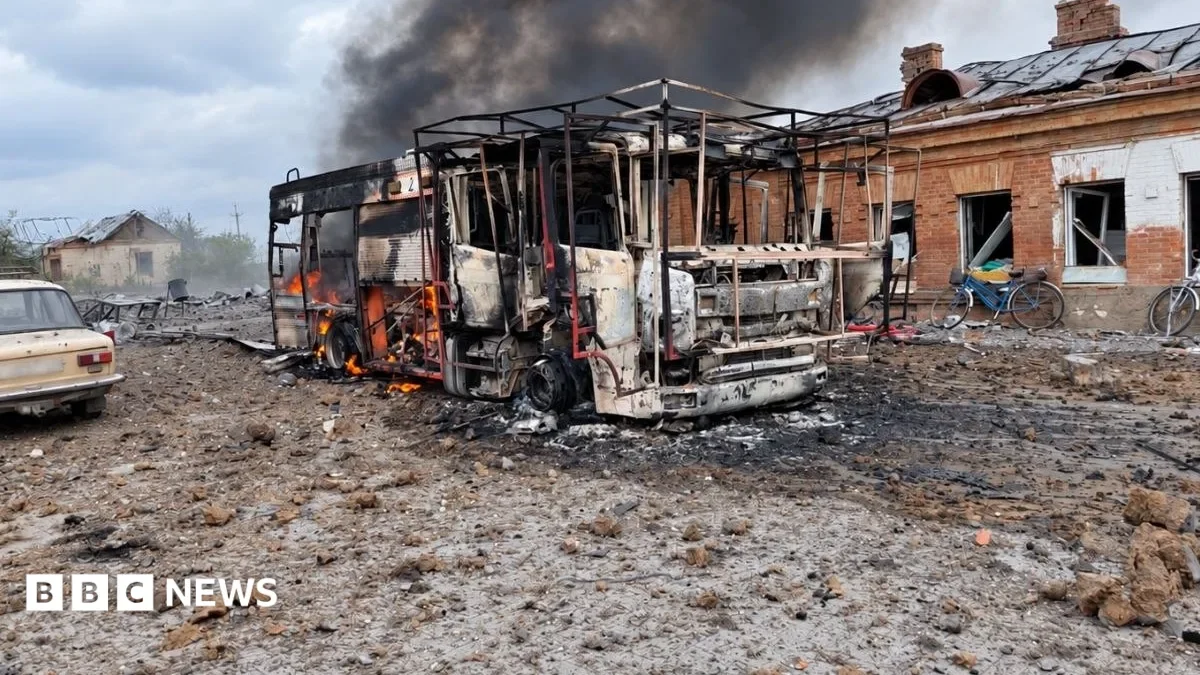
Russian forces have launched a devastating aerial attack on a Ukrainian aid distribution center, killing dozens. Meanwhile, global markets are treading water as the US midterm elections approach, potentially reshaping political power. In Europe, Germany faces a deepening energy crisis as it misses crucial gas storage targets ahead of winter.
At time of publishing
USD
272,000
Toman
Gold 18K
25.47M
Toman / gram
Bitcoin
$76,838
US Dollar
Tether
271,454
Toman
Deadly Russian Bombing in Ukraine
Kyiv officials reported a catastrophic Russian aerial assault on a village in southern Ukraine, striking an aid distribution center and killing at least 29 people. Ukrainian President Zelenskyy decried the attack as "utterly horrific," highlighting the indiscriminate nature of the strikes which reportedly involved nine massive 3,000kg aerial bombs. This incident underscores the brutal reality of the ongoing conflict, with civilian infrastructure and humanitarian efforts becoming increasingly vulnerable to the intensified Russian bombing campaign.
The implications of such attacks extend beyond the immediate loss of life and destruction. They serve as a stark reminder of the war's human cost and the precariousness of aid delivery in active conflict zones. For the global community, it renews calls for accountability and intensified diplomatic efforts, while for Ukraine, it represents another devastating blow to morale and infrastructure. The targeting of an aid center, if confirmed to be deliberate, would represent a grave violation of international humanitarian law and could further isolate Russia on the world stage, potentially impacting ongoing sanctions and diplomatic relations.

US Midterms Loom, Markets Hold Breath
As Americans head to the polls for crucial midterm elections, global financial markets are adopting a cautious stance. The outcomes of these elections, which will determine control of the US Congress, are seen as a significant referendum on the current administration and could dramatically influence future economic and foreign policy. Investors are closely watching for any shifts that might impact trade relations, regulatory landscapes, or geopolitical stability, all of which have ripple effects across international markets.
The uncertainty surrounding the election results is palpable. A divided government, or a significant shift in power, could lead to policy gridlock or, conversely, pave the way for new legislative agendas. This anticipation is contributing to a general market hesitancy, with investors reluctant to commit to major positions until the political landscape becomes clearer. The Bitcoin market, for instance, has already seen a slip to a one-month low of $76.5k, partly attributed to this pre-election caution, demonstrating how geopolitical events can directly influence even the most volatile digital assets.
Germany's Tightening Energy Grip
Germany, the economic powerhouse of Europe, is facing a growing energy crisis as it has failed to meet its crucial gas storage targets ahead of the winter season. The country has only managed to fill its storage facilities to approximately 61%, falling short of the 80% obligation set by the European Union. This shortfall is particularly concerning given the ongoing global energy shock, exacerbated by geopolitical tensions and the war in the Middle East.
The consequences of this energy deficit are manifold. Higher gas prices are already a reality, with the European gas benchmark topping 100 euros per MWh and remaining there. However, the more pressing concern is the potential for supply shortages, which could cripple industries and leave households struggling to cope with the cold. Germany's missed target not only jeopardizes its own energy security but also has broader implications for the entire EU, potentially forcing more drastic measures or increased reliance on alternative, and possibly more expensive, energy sources. The situation highlights the vulnerability of even the most developed economies to disruptions in global energy markets and the challenges of transitioning to sustainable energy sources under pressure.

Iran's Diplomatic Posturing Amidst Global Tensions
Amidst a backdrop of escalating international tensions and regional dynamics, Iranian Foreign Minister Abbas Araghchi has reiterated that Tehran harbors no hostility towards the Persian Gulf Cooperation Council (PGCC) states. He emphasized Iran's commitment to continuing dialogue with Saudi Arabia, suggesting a desire to de-escalate regional rivalries. This statement comes at a time when Iran is also reportedly engaged in discussions or facing scrutiny related to international incidents, such as the alleged Russian bombing in Ukraine, though direct Iranian involvement in that specific event has not been stated.
Simultaneously, Iran's Judiciary Chief, Gholam-Hossein Mohseni-Eje'i, paid tribute at the mausoleum of Ayatollah Seyyed Ali Khamenei. While this is a routine act of reverence within the political system, it occurs within a broader context of internal consolidation and external pressures. The Iranian currency also saw a slight uptick in its sell rate for USD, moving from 271,800 to 272,000 Toman (+0.1%), a minor fluctuation that can be influenced by a myriad of factors including regional stability, sanctions, and global economic trends.

Frequently Asked Questions
What was the impact of the Russian bombing in Ukraine?
Why are markets cautious about the US midterm elections?
What is the significance of Germany missing its gas storage targets?
What is Iran's current stance on regional relations?
How did the Iranian Toman perform against the USD in the last 24 hours?
Understanding Germany's Natural Gas Storage and Its Role in Energy Security
Germany’s recent energy crunch has highlighted the critical function of natural‑gas storage facilities. These underground caverns, depleted oil fields, and purpose‑built reservoirs act as a buffer, allowing the country to smooth out seasonal demand spikes and compensate for supply disruptions—whether caused by geopolitical tensions, pipeline outages, or sudden weather changes. By injecting gas when prices are low (typically in the summer) and withdrawing it during winter peaks, storage operators help stabilize both domestic prices and the broader European market.
The capacity of Germany’s storage network is measured in terawatt‑hours (TWh). As of 2023, the nation could store roughly 20 TWh, enough to cover about 30‑40 % of its winter consumption. However, the war in Ukraine has slashed imports of Russian pipeline gas, which historically supplied around 55 % of Germany’s gas demand. The loss of this reliable source forced storage operators to fill caverns to near‑full levels before the heating season, creating a “tight” market where any shortfall can trigger sharp price spikes.
Energy security, a concept that blends reliability, affordability, and sustainability, depends heavily on these storage buffers. When storage levels fall below critical thresholds—often defined as 70 % of total capacity—traders and policymakers view the system as vulnerable, prompting measures such as demand‑side curtailments, accelerated renewable‑energy deployment, or emergency imports of liquefied natural gas (LNG). Understanding how storage works therefore helps explain why headlines about “low gas storage” can move markets and why governments invest billions in expanding underground capacity.
Looking ahead, Germany is pursuing two complementary strategies: diversifying supply routes (e.g., increasing LNG terminals) and expanding storage infrastructure, including converting old salt mines into high‑pressure caverns. Both approaches aim to reduce dependence on any single source and to cushion the economy against future geopolitical shocks.