Kyiv Aid Center Struck as Trump Reshapes African Trade and China Woos the Gulf
فاجعه در مرکز امدادرسانی کییف همزمان با بازنگری ترامپ در تجارت جهانی و نفوذ چین در خلیج فارس
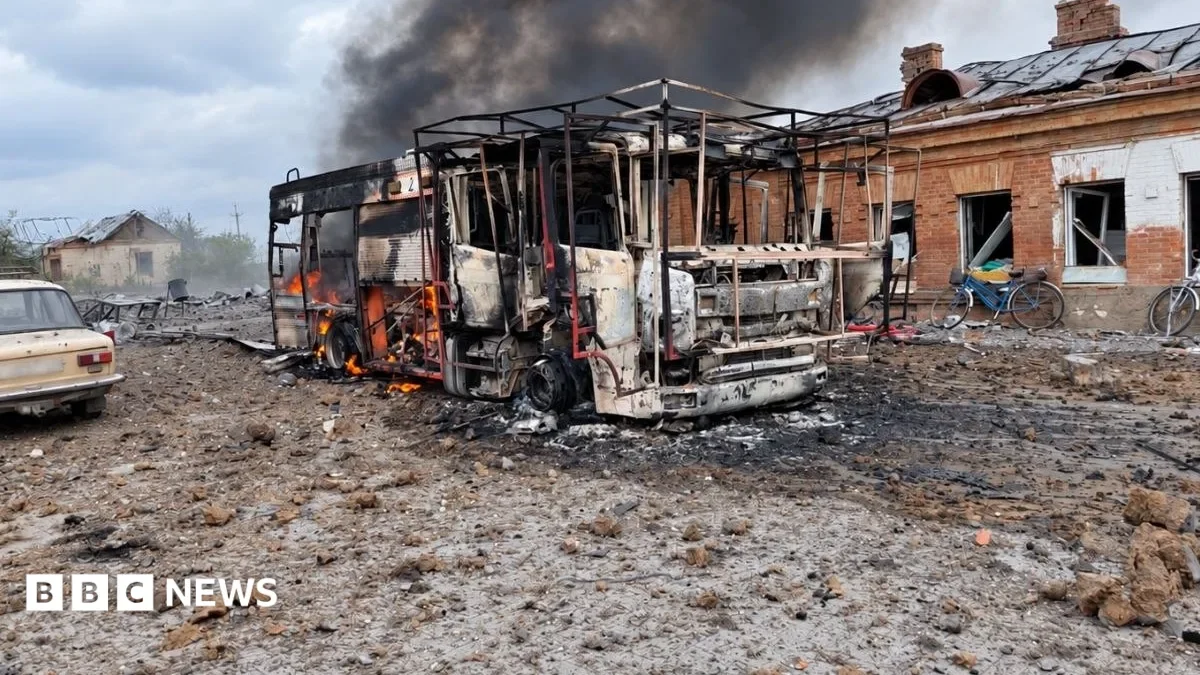
A devastating Russian strike on a Ukrainian aid hub has killed 31 people, while Donald Trump signals a major shift in trade policy by removing South Africa and Rwanda from US deals. Meanwhile, Beijing is moving to fill the diplomatic vacuum in the Middle East as US-Iran tensions persist.
At time of publishing
USD
272,600
Toman
Gold 18K
25.62M
Toman / gram
Bitcoin
$77,381
US Dollar
Tether
271,539
Toman
Massive Strike on Ukraine Aid Center Escalates Conflict
In one of the most devastating aerial assaults in recent weeks, Russian forces deployed at least nine 3,000kg aerial bombs against a southern Ukrainian village, striking a vital aid distribution center. Local officials in Kyiv confirmed that at least 31 people were killed in the attack, which President Zelenskyy described as "utterly horrific." The use of such heavy ordnance—the 3,000kg class of bombs—indicates a significant escalation in the firepower being utilized to break Ukrainian logistics and morale. This strike comes as Kyiv continues to plead with Western allies for more sophisticated air defense systems to counter long-range aerial threats that have increasingly targeted civilian infrastructure and humanitarian hubs.
The geopolitical fallout of this strike is immediate. For global markets, this escalation signals that the conflict remains far from a frozen state, maintaining high-risk premiums on energy and grain. For Iranian observers, the intensification of the war often correlates with shifts in regional alliances and the potential for increased Western pressure on any nations perceived to be aiding the Russian military effort. As the humanitarian toll rises, the international community's focus is shifting toward whether this will trigger a new round of heavy sanctions or a more direct intervention in providing advanced weaponry to Ukraine.

China Moves into the Gulf as Trump Pressures Iran
While Washington remains fixated on its adversarial stance toward Tehran, Beijing is launching a calculated diplomatic salvo to woo Gulf leaders. Reports indicate that China has held a flurry of high-level meetings with Middle Eastern leaders, aiming to bolster its influence in a region traditionally dominated by American security guarantees. This strategic pivot occurs just ahead of the Apec conference in Shenzhen, where Donald Trump and Xi Jinping are expected to meet. Beijing is essentially positioning itself as a more stable and less demanding partner for Gulf nations that are wary of the unpredictable nature of US foreign policy under the current administration.
For Iran, this shift is double-edged. On one hand, China's increased presence in the Gulf could offer Tehran a diplomatic lifeline or an alternative trade route that bypasses some Western restrictions. On the other hand, Beijing’s primary interest is energy security and regional stability, which may lead it to pressure Tehran to avoid actions that could disrupt the flow of oil. As Trump’s troubles with Iran continue to dominate headlines, the "open door" for China represents a fundamental reshaping of Middle Eastern geopolitics, where economic pragmatism is beginning to outweigh traditional security blocs.
Trump Reshapes Trade: South Africa and Rwanda Targeted
In a move that has sent shockwaves through the developing world, the Trump administration has announced plans to remove Rwanda and South Africa from a key US trade agreement. This decision follows recent sanctions imposed by the US Treasury on Rwanda’s defense ministry and reflects a broader trend of utilizing trade access as a weapon of foreign policy. South Africa, in particular, has found itself in the crosshairs of US lawmakers due to its perceived alignment with non-Western blocs and its vocal stance on international legal issues. The removal from these trade deals could have significant economic consequences for these nations, limiting their access to the world's largest consumer market.
This policy shift underscores the "America First" approach to trade, where loyalty and alignment with US strategic interests are prerequisites for economic cooperation. For global investors, it serves as a reminder that emerging markets are increasingly vulnerable to the whims of US executive action. The move against South Africa is particularly notable given its role in the BRICS+ alliance, suggesting that the US is willing to use economic leverage to discourage nations from drifting toward the orbit of Moscow or Beijing. This creates a more fragmented global trade environment, where bilateral deals are replacing broad multilateral frameworks.
Tehran Market Watch: Toman Edges Higher Amid Volatility
On the domestic front, the Iranian Toman experienced slight depreciation over the last 24 hours. The USD sell rate moved from 271,800 to 272,600 Toman, marking a 0.3% increase. This marginal rise reflects a cautious market as traders weigh the impact of regional tensions and the ongoing US election cycle. While the currency saw a slight dip in value, the gold market moved in the opposite direction. The price of 18-karat gold fell from 25,774,504 to 25,624,451 Toman per gram, a decrease of 0.6%. This decoupling of gold and currency suggests that local investors may be liquidating some gold positions or that global gold prices—currently at $3,963.00 per ounce—are exerting downward pressure on the local market.
Similarly, the Emami coin saw a slight decline, moving from 263,500,000 to 262,500,000 Toman, a 0.4% drop. These movements indicate a complex psychological state among Iranian investors. While the rising dollar usually signals inflationary fears, the drop in gold and coin prices suggests a lack of immediate panic or perhaps a shift toward other assets like stablecoins. In the crypto space, Bitcoin remains relatively steady at $77,381, providing a digital alternative for those looking to hedge against Toman volatility. As the geopolitical situation in Ukraine and the Middle East remains fluid, the Tehran market is expected to remain in a state of high sensitivity to any new diplomatic or military developments.
Frequently Asked Questions
چرا قیمت طلا در ایران با وجود افزایش دلار، کاهش یافته است؟
بمبهای ۳۰۰۰ کیلویی روسیه چه تاثیری بر روند جنگ اوکراین دارد؟
چرا ترامپ آفریقای جنوبی را از توافق تجاری حذف کرد؟
Understanding Great Power Competition in Today's World
In an increasingly interconnected yet fractured world, seemingly disparate events like trade policy shifts, regional diplomatic maneuvers, and ongoing conflicts often share a common underlying dynamic: Great Power Competition. This concept refers to the ongoing rivalry between major global powers—currently most prominently the United States, China, and Russia—as they vie for influence, resources, and strategic advantage across economic, political, military, and technological domains. Unlike the overt military standoffs of past eras like the Cold War, today's competition is often characterized by a complex interplay of cooperation and contention, utilizing a broader toolkit of statecraft.
This competition manifests in various forms across the globe. For instance, the headline's mention of "Trump Reshapes African Trade" and "China Woos the Gulf" directly illustrates how economic leverage and diplomatic engagement become crucial battlegrounds. Major powers use trade agreements, infrastructure investments, and aid packages to build alliances and secure access to vital markets and resources, effectively expanding their spheres of influence. These actions are not merely about economic gain; they are strategic moves designed to counter rivals and solidify global standing.
Beyond economics, geopolitical competition can escalate into more direct confrontations. The ongoing conflict in Ukraine, for example, while a localized war, is frequently framed within the context of great power dynamics, with Russia challenging the existing international order and Western powers supporting Ukraine to uphold principles of sovereignty and deter further aggression. This highlights how regional conflicts can become flashpoints where the interests and influence of major powers collide, with significant global repercussions.
Understanding Great Power Competition is essential for deciphering the complexities of international relations. It helps explain why nations adopt particular foreign policies, why certain regions become focal points of diplomatic activity, and how local events can quickly acquire global significance. Recognizing this overarching framework provides a lens through which to analyze global headlines, from trade disputes and technological races to humanitarian crises, revealing the intricate web of strategic maneuvering that shapes our world.
Topics
Related Articles