
US Judicial Threats and Yemen Accusations Heighten Geopolitical Risk as Binance Reveals $6.3B Hack Details
تهدید قضات آمریکایی و اتهامات جدید در یمن؛ افشای جزئیات هک ۶.۳ میلیارد دلاری بایننس در فضای ملتهب بازار
A pardoned January 6 participant faces new charges for threatening federal judges, while the Yemen government accuses the IRGC of direct military involvement. Simultaneously, Binance exposes a massive $6.3 billion security breach involving AI-driven social engineering.
At time of publishing
USD
271,400
Toman
Gold 18K
25.45M
Toman / gram
Bitcoin
$77,512
US Dollar
Tether
270,221
Toman
Political Volatility and the Shadow of January 6
In a development that highlights the persistent domestic instability in the United States, Cleveland Meredith, a North Carolina man previously pardoned by Donald Trump for his role in the January 6 Capitol attack, has been arrested again. This time, the charges are even more severe: Meredith is accused of posting social media threats calling for the execution of federal judges involved in the January 6 trials. This incident is not merely a legal footnote; it represents the deepening polarization of the American political landscape as the country moves closer to another election cycle. For international observers and market participants, particularly in regions like Iran, this volatility signals a potential for unpredictable shifts in U.S. foreign policy and judicial integrity.
The arrest of a pardoned individual on such charges raises critical questions about the long-term effectiveness of executive clemency and the rising tide of anti-government sentiment. When the legal infrastructure of the world's largest economy is under direct threat from domestic actors, global risk appetite tends to contract. For Iranian readers, the "Trump factor" remains a central pillar of economic forecasting; any sign that his previous legal interventions are leading to further chaos suggests that a future administration under similar ideology might be equally volatile, affecting everything from sanction enforcement to diplomatic backchannels.

Escalation in Yemen and Regional Security Claims
Geopolitical tensions in the Middle East have taken a sharper turn as the Yemeni interior minister officially accused the Islamic Revolutionary Guard Corps (IRGC) and Hezbollah of sending 21 military experts to assist Houthi rebels. According to the Yemeni government, this involvement has transitioned from mere technical support and arms smuggling to the direct management of military operations on the ground. This claim, while yet to be independently verified by international bodies, adds significant weight to the narrative of a widening regional conflict. The timing is particularly sensitive as the Red Sea remains a flashpoint for global maritime trade, where Houthi strikes have already disrupted supply chains.
For the Iranian economy, these accusations often serve as a precursor to tightened international scrutiny and potential new rounds of sanctions. The involvement of regional proxies in high-stakes military theaters directly impacts the "risk premium" associated with the Iranian Toman. As of today, November 3, 2026, the USD/IRR pair saw a minor decline, moving from 271,800 to 271,400 (-0.1%), but the underlying sentiment remains fragile. If these regional claims lead to a more direct confrontation or a breakdown in back-channel negotiations, the relative stability seen in the currency market today could quickly evaporate.

The $6.3 Billion Breach: Binance and the AI Threat
The cryptocurrency world was rocked by new details regarding a massive $6.3 billion heist targeting Binance. The exchange's investigation revealed that the attackers, suspected to be linked to North Korean state-sponsored groups, used sophisticated social engineering tactics, including fake job interviews and compromised AI tools. By tricking an engineer into downloading malicious software during what appeared to be a legitimate recruitment process, the hackers gained access to internal wallet infrastructures. This event underscores the terrifying reality of modern cyber warfare, where even the largest financial institutions are vulnerable to human error amplified by artificial intelligence.
For many Iranians who rely on cryptocurrencies like Bitcoin and Tether (USDT) to preserve their purchasing power or conduct international business, the Binance hack is a sobering reminder of the risks inherent in centralized platforms. Bitcoin is currently trading at $77,512, but the vulnerability of the infrastructure supporting these assets remains a major concern. Furthermore, the U.S. Commodity Futures Trading Commission (CFTC) has recently cleared the path for regulated equity perpetual futures, a move that brings crypto-native trading instruments into traditional stock markets. This convergence of traditional and digital finance means that security failures in one sector will increasingly have cascading effects on the other.
Market Realities: Gold Dips and Aramco's Wartime Profits
In the physical markets, gold has experienced a notable correction. In Tehran, the price of 18k gold fell from 25,774,504 to 25,451,313 Toman per gram, a decrease of 1.3%. Similarly, the Emami coin dropped from 263,500,000 to 261,500,000 Toman (-0.8%). This downward movement in gold, despite global tensions, suggests a local liquidity squeeze or a temporary rebalancing by investors who had over-hedged in previous weeks. Meanwhile, on the global stage, Saudi Aramco reported a third-quarter net income of $36.25 billion, a 34.5% increase year-on-year. However, analysts warn that these "wartime profits" are driven more by high prices than by operational growth, masking underlying vulnerabilities in the global energy supply chain.
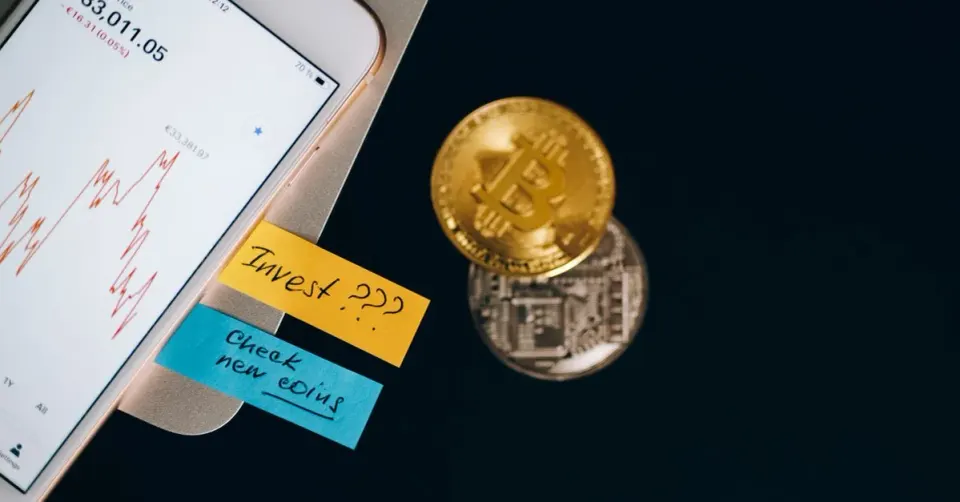
For the average consumer, these numbers tell a story of a global economy that is increasingly decoupled from reality. While corporate profits soar due to high commodity prices, the cost of living and the risks of systemic failure continue to rise. Whether it is the 50% jump in Medicare drug costs projected for 2027 or the volatility of the Toman, the current economic climate demands extreme caution. The intersection of political threats in the West, military escalations in the East, and technological vulnerabilities in the digital realm creates a complex web that every investor must navigate with precision.
Frequently Asked Questions
چرا هک بایننس با استفاده از هوش مصنوعی انجام شده است؟
تأثیر اتهامات جدید یمن علیه سپاه بر قیمت دلار چیست؟
علت ریزش ۱.۳ درصدی قیمت طلا در بازار تهران چه بود؟
Understanding Cryptocurrency Exchange Hacks
Cryptocurrency exchanges act as digital banks, holding vast amounts of users' crypto assets in hot wallets that are constantly connected to the internet. This convenience makes them attractive targets for hackers, who can exploit software vulnerabilities, weak access controls, or social‑engineering tricks to siphon off funds. The Binance hack of early 2024, which exposed a $6.3 billion shortfall, illustrates how a single breach can ripple through global markets, shaking investor confidence and prompting regulatory crackdowns.
At the technical core of most exchange hacks lies a failure in key management. Private keys control the movement of crypto assets; if they are stored in plaintext, shared among multiple staff, or protected only by weak passwords, attackers can gain unfettered access. Modern best practices recommend hardware security modules (HSMs), multi‑signature wallets, and strict separation between custodial and operational keys. Binance, after the incident, announced a shift toward more robust multi‑sig custody and third‑party audits to restore trust.
Beyond the immediate loss of funds, exchange hacks amplify systemic risk in the crypto ecosystem. Because many traders use leverage and derivatives tied to the same underlying assets, a large‑scale theft can trigger margin calls, forced liquidations, and price volatility across multiple exchanges. The fallout also fuels geopolitical tension, as state actors may weaponize cyber‑attacks on financial infrastructure to exert pressure, a concern echoed in the broader context of US‑Iran tensions and sanctions on the IRGC.
Mitigating these threats requires a blend of technology and governance. AI‑driven anomaly detection can flag unusual transaction patterns in real time, while rigorous compliance programs ensure that staff follow least‑privilege principles and undergo regular security training. Ultimately, users also share responsibility: employing hardware wallets, enabling two‑factor authentication, and diversifying holdings across reputable platforms reduce personal exposure to a single point of failure.
For anyone navigating the crypto world, grasping how exchange hacks happen—and the safeguards that can prevent them—is essential not only for protecting individual assets but also for understanding the broader financial stability implications of digital currencies.