Trump’s Grand Arch Blocked as Europe Braces for ‘Grey Zone’ Chaos; Gold Dips in Tehran
توقف پروژه نمادین ترامپ و آمادهباش اروپا در برابر تهدیدات سایبری؛ کاهش قیمت طلا در بازار تهران
A US judge has halted construction of Trump’s massive 250-foot arch, signaling a shift in judicial pushback following the midterms. Meanwhile, Europe faces a wave of 'grey zone' cyber-attacks targeting critical infrastructure, and Tehran gold prices see a minor 0.6% correction.
At time of publishing
USD
268,200
Toman
Gold 18K
25.93M
Toman / gram
Bitcoin
$75,270
US Dollar
Tether
271,438
Toman
The Sydney Double Murder Trial and the Question of Accountability
The high-profile trial of former NSW police officer Beau Lamarre-Condon has taken a dramatic turn in Sydney, as the defendant admitted to the shooting of Jesse Baird, though he maintained the act was not intentional. Lamarre-Condon, who is accused of using his police-issue firearm to kill Baird and his partner Luke Davies in early 2024, testified that while he takes responsibility for the deaths, the specific discharge of the weapon was a tragic error during a confrontation. This case has gripped international audiences, including many in Iran who follow global legal standards, as it highlights the immense power—and potential for abuse—held by state security officers.
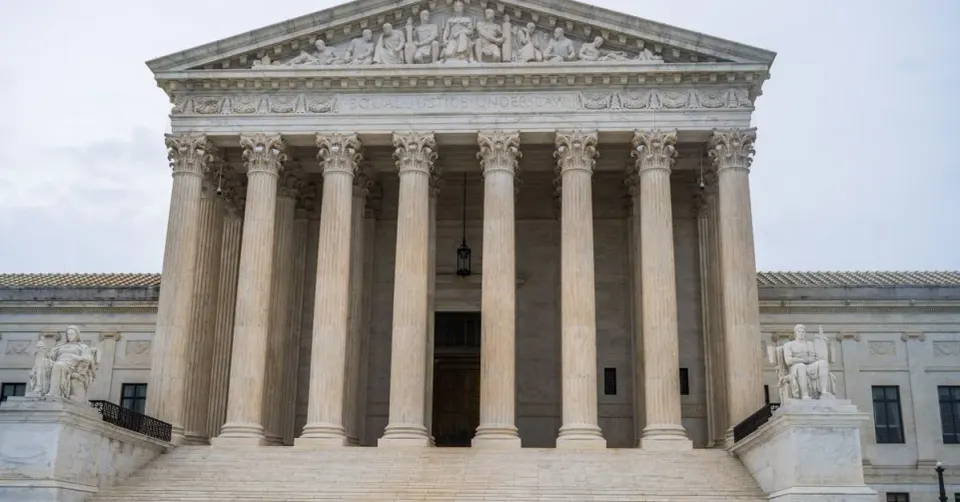
The prosecution’s cross-examination has focused on the premeditated nature of the events, including the defendant’s attempt to disguise himself as a delivery driver to gain access to the property. For observers, the trial is a stark reminder of the complexities of institutional accountability. In a world where police conduct is under increasing scrutiny, the admission that "it was my fault" while denying intent creates a legal gray area that the Supreme Court must now navigate. For the Iranian public, such cases often serve as a point of comparison for how judicial systems handle misconduct within the ranks of the armed forces and police.
Europe’s Descent into ‘Grey Zone’ Warfare
Across the European continent, a series of disruptive incidents has prompted a Friday briefing warning that we may be entering a "new normal" of constant, low-level conflict known as the grey zone. From hoax bomb threats diverting passenger flights to sophisticated cyber-attacks targeting supermarket refrigerators in Belgium and Sweden, the vulnerability of modern infrastructure is on full display. Most concerning was a recent attack on France’s national blood service cold storage, an escalation that moves beyond mere economic disruption into the realm of public health threats.
These actions, which often lack a clear signature, are designed to create a pervasive sense of instability without triggering a full-scale military response. Analysts suggest that whether these acts are the work of hostile state actors or criminal syndicates, the objective remains the same: to erode public trust in government institutions. For regional markets, this translates to higher insurance premiums for shipping and logistics and a general tightening of cybersecurity budgets. As Iran itself frequently finds itself at the center of cyber-warfare narratives, the broadening of these tactics to European civilian infrastructure suggests a global shift in how geopolitical pressure is applied.

Judicial Roadblocks for Trump’s Legacy Projects
In the United States, the post-midterm political landscape is already shifting the balance of power, as evidenced by a federal judge’s decision to block the construction of a massive 250-foot arch championed by the Trump administration. Despite receiving initial approval from federal agencies, the court ruled that the project did not meet environmental and historical preservation standards. This ruling is seen by many as the beginning of a broader judicial and legislative pushback against the executive branch following the Democratic gains in the House of Representatives.
This halt is not just a blow to a symbolic architectural project; it signals to markets that the era of unchecked executive orders may be coming to a close. Investors are now recalibrating their expectations for large-scale infrastructure spending and deregulation, which were hallmarks of the previous two years. As the political gravity of a "lame duck" period begins to set in, the focus is shifting toward how much of the administration's agenda can survive the next two years of divided government. For international observers, this internal friction in Washington often dictates the pace of foreign policy and sanctions enforcement.

Tehran Market Update: Gold Dips Amid Global Repricing
On this Friday, November 6, 2026 (جمعه ۱۵ آبان ۱۴۰۵), the Tehran markets are reflecting a slight cooling period following the volatility of the US elections. Gold 18k per gram has decreased from 26,086,153 to 25,931,483 Toman, representing a 0.6% decline. Meanwhile, the USD sell rate has remained stable at 268,200 Toman. This minor correction in gold prices mirrors a global trend where the metal is losing some of its safe-haven premium as the immediate uncertainty of the American political transition begins to crystallize into a known, albeit divided, reality.
In the crypto space, the mood is more somber for specific assets. XRP has suffered a 10% selloff, and politically-themed memecoins associated with the Trump campaign have slumped to record lows following the midterm losses. This suggests a "sell the news" event where speculators are exiting positions that were heavily tied to a specific political outcome. For Iranian traders, who often use USDT (currently at 271,438 Toman) as a hedge, the stability of the dollar against the Toman provides a brief window of predictability in an otherwise turbulent month.
Frequently Asked Questions
چرا قیمت طلا در بازار تهران کاهش یافت؟
منظور از «جنگ منطقه خاکستری» در اروپا چیست؟
توقف پروژه طاق ترامپ چه پیامدی برای بازارها دارد؟
Understanding Grey‑Zone Warfare
Grey‑zone warfare sits between traditional peace and outright war, blending political, economic, informational, and cyber tools to achieve strategic goals without triggering a formal military response. Unlike conventional conflict, it avoids clear‑cut battle lines, making attribution difficult and allowing state and non‑state actors to operate below the threshold that would justify a full‑scale retaliation. The concept gained prominence after the 2010s as nations like Russia and China refined tactics that blend propaganda, cyber intrusions, and covert support for proxy forces.
In practice, a grey‑zone campaign might involve a coordinated disinformation push on social media, a ransomware attack on critical infrastructure, and the covert supply of weapons to insurgents—all while the aggressor maintains plausible deniability. Europe’s recent concerns about cyber attacks on energy grids and election systems illustrate how the continent can become a battlefield for these low‑intensity, high‑impact actions. By staying in the “grey” area, attackers aim to erode trust in institutions, destabilise markets, and extract political concessions without crossing the red line that would trigger NATO’s collective defence.
The term also helps explain why seemingly unrelated events, such as the blockage of a symbolic structure like Trump’s Grand Arch, can be leveraged as part of a broader narrative. By amplifying the incident through state‑aligned media, adversaries can sow division and distract from simultaneous cyber operations. This multi‑vector approach underscores the importance of resilience‑building across diplomatic, cyber‑security, and informational domains.
For policymakers and businesses, the key takeaway is that defence against grey‑zone threats requires a whole‑of‑government strategy: robust cyber hygiene, rapid fact‑checking mechanisms, and clear communication channels to counter misinformation. Ignoring the subtle but persistent nature of these tactics can leave societies vulnerable to gradual erosion of stability and confidence.
Topics
Related Articles