Market Veteran Warns of 40% Crash and $500 Oil as Hormuz Tensions Push Dollar Higher
هشدار تحلیلگر باسابقه نسبت به سقوط ۴۰ درصدی بورس و نفت ۵۰۰ دلاری همزمان با پیشروی دلار در بازار تهران
A 40-year market veteran is betting on a massive global stock market correction and a surge in oil prices to $500, contrasting sharply with bank forecasts. In the Middle East, another tanker fire near the Strait of Hormuz has pushed the US Dollar up by 0.6% in the Tehran market.
At time of publishing
USD
268,200
Toman
Gold 18K
24.49M
Toman / gram
Bitcoin
$64,505
US Dollar
Tether
269,920
Toman
The $500 Oil Prophecy and the Looming Market Storm
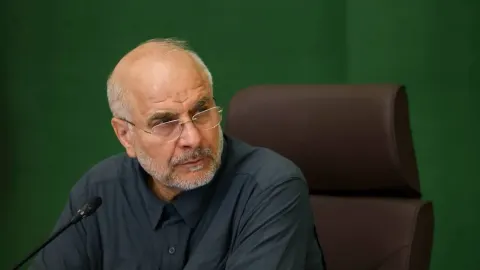
Ulf Lindahl, a market veteran with four decades of experience, has issued a stark warning that diverges sharply from the current Wall Street consensus. While major institutions like Goldman Sachs are predicting an oil glut by 2027 with prices potentially dipping to $78, Lindahl is making a 'lonely bet' that crude oil could skyrocket to $500 per barrel. His thesis is built on the belief that the U.S. stock market is facing a systemic exhaustion, potentially leading to a 40% crash as inflationary pressures and geopolitical instability dismantle the post-pandemic growth narrative. This prediction suggests that the current relative stability in global markets is a facade, masking deep structural vulnerabilities that could trigger a massive rotation out of equities and into hard commodities.
For investors, this means the 'soft landing' scenario promised by central banks might be an illusion. Lindahl argues that the convergence of debt cycles and energy scarcity will force a revaluation of all asset classes. If his $500 oil prediction even partially materializes, it would render current inflation targets obsolete and force a radical shift in global monetary policy. This perspective is particularly relevant now as the S&P 500 remains heavily concentrated in a few tech giants, making the entire index susceptible to a rapid correction if sentiment shifts. While his views are considered extreme by many, his 40-year track record demands attention in an era where 'black swan' events have become increasingly frequent.
Naval Mines and the Rising Cost of Risk in Hormuz
The geopolitical temperature in the Persian Gulf has spiked once again following reports from the Iranian Navy that another tanker has caught fire east of the Strait of Hormuz. According to state media, the vessel allegedly struck a naval mine after entering a prohibited area. This incident follows a series of similar disruptions in the region, coinciding with the arrival of the USS Theodore Roosevelt aircraft carrier. While official Iranian sources frame these events as violations of maritime regulations by foreign vessels, the immediate effect on the markets is a 'risk premium' that is becoming increasingly permanent. The recurring nature of these fires suggests a volatile security environment where shipping lanes are no longer guaranteed, directly impacting global energy supply chains and insurance costs.
In the Tehran market, these tensions have translated into immediate currency volatility. The US Dollar (USD/IRR) moved from 266,700 to 268,200, marking a 0.6% increase within the last 24 hours. While gold prices remained relatively flat at 24,493,282 Toman per gram, the Emami coin saw a slight retreat, falling from 251,000,000 to 249,000,000 Toman (-0.8%). This divergence suggests that while the dollar is reacting to immediate geopolitical friction, the domestic gold market may be seeing some profit-taking or a temporary cooling of demand after recent highs. However, as long as the Strait of Hormuz remains a flashpoint, the upward pressure on the dollar is expected to persist, reflecting the public's search for a safe haven against regional instability.
Europe’s Billion-Dollar Tech Gamble and Global Legal Crises
As markets grapple with energy and currency risks, the technology sector in Europe is attempting to mount a defense against US and Chinese dominance. Plural, an operator-led venture capital firm, has successfully raised $1.1 billion to fund what they call 'moonshots'—high-risk, high-reward deep tech projects. This move is part of a broader European strategy to achieve technological sovereignty in fields like AI and green energy. The fund joins other major European players like EQT in trying to close the capital gap that has historically seen European startups move to Silicon Valley for late-stage funding. For the global economy, this represents a significant shift as Europe tries to build its own industrial giants to compete in the next era of computing and automation.
---
Meanwhile, in a stark reminder of the legal complexities facing international travelers in volatile regions, an American basketball player was arrested at a Nigerian airport with 34kg of cannabis. This incident highlights the ongoing risks of 'hostage diplomacy' and the severe consequences of legal oversight in foreign jurisdictions. On a more historical note, the upcoming auction of the 16th-century 'Book of Miracles'—which depicts apocalyptic visions and extreme weather—is being compared to modern-day 'doomscrolling.' These stories, ranging from billion-dollar tech funds to ancient apocalyptic art, reflect a global society that is simultaneously looking toward a high-tech future while remaining deeply anxious about systemic collapse and regional conflict.
Frequently Asked Questions
Why does Ulf Lindahl predict $500 oil despite bank forecasts of a glut?
How did the Tehran market react to the latest tanker fire in the Strait of Hormuz?
What is the significance of the $1.1 billion Plural fund for Europe?
The Strategic Chokepoint: Understanding the Strait of Hormuz
The Strait of Hormuz, a narrow waterway connecting the Persian Gulf to the Arabian Sea and the open ocean, stands as one of the world's most critical maritime chokepoints. Flanked by Iran to the north and Oman's Musandam Governorate to the south, this strategic passage is barely 21 nautical miles (39 kilometers) wide at its narrowest point. Its geographical position makes it indispensable for the global energy market, as it is the only sea passage from the Persian Gulf to the open ocean, through which a significant portion of the world's oil supply must transit.
Indeed, the Strait of Hormuz is the conduit for approximately one-fifth of the world's total petroleum consumption and a substantial percentage of its liquefied natural gas (LNG) trade. Major oil-producing nations like Saudi Arabia, Iran, Iraq, Kuwait, Qatar, and the UAE rely heavily on this strait to export their vast hydrocarbon resources to international markets, particularly to energy-hungry economies in Asia and Europe. Any disruption to this flow, whether due to geopolitical tensions, military incidents, or blockades, sends immediate shockwaves through global energy markets, directly impacting oil prices and, consequently, the world economy.
The implications of tensions in the Strait of Hormuz extend far beyond just the price of oil. Heightened instability in this region can trigger a flight to safety, leading investors to seek refuge in assets perceived as secure, such as the U.S. dollar. This increased demand for the dollar can strengthen its value against other currencies. For oil-importing nations, a combination of soaring oil prices (often denominated in USD) and a stronger dollar can create a double economic burden, fueling inflation and potentially stifling economic growth. Understanding the Strait's pivotal role is crucial for comprehending global energy security, international trade, and the intricate dynamics of currency markets.
Topics
Related Articles