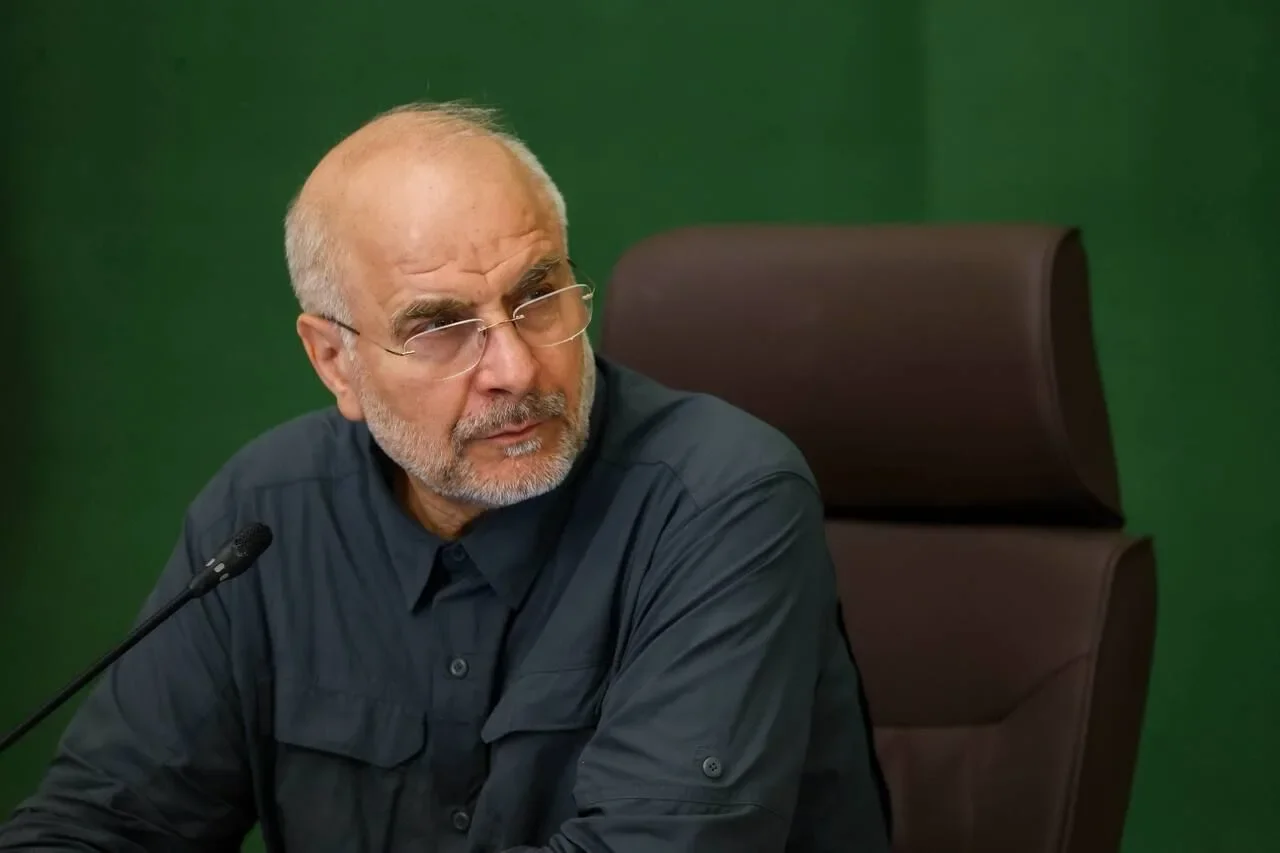
Ghalibaf Warns of 'Blood Profiteers' as Toman Nears 270k; Trump Backs Huang’s Nvidia Return
هشدار قالیباف به «کاسبان خون» همزمان با جهش دلار؛ حمایت ترامپ از بازگشت مدیرعامل برکنار شده انویدیا
Iranian Parliament Speaker Mohammad Bagher Ghalibaf has condemned 'war profiteers' as the Toman slips toward 270,000. Meanwhile, Donald Trump has signaled support for Jensen Huang's return to Nvidia, dismissing intelligence concerns over a potential espionage scandal.
At time of publishing
USD
268,600
Toman
Gold 18K
24.54M
Toman / gram
Bitcoin
$64,846
US Dollar
Tether
269,645
Toman
Ghalibaf Targets 'Blood Profiteers' Amid Escalating Tensions
In a sharp rhetorical turn on Monday, November 16, 2026, Iranian Parliament Speaker Mohammad Bagher Ghalibaf addressed the nation regarding what he termed "false flag" campaigns designed to drag Iran into a direct military conflict. Speaking at a session in Tehran, Ghalibaf claimed that "blood-profiteers" are currently dominating the discourse, attempting to create a climate of regret among those who advocate for avoiding war. While he did not name specific domestic or foreign entities, his comments follow a series of naval incidents in the Strait of Hormuz, where Iranian state media has consistently denied involvement despite mounting international pressure and reports of sea mines.
For the average Iranian citizen, this high-level political posturing is inextricably linked to the value of their savings. The Iranian Toman has felt the weight of this uncertainty, with the USD/IRR exchange rate rising from 266,700 to 268,600 today, a 0.7% increase in just 24 hours. Historically, when high-ranking officials like Ghalibaf begin discussing the inevitability of conflict or the presence of "war-mongers," it signals to the market that diplomatic avenues may be narrowing. This often leads to a rush for hard currency and gold, as evidenced by the 0.2% rise in Emami coins, which hit 251,500,000 Toman per piece this evening.

Trump Intervenes in Nvidia Crisis as Tech Markets Shiver
The global technology sector has been rocked by the sudden resignation of Nvidia CEO Jensen Huang, but a new champion has emerged for the embattled executive: Donald Trump. The US President has publicly backed the "Bring Jensen Back" campaign, contradicting his own intelligence officials who had recently linked Huang’s departure to an alleged affair with a Chinese spy. Trump dismissed these national security concerns, suggesting that Huang had "learned a big lesson" and that his return is vital for American dominance in the AI arms race. This intervention comes as the US Commerce Department moves to further restrict China’s remote access to high-end AI chips, a policy that Trump claims Beijing will tolerate in exchange for broader trade concessions.
However, the market remains unconvinced. The chip sector is currently undergoing a brutal selloff, with AMD and Micron stocks falling as investors worry that Nvidia might scale back its massive financing of the broader AI ecosystem. If Nvidia—the primary engine of the 2024-2026 bull market—is distracted by a leadership vacuum or a messy reinstatement process, the entire tech sector could face a liquidity crunch. For crypto investors, this is particularly relevant; Bitcoin miners who had pivoted to providing AI compute power are now finding their funding plans under scrutiny, as the hardware and capital they rely on are caught in this geopolitical crossfire.

Global Markets and the Shadow of the Shenzhen Summit
As President Trump prepares for his upcoming Asia trip, which includes a high-stakes meeting with Xi Jinping and Vladimir Putin in Shenzhen, the global economy is holding its breath. The agenda is purportedly focused on "de-escalation," but the reality on the ground is one of tightening restrictions and military repositioning. In the Middle East, Saudi Arabia is being challenged by its Yemeni allies for ceding ground to Houthi forces near the strategic Bab al-Mandab strait. This retreat, aimed at protecting the port of Aden, has raised fears that key energy shipping lanes are becoming more vulnerable to disruption, further supporting the current high price of gold, which stands at $3,868.65 per ounce.
---
Ultimately, these disparate events—from Ghalibaf’s warnings in Tehran to the boardroom drama in Silicon Valley—point toward a period of extreme volatility. The Toman’s steady climb toward the 270,000 mark reflects a domestic market that no longer believes in short-term stabilization. Meanwhile, the global shift toward protectionism in the AI sector suggests that the era of borderless tech growth is over. Investors are now forced to navigate a world where a single tweet from the White House or a parliamentary speech in Iran can wipe out billions in market value in a matter of hours.
Frequently Asked Questions
چرا سخنان قالیباف باعث افزایش قیمت دلار شد؟
دلیل حمایت ترامپ از بازگشت جنزن هوانگ به انویدیا چیست؟
آیا ریزش سهام تراشهسازان بر بازار کریپتو تاثیر دارد؟
Understanding Currency Devaluation and Hyperinflation in Iran
When a country's official exchange rate diverges sharply from the rate on the black market, it signals a deep loss of confidence in the national currency. In Iran, the official rate for the Iranian rial (or toman, a unit equal to 10 rials) has been kept artificially high by the government, while the market rate has surged toward 270,000 rials per US dollar. This gap reflects not only monetary policy choices but also the impact of international sanctions, fiscal deficits, and a shortage of foreign currency reserves.
Currency devaluation occurs when a nation deliberately lowers the value of its money relative to foreign currencies, often to boost exports or reduce trade deficits. However, when devaluation is driven by uncontrolled inflation and capital flight, it can spiral into hyperinflation—a situation where prices double in weeks or even days. Iran's inflation rate has hovered above 40% annually, eroding real wages and prompting citizens to seek foreign currency as a store of value, which further fuels the black‑market premium.
The mechanics of a black‑market exchange rate are simple: sellers of foreign currency demand higher prices to compensate for the risk of holding a devalued asset and for the scarcity of hard currency. This creates a feedback loop—higher black‑market rates increase import costs, which push consumer prices up, leading to even more demand for foreign currency. Policymakers attempting to curb the gap may impose strict capital controls, limit access to foreign exchange, or even criminalize “currency profiteering,” as seen in recent statements by Iranian officials warning against “blood profiteers."
Understanding this dynamic is crucial for investors and observers. A widening gap can signal upcoming policy shifts, such as a possible abandonment of the official peg, introduction of a unified exchange rate, or further monetary tightening. It also highlights the broader geopolitical context: sanctions on Iran's oil exports and technology imports limit the inflow of dollars, exacerbating the currency crunch.
For those wanting to dive deeper, the phenomenon of hyperinflation has been studied in other contexts—from the Weimar Republic to Zimbabwe—offering lessons on how fiscal discipline, credible monetary policy, and political stability are essential to restore confidence in a national currency.