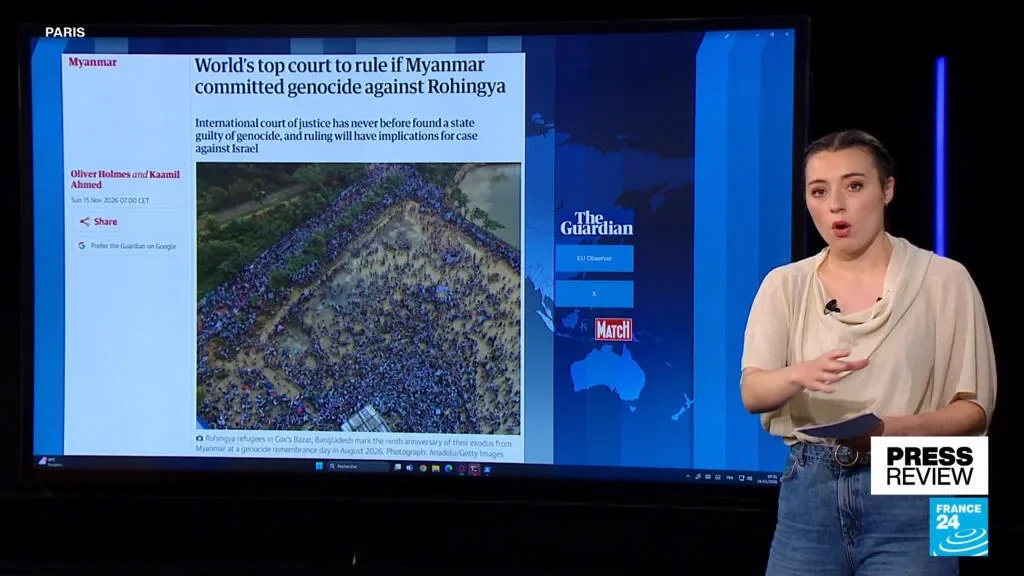
Genocide Verdict Looms for Myanmar as Secret Iranian Missile Sites Masked as Dams Face Global Scrutiny
صدور حکم نسلکشی میانمار و افشای راز موشکی سدهای ایران؛ خیز ۱.۲ درصدی دلار در سایه تنشهای هرمز
A pivotal week for international justice begins with the Myanmar genocide verdict, while new reports suggest Iranian environmental projects were covers for missile silos. Meanwhile, Tehran's currency markets react sharply to renewed naval tensions in the Strait of Hormuz.
At time of publishing
USD
269,900
Toman
Gold 18K
24.60M
Toman / gram
Bitcoin
$64,596
US Dollar
Tether
270,215
Toman
International Justice: The Myanmar Genocide Verdict
This week marks a historic turning point in international law as the global community awaits the final verdict in the genocide case against Myanmar. The case, which centers on the systematic atrocities committed against the Rohingya minority, has been a litmus test for the International Court of Justice's ability to hold sovereign states accountable for human rights violations. For years, the international press and human rights organizations have documented the displacement and targeted violence in the region, and a guilty verdict would set a powerful precedent for other nations facing similar accusations of state-sponsored repression.
The implications of this ruling extend far beyond the borders of Southeast Asia. In a world where geopolitical alliances often shield regimes from scrutiny, a definitive ruling of genocide would signal a shift toward more aggressive judicial intervention. For Iranian readers and observers of international politics, this case is a reminder of how human rights issues can become central to diplomatic and economic isolation. As the verdict looms, global markets are also watching for how this might affect regional stability and trade routes in the East, which remain vital for global energy and commodity flows.

Environmental Cover-ups: The Secret of Iran's Dams
A startling new report has shed light on a long-standing mystery involving Iran’s massive infrastructure projects. For decades, environmentalists and hydrologists have questioned the construction of dozens of dams in areas where there appeared to be no rational ecological or agricultural justification. Many of these experts were silenced or imprisoned by the state for their inquiries. However, recent airstrikes targeting missile infrastructure have revealed a disturbing pattern: these 'ghost dams' were often built as elaborate camouflage for underground missile silos and command centers, effectively using environmental engineering as a shield for military expansion.
This revelation underscores the deep lack of transparency within the Iranian government's domestic policy, where national resources are diverted from critical water management needs to fund clandestine military operations. The discovery that these sites were targeted in recent strikes suggests that international intelligence agencies have long been aware of the deception. For the Iranian public, this means that the severe water crises and environmental degradation seen across the country may not just be a result of mismanagement, but a deliberate byproduct of prioritizing military infrastructure over civilian survival. This news adds a layer of internal instability as the gap between official state narratives and reality continues to widen.
---
Geopolitics: The Manila Summit and the Trump Factor
In the Philippines, Australian Prime Minister Anthony Albanese is preparing for a high-stakes meeting with Donald Trump at the Quad leaders’ summit. Albanese is walking a diplomatic tightrope, attempting to secure American engagement in the Indo-Pacific while advocating for a swift end to the ongoing conflicts involving Iran and Ukraine. Trump’s return to the center stage of global diplomacy, following his recent electoral successes, has injected a sense of urgency and unpredictability into these discussions. The Australian leadership is particularly concerned about the potential for escalating trade wars and how a shifts in U.S. policy might leave regional allies vulnerable to Chinese influence.
The focus on ending the 'Iran and Ukraine wars' suggests that the international community is bracing for a more transactional and direct approach from the U.S. administration. For Iran, this could mean a pivot from the current state of frozen diplomacy to a period of intense pressure or sudden, unpredictable deal-making. As Trump prepares for historic talks with Xi Jinping and Vladimir Putin later this week, the fate of regional security frameworks hangs in the balance. The outcome of these meetings will likely dictate the level of economic and military pressure applied to Tehran in the coming months, influencing everything from oil exports to the stability of the Toman.

Market Reaction: Tensions in the Strait of Hormuz
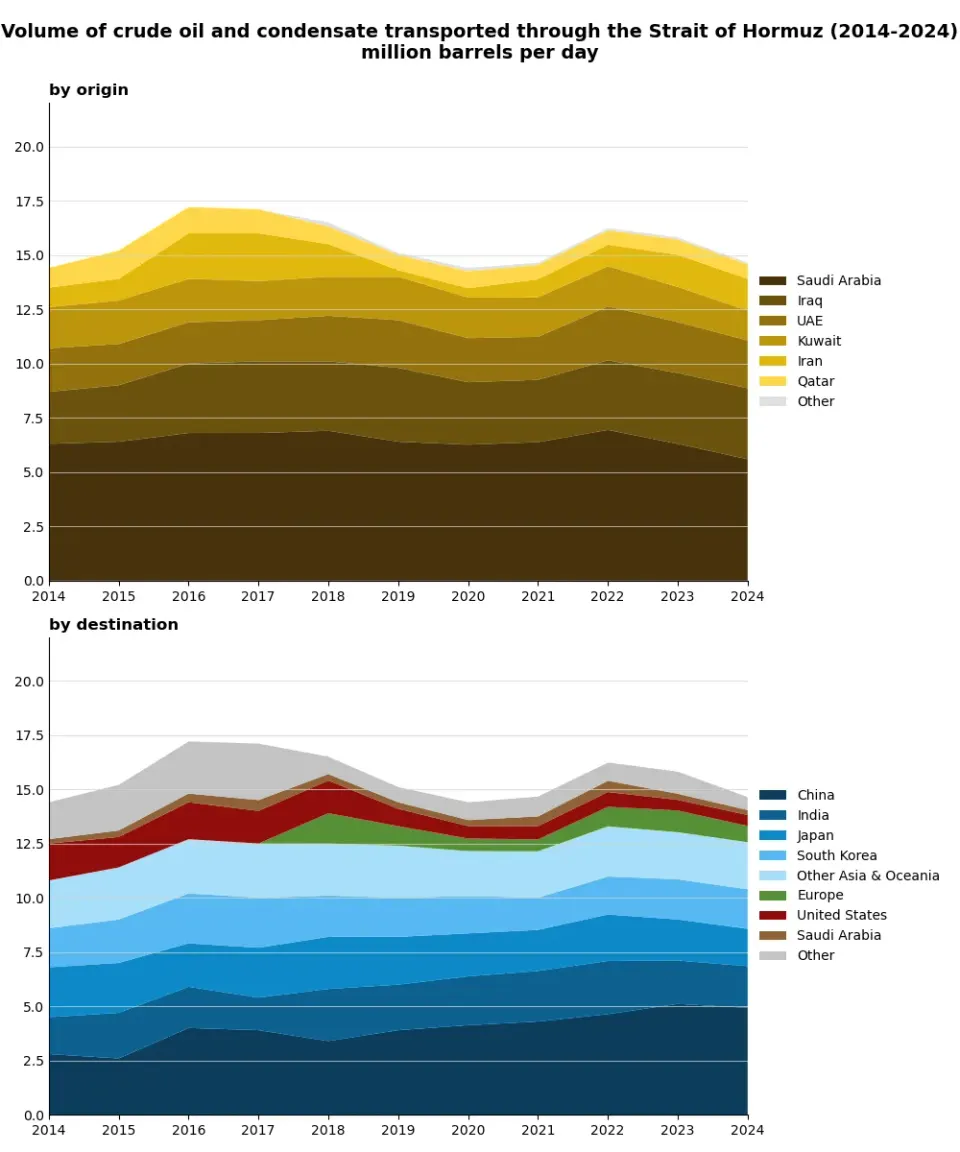
Domestic markets in Iran have reacted with immediate volatility to reports of renewed naval tensions. The Islamic Revolutionary Guard Corps (IRGC) claimed on Monday that two more oil tankers were hit by naval mines in the Strait of Hormuz, alleging that the vessels were attempting to use unauthorized routes under U.S. guidance. While these claims are viewed with skepticism by international observers, the immediate impact on market sentiment was undeniable. The USD/IRR exchange rate rose from 266,700 to 269,900, marking a 1.2% increase in just 24 hours. This move reflects the persistent fear that any disruption in the world's most critical energy chokepoint will lead to further economic isolation for Iran.
Gold and coin markets followed the upward trend of the dollar, though at a slightly more tempered pace. Gold 18k per gram rose from 24,495,590 to 24,597,165 Toman (+0.4%), while the Emami coin similarly increased from 251,000,000 to 252,000,000 Toman (+0.4%). These movements suggest that while investors are hedging against currency devaluation, there is also a cautious eye on global gold prices, which currently sit at $3,865.05 per ounce. The combination of regional military threats and the uncertainty of U.S. foreign policy continues to drive capital toward hard assets, leaving the average Iranian consumer to face the consequences of rising inflation and reduced purchasing power.
Watch
Verdict week in the Myanmar genocide case • FRANCE 24 English
FRANCE 24 English
Frequently Asked Questions
Why are Iranian dams being linked to missile sites?
What caused the 1.2% jump in the USD/IRR rate today?
What is the significance of the Myanmar genocide verdict for Iran?
What is Australia's role in the current Iran-US tension?
Understanding Dual-Use Technology: The Double-Edged Sword of Innovation
Dual-use technology refers to goods, software, and technology that can be used for both peaceful, civilian purposes and military applications. This inherent ambiguity makes them a critical concern in international security and non-proliferation efforts. Examples range from seemingly innocuous items like advanced computing equipment and certain chemicals, to more complex systems such as nuclear power reactors (which can produce fissile material for weapons) and drones (used for commercial delivery or military surveillance and attack). The challenge lies in distinguishing between legitimate civilian development and clandestine military programs, especially when intentions are obscured.
The "missile sites masked as dams" mentioned in the headline perfectly illustrate the complexities surrounding dual-use concerns. While dams are vital infrastructure for water management, power generation, and flood control, their construction can involve extensive underground facilities, large-scale engineering, and strategic locations that could potentially conceal or facilitate military installations, including missile silos or command centers. Such a scenario raises serious questions about transparency, verification, and adherence to international norms, as ostensibly civilian projects could be exploited for strategic military advantage, fueling regional tensions and global scrutiny.
International bodies like the International Atomic Energy Agency (IAEA) and the United Nations grapple with the formidable task of monitoring and regulating dual-use technologies. Their efforts involve establishing safeguards, conducting inspections, and implementing export controls to prevent the diversion of sensitive materials and technologies to illicit military programs. However, the sovereign right of nations to pursue technological development for peaceful purposes must be balanced against the imperative of global security. This delicate balance often leads to diplomatic disputes, sanctions regimes, and ongoing intelligence efforts to ascertain the true nature and intent behind a nation's technological pursuits.
Topics
Related Articles