Shenzhen Summit Redraws Global Power as Letby Case Sparks Legal Crisis and IMF Warns of AI Inflation
نشست شنزن نقشه قدرت جهانی را تغییر داد؛ بحران قضایی در پرونده لتبی و هشدار صندوق پول از تورم هوش مصنوعی
A historic trilateral meeting between Trump, Xi, and Putin in Shenzhen signals a new geopolitical era, while legal bombshells in the UK's Letby case raise questions about expert testimony. Meanwhile, the IMF warns that the AI boom will force interest rates higher, complicating the global economic outlook.
At time of publishing
USD
270,000
Toman
Gold 18K
24.26M
Toman / gram
Bitcoin
$63,724
US Dollar
Tether
271,000
Toman
The Letby Bombshell: A Crisis of Credibility in High-Stakes Justice
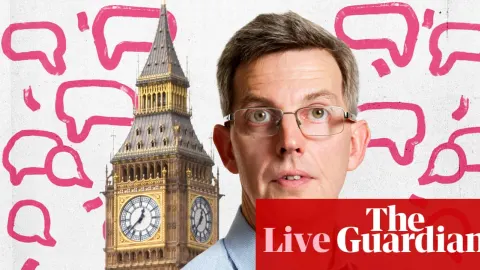
The legal landscape in the United Kingdom has been rocked by a stunning revelation that could dismantle one of the most high-profile criminal convictions in recent history. Lucy Letby’s legal team is now calling for an urgent review of her convictions after it emerged that a primary medical expert for the prosecution, Professor Peter Hindmarsh, had been excluded from clinical practice months before the trial due to safety concerns. This failure to disclose such a critical piece of information raises fundamental questions about the integrity of the judicial process and the reliability of expert testimony that leads to life-without-parole sentences.
For the Iranian public, who often view Western judicial systems through a lens of both scrutiny and comparison, this case serves as a stark reminder that even the most established legal frameworks are susceptible to procedural failures. The "medical certainty" presented during the trial—specifically regarding the alleged insulin poisoning of two infants—now sits on shaky ground. If the core evidence was provided by an expert deemed "unsafe" by his own hospital, the entire narrative of the prosecution faces a legitimacy crisis that transcends borders, reminding us that justice is only as strong as the evidence it admits.

The Shenzhen Triumvirate: A New World Order in the Making
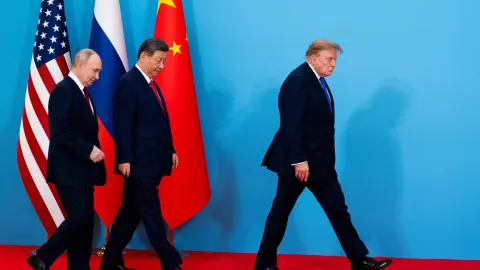
In a scene that would have been unthinkable just years ago, Donald Trump, Vladimir Putin, and Xi Jinping have concluded a historic trilateral meeting at the APEC summit in Shenzhen. President Trump, describing Putin as his "friend," signaled a radical departure from the confrontational rhetoric of the previous decade. The three leaders reportedly discussed international peace and nuclear disarmament, with Chinese state media characterizing the ninety-minute session as a turning point for global stability. This meeting suggests a shift toward a multi-polar world where the traditional alliances of the 20th century are being replaced by pragmatic, leader-driven diplomacy.
This geopolitical realignment has immediate and profound implications for Iran. As the "Big Three" negotiate over nuclear weapons and regional conflicts, Tehran finds itself at a crossroads. Any grand bargain between Washington, Moscow, and Beijing will likely dictate the future of sanctions, oil export quotas, and the survival of regional influence networks. While Trump speaks of "making history," the underlying reality for the Iranian economy is one of heightened uncertainty. If a new global security blueprint is forged without Tehran’s direct input, the pressure on the Iranian government to adapt to this "Shenzhen Consensus" will be immense.
Oil Chokepoints and the IMF’s AI Inflation Warning
The energy markets are reacting swiftly to the ongoing instability in the Persian Gulf. Major commodity trading houses are currently bypassing traditional spot markets to seek long-term crude supply deals with Qatar for 2027. This move is a direct response to the recurring threats and incidents in the Strait of Hormuz, which have made shipping through the chokepoint a high-risk gamble. Traders are essentially "pricing in" a permanent state of regional friction, opting for the relative security of Qatari Marine and Land grades over more volatile routes. This shift is a primary driver behind the 1.4% rise in the USD/IRR rate today, as the market anticipates lower domestic foreign exchange inflows.
Simultaneously, IMF Managing Director Kristalina Georgieva has issued a sobering warning: the global boom in Artificial Intelligence is not just a tech story; it is an inflationary one. The massive demand for AI hardware and the energy required to power data centers are pushing up consumer prices worldwide, which will force central banks to maintain higher interest rates for longer. For the average Iranian, this means a "double squeeze." Locally, the Toman is devaluing against a strengthening dollar—with USD selling prices rising from 266,300 to 270,000 (+1.4%)—while globally, the cost of imported technology and goods remains elevated due to AI-driven inflation. The message from the IMF is clear: "You snooze, you lose," and for developing economies, the cost of losing this race is becoming prohibitively expensive.
Frequently Asked Questions
چرا قیمت دلار افزایش یافت اما طلا ارزان شد؟
افشای جدید در پرونده لوسی لتبی چیست؟
نشست شنزن چه تاثیری بر ایران دارد؟
چرا هوش مصنوعی باعث افزایش نرخ بهره میشود؟
Understanding the Multipolar World Order
The concept of a "multipolar world order" is crucial for understanding contemporary global dynamics, particularly when events like the hypothetical Shenzhen Summit involving leaders such as Trump, Putin, and Xi are discussed. In a multipolar system, international power is distributed among three or more major states or blocs, each possessing significant military, economic, and diplomatic influence. This contrasts sharply with a unipolar world, where one superpower dominates (like the U.S. after the Cold War), or a bipolar world, where two dominant powers contend (like the U.S. and Soviet Union during the Cold War). The shift towards multipolarity signifies a redistribution of global influence, where no single nation or alliance can unilaterally dictate international affairs.
This emerging order is characterized by increased competition and shifting alliances as major powers vie for influence, resources, and technological advantage. The rise of economic powerhouses like China, the resurgence of Russia on the geopolitical stage, and the continued influence of established powers like the United States and the European Union are key drivers. Strategic regions and resources, such as crude oil deals involving nations like Qatar or the security of vital shipping lanes like the Strait of Hormuz, become focal points of this competition. Nations strategically align or compete to secure their economic interests and enhance their geopolitical standing, leading to a more complex and often less predictable international landscape.
The implications of a multipolar world are profound. It often leads to a more complex web of international relations, where issues like trade, technology, and regional conflicts are negotiated through various power centers. While it can foster greater resilience by diversifying global leadership, it also carries risks of increased instability, proxy conflicts, and challenges to existing international norms and institutions. For instance, discussions around AI's economic impact or the stability of currency exchange rates (like USD/IRR) become intertwined with the strategic objectives of these multiple poles, making economic policy a tool in broader geopolitical competition.
Understanding this framework helps explain why summits involving multiple major leaders are so significant—they are critical arenas where the contours of this evolving global power structure are debated, negotiated, and ultimately, redrawn. These gatherings are not just about specific agreements; they are about signaling intentions, building leverage, and shaping the future balance of power in an increasingly interconnected yet fragmented world.
Topics
Related Articles