Google Gemini Seizes Control of Mac Desktops as USD Pierces 270k Barrier Amid Global Market Rotations
تسلط هوش مصنوعی گوگل بر سیستمعامل مک همزمان با عبور دلار از مرز ۲۷۰ هزار تومان در بازارهای داخلی
Google has launched a transformative update allowing Gemini to act as a computer agent on macOS, while the Iranian Toman faces new pressure as the US Dollar officially crosses the 270,000 mark. Meanwhile, legendary investor Stanley Druckenmiller signals a massive shift in AI investment strategy away from hardware toward application sectors.
At time of publishing
USD
270,700
Toman
Gold 18K
24.23M
Toman / gram
Bitcoin
$62,930
US Dollar
Tether
271,530
Toman
Gemini Evolution: From Chatbot to Computer Agent
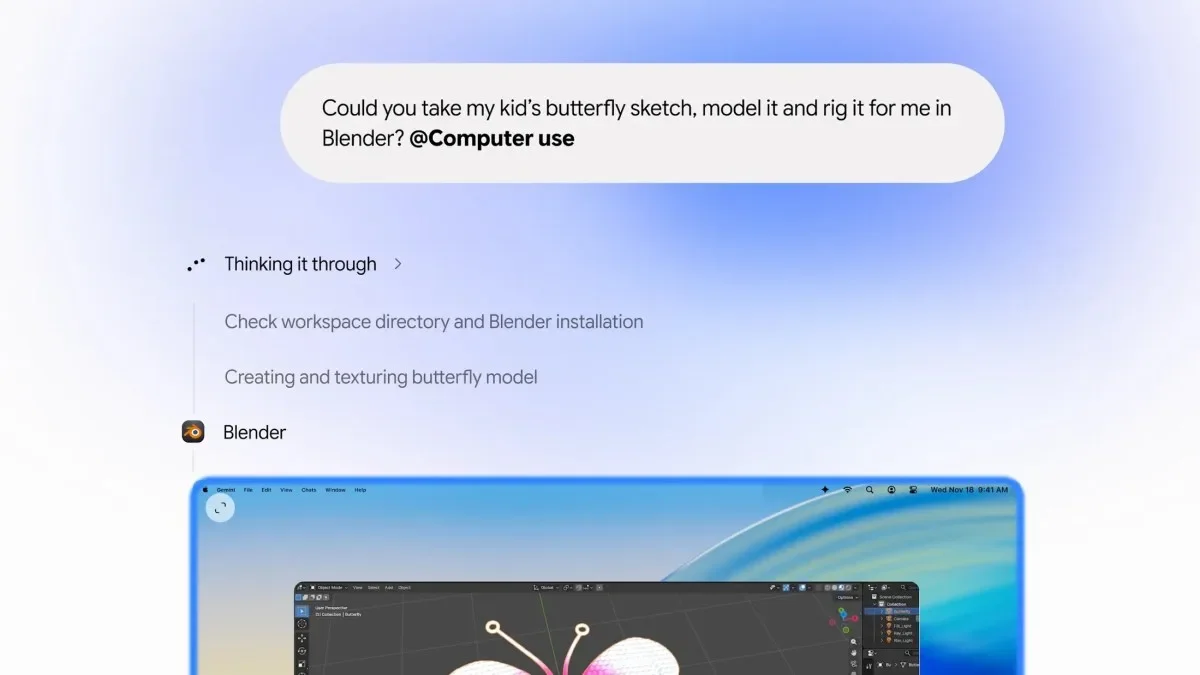
In a move that fundamentally alters the competitive landscape of personal computing, Google has updated its Gemini AI to include 'computer use' capabilities on macOS. This transition marks the shift from large language models that simply generate text to 'AI agents' that can interact with a user's local environment. Gemini can now navigate files, fill out complex forms, and execute multi-step workflows across desktop applications and the web. By giving the AI the ability to 'see' and 'act' within the operating system, Google is effectively leapfrogging Apple's own staggered rollout of Apple Intelligence features, positioning itself as the primary productivity layer for Mac users.
This development is significant because it addresses the 'integration gap' that has plagued generative AI since its inception. Until now, users had to copy and paste data between AI windows and their professional tools. With this update, the AI becomes a co-pilot that understands the context of a user's entire desktop. For businesses, this means a potential surge in white-collar productivity, but it also raises profound questions about data privacy and the security of allowing a third-party cloud AI to monitor and manipulate local files. As Gemini begins to handle tasks like making presentations or listing items for sale autonomously, the boundary between human intent and machine execution continues to blur.
Market Rotations: UnitedHealth Plunges and AI's New Frontier
While tech enthusiasts focus on AI agents, Wall Street is grappling with a violent rotation in market leadership. UnitedHealth Group, a heavyweight in the Dow Jones Industrial Average, has seen its stock plunge by 20% over the last five trading days. This collapse follows aggressive signals from the US government regarding a crackdown on Medicare Advantage fraud. The regulatory pressure on one of the world's largest healthcare insurers is creating a ripple effect, forcing institutional investors to re-evaluate the 'safe-haven' status of managed care stocks. This volatility highlights how regulatory shifts can be just as disruptive as technological breakthroughs in the current economic climate.
Simultaneously, legendary investor Stanley Druckenmiller is urging a pivot away from the traditional 'AI trade.' While the market has been obsessed with data centers and chipmakers like Nvidia, Druckenmiller argues that the next great winners are hiding in sectors that apply AI rather than those that build its infrastructure. He identifies four specific sectors—including healthcare and logistics—where the application of AI could yield massive efficiency gains. This sentiment is echoed in the market's response to the Anthropic IPO; while the debut was historic, the subsequent dip in share price below $100 suggests that investors are becoming more discerning about valuations and seeking tangible returns on AI spending.
[IMAGE: financial trading floor with multiple screens showing red stock tickers for UnitedHealth and green indicators for emerging AI sectors]
Geopolitical Tensions and the 270,000 Toman Dollar
In the Iranian domestic market, the currency has reached a significant psychological and economic milestone. The US Dollar rose from 266,300 to 270,700 Toman, a 1.7% increase that reflects deepening concerns over regional stability and the outcome of the Shenzhen Summit. Interestingly, while the dollar surged, gold prices showed a slight decoupling; 18k gold fell from 24,470,197 to 24,232,420 Toman (-1.0%), and the Emami coin dropped 0.4% to 250,000,000 Toman. This divergence suggests that while currency risk is high, global gold price movements (with the ounce at $3,681.72) are currently offsetting some of the domestic inflationary pressure.
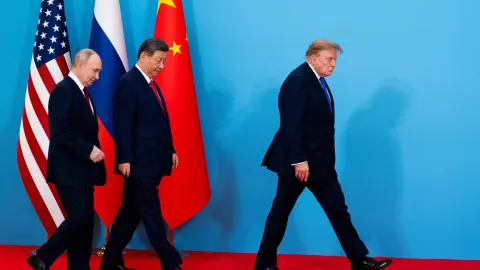
On the global stage, the aftermath of the meeting between Trump, Xi, and Putin in Shenzhen has left European allies in a state of high anxiety. The 'peace declaration' issued after the summit notably omitted any mention of Ukraine or European security, focusing instead on 'strategic stability' between the three superpowers. This 'Yalta format' approach—where major powers decide the fate of smaller nations without their presence—has sparked warnings from Berlin and other European capitals. As the US, China, and Russia vow to increase oil supply to stabilize prices, the geopolitical map is being redrawn in a way that suggests a shift toward a tri-polar world order, leaving traditional alliances in a precarious position.

Frequently Asked Questions
How does Gemini's 'computer use' feature work on Mac?
Why did UnitedHealth stock drop so significantly?
Why is the Toman falling despite gold prices dropping in Iran?
Understanding AI Agents: Autonomous Software in the Age of Large Language Models
Artificial Intelligence (AI) agents are software entities that perceive their environment, make decisions, and take actions to achieve specific goals. Unlike traditional programs that follow static, pre‑written instructions, AI agents combine perception (often via natural‑language input or sensor data) with reasoning mechanisms such as reinforcement learning, planning, or large language model (LLM) inference. This enables them to adapt to new situations, learn from feedback, and operate with a degree of autonomy that resembles human decision‑making.
The recent wave of "foundation models"—massive LLMs like Google Gemini, OpenAI’s GPT‑4, and Anthropic’s Claude—has dramatically expanded what AI agents can do. By plugging a language model into a loop that includes tool use (e.g., browsing the web, executing code, or controlling a desktop application), developers can create agents that write emails, schedule meetings, or even debug software without direct human supervision. Google’s Gemini integration on macOS, for example, lets a user ask the system to draft a document, fetch data, or manipulate files, turning the entire desktop into an interactive, conversational interface.
From an economic perspective, AI agents are reshaping investment strategies. Prominent investors such as Stanley Druckenmiller have highlighted AI‑driven sectors as a new frontier for capital allocation, noting that autonomous agents can process vast amounts of market data faster than any human analyst. This has contributed to heightened interest in AI‑centric IPOs like Anthropic and has amplified volatility in related stocks, including UnitedHealth, whose recent crash was partially blamed on algorithmic trading spikes.
However, the rise of autonomous agents also raises governance and safety challenges. Because agents can act without explicit human oversight, they may inadvertently execute harmful commands, spread misinformation, or amplify market manipulation. Researchers therefore emphasize the need for robust alignment techniques—methods that ensure an agent’s objectives stay consistent with human values—and for transparent monitoring frameworks that can intervene when an agent behaves unexpectedly.
In practice, everyday users will increasingly encounter AI agents across devices, from smartphones to laptops, and even in specialized tools for finance, healthcare, and creative work. Understanding how these agents function, their potential benefits, and the safeguards required to keep them trustworthy is essential for anyone navigating the AI‑infused future.
Topics
Related Articles