Anthropic's Trillion-Dollar Debut: AI Tests Market Faith as Iran Boosts Air Defense & Bitcoin Expands DeFi
ورود ۱.۵ تریلیون دلاری انتروپیک: هوش مصنوعی ایمان بازار را میآزماید؛ ایران پدافند هوایی را تقویت میکند و بیتکوین دیفای را گسترش میدهد
The AI sector reached new heights as Anthropic debuted on Nasdaq with a $1.5 trillion valuation, setting a record for IPOs and challenging market confidence. Meanwhile, Iran declared a significant upgrade in its air defense capabilities amidst a standoff on nuclear inspections, while the Australian music industry rejected a divisive AI scraping proposal. Bitcoin's utility in DeFi also expanded with the launch of the Hashi protocol on Sui mainnet.
At time of publishing
USD
270,000
Toman
Gold 18K
24.24M
Toman / gram
Bitcoin
$63,897
US Dollar
Tether
270,040
Toman
Australian Music Industry Rejects AI 'Divide and Conquer' Deal
The Australian music industry, spearheaded by figures like the Aria CEO, has firmly rejected a controversial proposal that sought to grant musicians a special exemption from AI scraping while leaving other creative sectors exposed. This "divide and conquer strategy," as it was described by Senator David Pocock, aimed to allow artificial intelligence companies to train on Australian data if they acquired a specific permit, but controversially, this privilege was initially proposed only for musicians, not for writers, visual artists, or other creative professionals. The industry's unified stance underscores a broader concern that such a segmented approach would severely weaken the collective bargaining power of creators against increasingly dominant big tech firms.
This rejection highlights a critical global debate on intellectual property rights in the age of generative AI. The proposed deal, which was also strongly rebuffed by the Coalition and Greens, would have created a dangerous precedent, potentially fragmenting the creative community and making it easier for AI developers to exploit copyrighted material without comprehensive compensation. For Iranian creatives and businesses navigating the digital economy, this development is highly relevant; it illuminates the intense international struggle to define fair use, intellectual property protection, and equitable compensation in an era where AI can rapidly consume and repurpose vast amounts of human-generated content.
The Australian music industry's decision to stand united with other creative sectors sends a powerful message: the challenge of AI scraping requires a holistic, industry-wide solution, not piecemeal agreements that could undermine the rights of certain groups. This principled stand could influence future international norms and local policy discussions on data rights, AI ethics, and copyright enforcement, demonstrating the growing tension between rapid technological advancement and the fundamental principles of creative ownership. It emphasizes that the economic implications for content creators worldwide are substantial, and a coordinated approach is crucial for safeguarding their livelihoods.
Anthropic's Record-Breaking IPO Tests AI Market Faith
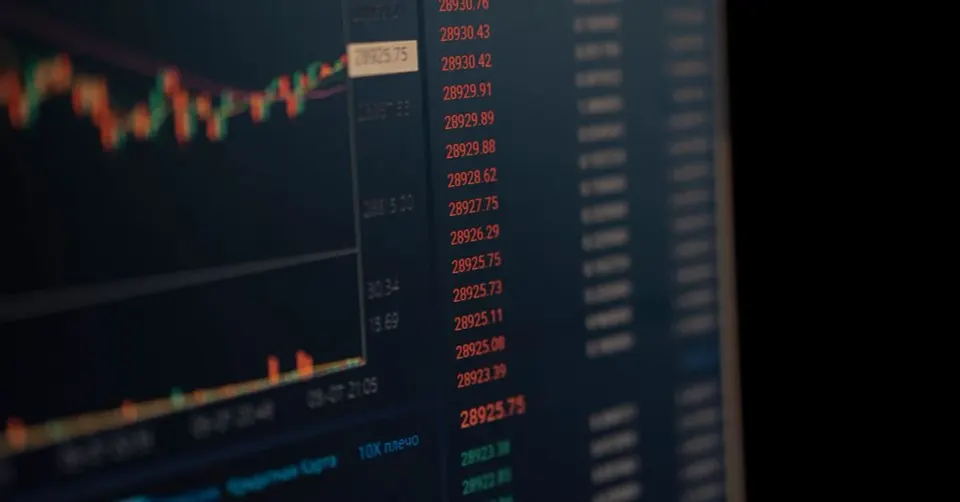
Artificial intelligence giant Anthropic has officially begun trading on the Nasdaq, marking a monumental moment for the tech industry. The company priced its initial public offering (IPO) at $83 per share, catapulting its valuation to an astonishing $1.5 trillion and, in doing so, surpassing SpaceX to become the largest initial public offering on record. This unprecedented valuation reflects an intense investor appetite for AI technologies, seen by many as the next frontier for economic growth and innovation, yet it simultaneously ignites a crucial debate about the sustainability of such rapid market expansion.
This IPO serves as a significant litmus test for Wall Street's fervent belief in the burgeoning AI boom. Investors are now actively weighing the technology's immense promise as an economic game-changer against growing concerns of a potential market bubble and the inherent, widely discussed risks that AI poses to humanity and societal structures. Anthropic itself was founded on principles of AI safety and ethical development, and its public debut now presents the complex challenge of balancing these foundational commitments with the relentless pressures of market performance and escalating investor expectations for rapid returns.
For investors in Iran and across the broader region, Anthropic's valuation sends a powerful, albeit cautious, signal about the perceived future value of artificial intelligence. It reinforces the narrative of AI as a transformative sector, potentially drawing more attention to tech investments and the underlying digital infrastructure required to support advanced AI development. However, the sheer scale of the valuation also raises pertinent questions about market sustainability and the potential for overvaluation, urging a degree of caution even amidst significant growth opportunities. In parallel, local market dynamics show the USD/IRR exchange rate moved from 266,300 to 270,000 (+1.4%), indicating a weakening of the Toman, influenced by both global financial currents and domestic economic pressures. Meanwhile, Gold 18k/gram experienced a slight decline from 24,470,197 to 24,239,346 (-0.9%), and the Emami coin also saw a minor decrease from 251,000,000 to 250,000,000 (-0.4%), suggesting a complex interplay of investor sentiment, possibly influenced by the allure of global tech or local economic factors.
Iran Bolsters Air Defense Amid Nuclear Inspection Standoff
The spokesperson for the Islamic Revolution Guard Corps (IRGC) has announced a "significant upgrade" in Iran’s air defense capabilities, asserting that all previously identified defensive gaps have been comprehensively addressed. This declaration serves as a clear message of enhanced military readiness and deterrence, coming at a time of persistent international scrutiny over Iran's military and nuclear ambitions. The statement aims to project an image of self-sufficiency and robust defense against any perceived external threats, reinforcing the country's strategic posture in a volatile region.
Concurrently with this military pronouncement, Iran’s Ambassador and Permanent Representative to International Organizations in Vienna has reiterated Tehran's steadfast position: the country will not submit to "unrestricted inspections" by the International Atomic Energy Agency (IAEA) as long as it faces continued military threats. This stance explicitly links any future requests for inspection access to Iran's national security considerations, indicating that transparency will remain conditional. This hardline approach suggests a deepening entrenchment in Iran's strategy regarding international oversight of its nuclear program, prioritizing perceived security interests above full compliance with international demands.
These dual pronouncements collectively signal Iran's unwavering resolve to both enhance its military posture and maintain strict control over its sensitive nuclear program, actions that are highly likely to exacerbate existing tensions with Western powers and international bodies. For Iranian citizens and the broader regional economy, such rhetoric can contribute to heightened uncertainty and geopolitical risk, potentially impacting foreign investment, trade relations, and the stability of domestic markets. It also implies that prospects for a swift diplomatic breakthrough on the nuclear issue remain dim, with Iran consistently prioritizing its national security perceptions, which could lead to further international isolation or the imposition of additional sanctions.

Bitcoin Finance Protocol Hashi Launches on Sui Mainnet
Hashi, an innovative new Bitcoin finance protocol, has officially gone live on the Sui mainnet, marking a significant step in expanding Bitcoin's utility across decentralized finance (DeFi). This crucial development now enables the seamless processing of Bitcoin deposits on the Sui blockchain, with the introduction of wrapped Bitcoin (hBTC) designed for integration into various DeFi applications. Early use cases for hBTC include facilitating Fluid loans and powering HoneyB vaults on the Upshift platform, demonstrating the immediate practical applications of this cross-chain bridge.
The strategic launch of Hashi on Sui is driven by a clear objective: to bridge Bitcoin's immense liquidity and expansive user base with the high-throughput, low-latency environment that the Sui blockchain offers. By effectively integrating Bitcoin into the Sui ecosystem, developers are aiming to transcend Bitcoin's traditional role as merely a store of value, unlocking its potential for more complex and dynamic financial operations. This initiative significantly increases interoperability within the broader DeFi space, aligning with a larger industry trend to leverage Bitcoin's foundational value on more agile smart contract platforms.
For the global crypto community, this represents a substantial leap towards greater cross-chain functionality and the proliferation of sophisticated Bitcoin-backed financial products. Iranian crypto investors, who frequently turn to digital assets as a critical hedge against economic instability and currency fluctuations, could find new and expanded avenues for leveraging their existing Bitcoin holdings. This could potentially translate into access to a more diverse array of lending, borrowing, and yield-generating opportunities within a rapidly evolving DeFi landscape. The launch of Hashi signifies a maturation of the DeFi sector, offering more sophisticated tools but also inherently requiring users to possess a thorough understanding of the associated risks involved in bridging and utilizing assets across disparate blockchain networks.
Frequently Asked Questions
What is the significance of Anthropic's $1.5 trillion IPO?
Why did the Australian music industry reject the AI scraping proposal?
What is Iran's current stance on nuclear inspections by the IAEA?
How does the Hashi protocol launch impact Bitcoin's role in DeFi?
What were the key market movements in Iran today?
Understanding Market Bubbles in the Age of AI
A market bubble occurs when the price of an asset or asset class inflates rapidly and excessively, far beyond its intrinsic or fundamental value. This surge is typically driven by speculative buying, investor euphoria, and the "fear of missing out" (FOMO), rather than underlying economic fundamentals. Historically, we've seen this phenomenon in various forms, from the 17th-century Dutch Tulip Mania to the late 1990s Dot-com bubble, where internet companies with little to no profit were valued at astronomical figures. The core characteristic is a self-reinforcing cycle where rising prices attract more buyers, pushing prices even higher until the bubble becomes unsustainable.
New and transformative technologies like Artificial Intelligence are particularly susceptible to market bubbles. The immense potential for disruption and growth can lead investors to project future earnings far into the stratosphere, often overlooking current profitability or realistic adoption timelines. When a company like Anthropic, a prominent AI startup, is mentioned in the context of a "trillion-dollar debut" or "AI market valuation," it signals a period where market enthusiasm for AI might be outpacing a sober assessment of immediate returns. This isn't to say the technology isn't valuable, but rather that the market's collective "faith" can drive valuations to extraordinary, and potentially precarious, levels.
The lifecycle of a market bubble typically involves several stages: displacement (a new paradigm like AI emerges), boom (prices rise, attracting attention), euphoria (speculation dominates, rational analysis diminishes), and finally, bust (prices collapse as investors realize assets are overvalued, leading to panic selling). While the bursting of a bubble can cause significant financial losses and economic disruption, it also often clears the market of unsustainable ventures, allowing more robust and genuinely innovative companies to thrive in the long run. Understanding this cycle is crucial for investors and observers alike to navigate the volatile landscape of emerging technologies.
Topics
Related Articles