Anthropic’s $81B IPO Fails to Halt AI Sell-off as Tehran Warns Bahrain; Oil Sinks Amid Hormuz Tensions
عرضه اولیه ۸۱ میلیارد دلاری آنتروپیک و سقوط سهام هوش مصنوعی؛ هشدار ولایتی به بحرین و تنش در هرمز
Anthropic's record-breaking IPO failed to stop a global slide in AI stocks as Bitcoin dipped below $62,000. Meanwhile, Tehran issued sharp warnings to Bahrain, and the US intensified its maritime blockade against Iranian ship-to-ship transfers.
At time of publishing
USD
272,500
Toman
Gold 18K
23.63M
Toman / gram
Bitcoin
$61,510
US Dollar
Tether
274,973
Toman
The Geopolitics of Instability: Tehran’s Warning to Bahrain
Ali-Akbar Velayati, a senior adviser to the Leader of the Islamic Revolution, has issued a stern warning to Bahraini authorities regarding their ongoing crackdown on clerics and civil activists. Velayati emphasized that these repressive measures would only serve to "deepen the gap between the state and society," suggesting that the Manama government is isolating itself from its own populace. This statement comes at a time of heightened regional sensitivity, as Tehran continues to position itself as a defender of Shia clerical movements across the Persian Gulf, often leading to diplomatic friction with its neighbors.
Simultaneously, the Commander-in-Chief of the Islamic Revolution Guards Corps (IRGC) declared that while Iran has passed a "major part of the battle against enemies," significant challenges remain. This rhetoric suggests a continued commitment to regional posturing despite the economic pressures of sanctions. For the average Iranian reader, these developments signal that the geopolitical risk premium is unlikely to fade soon. Such tensions often act as a floor for the US dollar's value in the domestic market, as political uncertainty drives investors toward hard currency as a hedge against potential escalation.

Maritime Blockade and the Paradox of Falling Oil Prices
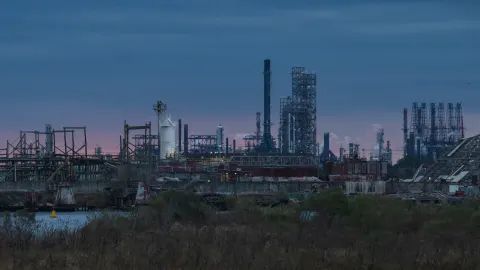
The maritime theater in the Persian Gulf is becoming increasingly kinetic. U.S. Central Command (CENTCOM) has officially declared its intent to target Iranian ship-to-ship transfers, warning that vessels bypassing the current blockade could be stopped, boarded, or seized. This escalation coincides with reports that Iran has intensified its own activities in the Strait of Hormuz, with tanker attacks reaching their highest frequency since earlier this year. The tactical goal of the US appears to be the total strangulation of Iran's remaining oil export routes, which rely heavily on mid-sea transfers to obscure the origin of the crude.
Despite these supply-side threats, global oil prices are actually sliding. WTI crude fell more than 5% this week as fears of a global supply glut outweigh the risk of Middle Eastern disruptions. Traders are currently prioritizing the build-up in U.S. inventories and recovering regional flows over the threat of localized conflict. For Iran, this is a double blow: the physical difficulty of exporting oil is increasing just as the global price per barrel is shrinking, putting further strain on a national budget already struggling with high inflation and a volatile currency.
The AI Bubble and the Global Markets Rout
In the financial world, the long-awaited Anthropic IPO finally arrived, raising a staggering $81 billion and becoming the largest debut in history. However, the success of the company behind the Claude AI model failed to stop a broader sell-off in the technology sector. Global markets slumped as investors used the record-breaking IPO as an opportunity to take profits and exit AI-linked positions. This "sell the news" event suggests that the market's appetite for AI growth has reached a saturation point, at least in the short term, as macroeconomic concerns take center stage.
This risk-averse sentiment has spilled over into the cryptocurrency market. Bitcoin (BTC) dropped below the $62,000 mark, currently trading at $61,510, as US spot Bitcoin ETFs saw massive daily net outflows of $582 million. Rising Treasury yields and bets on further Federal Reserve rate hikes are weighing heavily on risk assets. In Tehran, the USD sell rate rose from 270,700 to 272,500 Toman (+0.7%), while gold 18k prices fell by 2.5% to 23,627,591 Toman per gram. The drop in gold is largely a reflection of the global ounce price falling, even as the local dollar strengthens, creating a complex environment for domestic savers.
Frequently Asked Questions
چرا با وجود تنش در تنگه هرمز، قیمت نفت کاهش یافته است؟
دلیل سقوط بیتکوین به زیر ۶۲ هزار دلار چیست؟
چرا قیمت طلا در ایران با وجود افزایش قیمت دلار، کاهش یافت؟
The Strait of Hormuz: A Global Chokepoint for Energy and Geopolitics
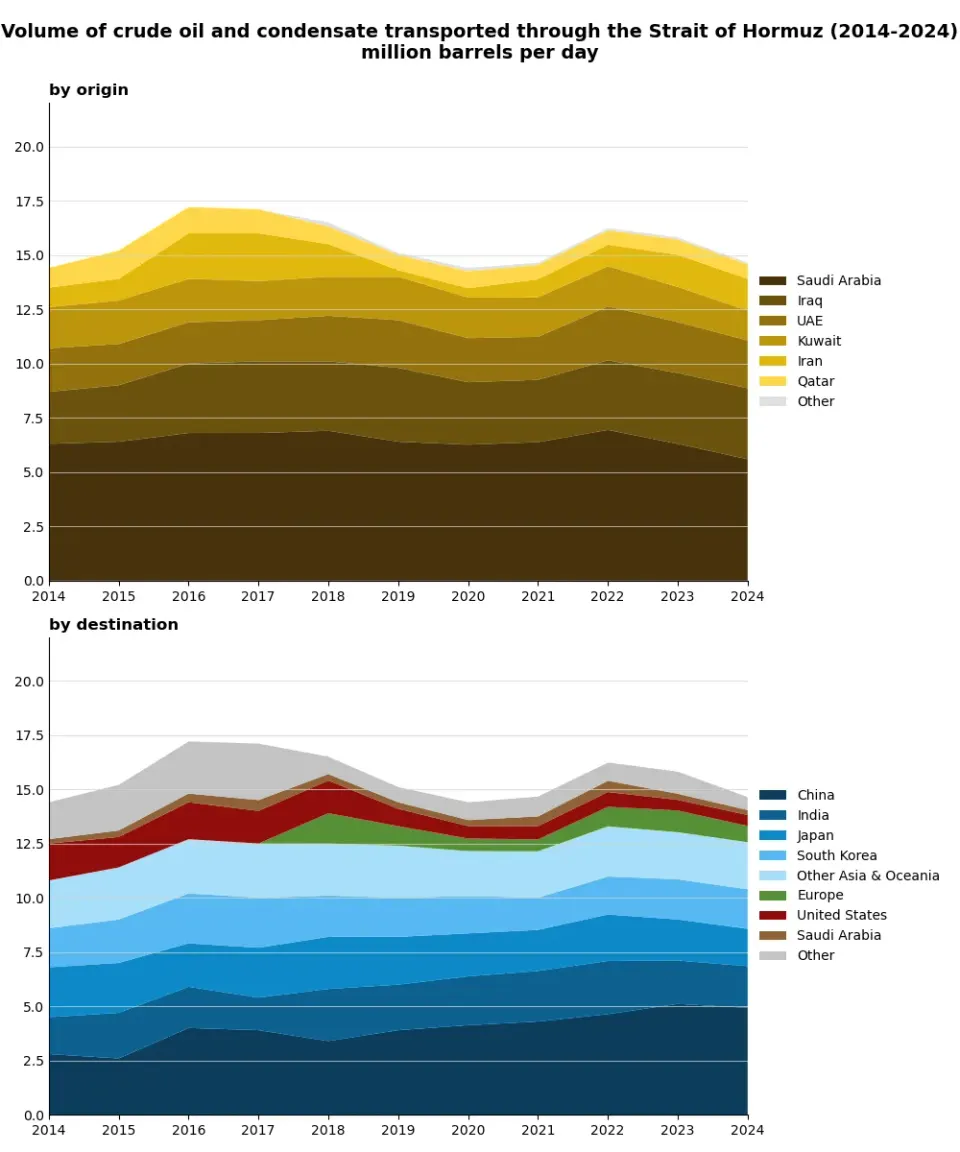
The Strait of Hormuz is one of the world's most strategically important waterways, connecting the Persian Gulf to the open ocean. This narrow passage, approximately 21 miles (34 km) wide at its narrowest point, is bordered by Iran to the north and Oman's Musandam Governorate to the south. Its geographical significance cannot be overstated, as it serves as the sole maritime passage for vast quantities of crude oil and liquefied natural gas (LNG) from major producers in the Middle East to markets worldwide.
Economically, the Strait is an indispensable artery for global energy supply. A significant portion of the world's seaborne oil and a substantial volume of LNG transit through this chokepoint daily. Any disruption, even the threat of one, can send immediate ripples through international energy markets, leading to volatile oil prices as traders anticipate supply shortages or increased shipping costs. The recent headlines linking "Hormuz Tensions" to "Oil Sinks" highlight this direct causal relationship, where geopolitical instability in this region directly translates into market uncertainty and price fluctuations.
Geopolitically, the Strait of Hormuz is a focal point for regional and international powers. Its control, or the ability to disrupt traffic, provides immense leverage in international relations. Warnings from nations like Iran, or discussions of maritime blockades, are not merely rhetorical; they underscore the potential for significant economic fallout globally. Understanding the Strait of Hormuz is crucial for comprehending why events in the Middle East often have far-reaching implications for global economic stability, energy security, and even broader geopolitical alignments.
Topics
Related Articles