French Police Brutality Verdict Looms as BofA Warns of Wall Street 'Doom Loop'
انتظار برای حکم تاریخی دادگاه پلیس فرانسه؛ هشدار «حلقه مرگ» در بازارهای جهانی
France awaits a landmark verdict in the Michel Zecler police brutality case, while a Bank of America strategist warns of a potential 'doom loop' hitting stocks. In Tehran, the US Dollar edged up to 273,200 Toman as gold prices saw a sharp correction.
At time of publishing
USD
273,200
Toman
Gold 18K
23.56M
Toman / gram
Bitcoin
$61,316
US Dollar
Tether
274,621
Toman
Landmark Verdict Awaited in French Police Brutality Trial
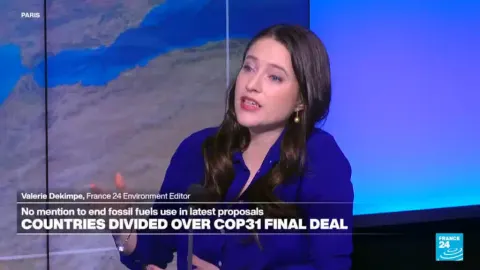
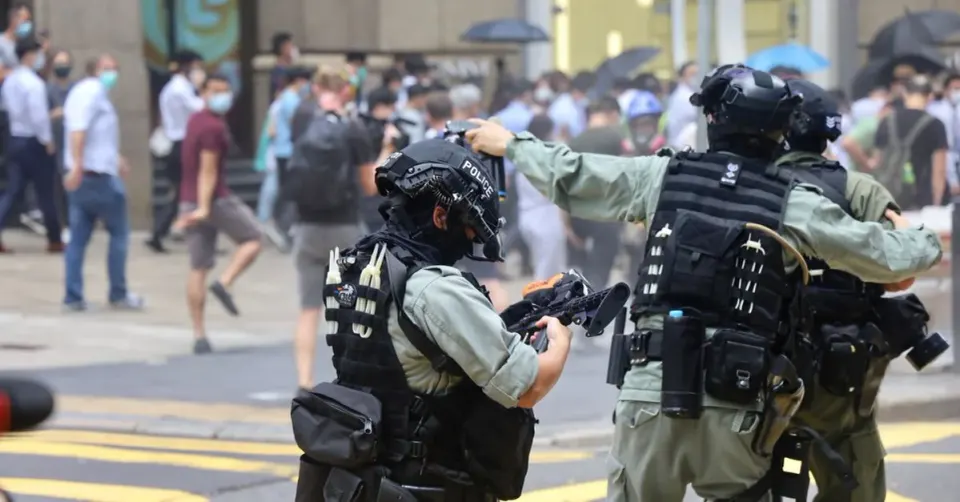
France is standing at a pivotal moment in its judicial history as a court prepares to deliver a verdict in the landmark trial of three police officers accused of assaulting Michel Zecler, a Black music producer. The incident, which occurred in late 2020, was captured on security cameras and sparked nationwide protests against systemic racism and law enforcement violence. A French prosecutor has urged the court to sentence the officers to four to six years in prison, arguing that their actions not only caused immense physical and psychological harm to Zecler but also betrayed the uniform and the social contract between the state and its citizens.
This case is exceptionally rare in France, where allegations of police brutality are often dismissed as isolated incidents by government officials and powerful police unions. However, the graphic nature of the video evidence made it impossible for the authorities to ignore. For the public, the verdict represents more than just a judgment on three individuals; it is seen as a test of whether the French legal system is capable of holding law enforcement accountable for systemic failures. The outcome will likely dictate the future of police reform debates across Europe, as neighboring nations grapple with similar issues of racial profiling and excessive force.
BofA Warns of 'Doom Loop' as Tehran Markets React
In the financial world, a stark warning from a Bank of America strategist has sent ripples through global markets. The strategist cautioned that Wall Street is significantly underpricing the risk of a "hard landing" for the U.S. economy, potentially triggering a "doom loop" for stocks. This scenario suggests that as economic data weakens, the realization of a recession could lead to a rapid sell-off in risky assets, including the S&P 500, which has been hovering near record highs despite mounting inflationary pressures and high interest rates. Investors are being advised to remain cautious and wait for clearer signs of economic stability before increasing their exposure to volatile equities.
Closer to home, the Iranian market reflected a mix of global anxiety and local demand during the afternoon session on Friday, November 20, 2026. The US Dollar saw a moderate increase, moving from 270,700 to 273,200 Toman, marking a 0.9% rise over the last 24 hours. Conversely, the gold market experienced a notable correction. Gold 18k per gram dropped from 24,232,420 to 23,558,336 Toman, a significant decline of 2.8%. This volatility in gold, despite the rise in the dollar, suggests a shift in local sentiment or perhaps a reaction to the global gold ounce price, which currently sits at $3,559.30. For local savers, the divergence between the dollar and gold highlights the complexity of preserving capital in a high-inflation environment.

Geopolitical Posturing: Shenzhen Summits and IRGC Rhetoric
On the geopolitical front, senior Iranian officials are projecting a sense of diplomatic triumph following a trilateral summit in Shenzhen involving China and Russia. Mohammad Mokhber, a senior adviser to the Leader of the Islamic Revolution, claimed that the summit demonstrated that the United States is no longer capable of forging a global alliance against Iran. According to Mokhber, the shifting power dynamics in Asia and the strengthening of the Moscow-Beijing-Tehran axis have effectively neutralized Western efforts to isolate the Iranian economy. While these statements are intended to project domestic strength, they also signal a deeper strategic pivot toward Eastern powers as nuclear negotiations remain stalled.
Simultaneously, the Commander-in-Chief of the Islamic Revolutionary Guard Corps (IRGC) provided a more sober yet defiant assessment of the country's security situation. He stated that while Iran has passed a "major part" of its battle against external enemies, significant challenges still lie ahead. This rhetoric often serves as a precursor to increased military spending or internal security crackdowns, framed as necessary measures for national defense. For the average Iranian citizen, this high-level posturing translates into a continued climate of geopolitical tension, which directly impacts foreign investment prospects and the long-term stability of the Toman. The narrative of "victory" over sanctions contrasts sharply with the daily reality of rising costs and restricted access to global financial networks.

UK and EU Reach Fragile 'Reset' Agreement
In a development that could reshape European trade, the United Kingdom and the European Union have reportedly reached a preliminary "reset" deal aimed at easing post-Brexit tensions. Prime Minister Andy Burnham met with EU leaders in Brussels to conclude negotiations on food and drink standards, emissions trading, and youth mobility. However, the agreement remains fragile, as the EU has made the deal's implementation contingent on a future resolution regarding university tuition fees for EU students in the UK. This "chess game" of diplomacy shows that while both sides are eager to improve relations, the EU is maintaining significant leverage to protect its supply chains and institutional interests.
For global observers, the UK-EU reset is a critical indicator of how Western alliances are reorganizing in the face of rising competition from China. The deal includes provisions designed to protect European supply chains against Chinese dominance, reflecting a broader trend of "de-risking" in Western economies. While this may seem distant from the streets of Tehran, such shifts in European policy often dictate the severity of secondary sanctions and the availability of European technology in the Middle East. As London and Brussels attempt to mend fences, the global trade landscape becomes increasingly polarized, forcing regional players to choose between traditional Western partners and the emerging Eastern bloc.
Watch
France awaits verdict in landmark police brutality trial over Michel Zecler assault • FRANCE 24
FRANCE 24 English
Frequently Asked Questions
Why is the Michel Zecler trial considered a landmark case in France?
What does the 'doom loop' mentioned by Bank of America mean for investors?
Why did gold prices fall in Tehran while the US Dollar rose?
What was the significance of the Shenzhen summit mentioned by Iranian officials?
Understanding the "Doom Loop" in Financial Markets
The term "doom loop" has gained prominence in financial discourse, often used by institutions like Bank of America to describe a self-reinforcing negative cycle in economic or financial systems. It represents a vicious circle where an initial problem exacerbates itself through a series of interconnected reactions, leading to a downward spiral. This concept is particularly relevant when discussing risks like a "hard landing" for the economy, where aggressive monetary policy or other shocks lead to a severe downturn rather than a gentle slowdown.
At its core, a doom loop illustrates how vulnerabilities in one part of the system can transmit and amplify risks across others. A classic example often cited is the sovereign-bank doom loop seen during the Eurozone debt crisis. Here, struggling banks holding large amounts of their own government's debt would weaken as the government's fiscal health deteriorated. This, in turn, put pressure on the government to potentially bail out these banks, further increasing national debt and making government bonds riskier, thereby hurting the banks' balance sheets even more. This creates a feedback loop where the fate of banks and the sovereign become inextricably linked in a downward trajectory.
In a broader market context, as Bank of America might warn, a doom loop could manifest through various channels. For instance, rapidly rising interest rates aimed at curbing inflation could trigger a significant slowdown in economic activity. This slowdown could lead to corporate earnings misses, job losses, and declining asset values (stocks, real estate). As asset values fall, investor confidence erodes, credit conditions tighten, and consumers reduce spending, further depressing economic growth. This continuous cycle of falling confidence, tighter credit, and declining economic performance can become very difficult to break, pushing the economy towards a "hard landing."
Understanding the "doom loop" is crucial for investors and policymakers alike because it highlights the systemic risks present in complex financial ecosystems. It underscores why seemingly isolated problems can quickly metastasize into broader crises. While the specific triggers and mechanisms can vary, the underlying principle of interconnected negative feedback loops remains consistent, demanding proactive measures and robust regulatory frameworks to prevent such spirals from taking hold.
Topics
Related Articles