Ukraine’s Bridge Strikes and Iran’s ‘Seven Conditions’: Toman Gains as Regional Stakes Rise
حملات اوکراین به پل کریمه و «هفت شرط» ایران؛ تقویت تومان در سایه تنشهای ژئوپلیتیک
President Zelensky defends strikes on the Crimean Bridge as a 'fair response' while meeting UK officials. Simultaneously, Tehran issues a new seven-point ultimatum for the Strait of Hormuz as the Toman gains 1% against the dollar.
At time of publishing
USD
270,300
Toman
Gold 18K
23.14M
Toman / gram
Bitcoin
$58,424
US Dollar
Tether
271,670
Toman
Zelensky Defends Crimean Bridge Strikes in High-Level UK Meeting
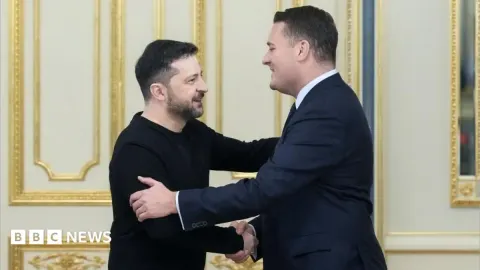
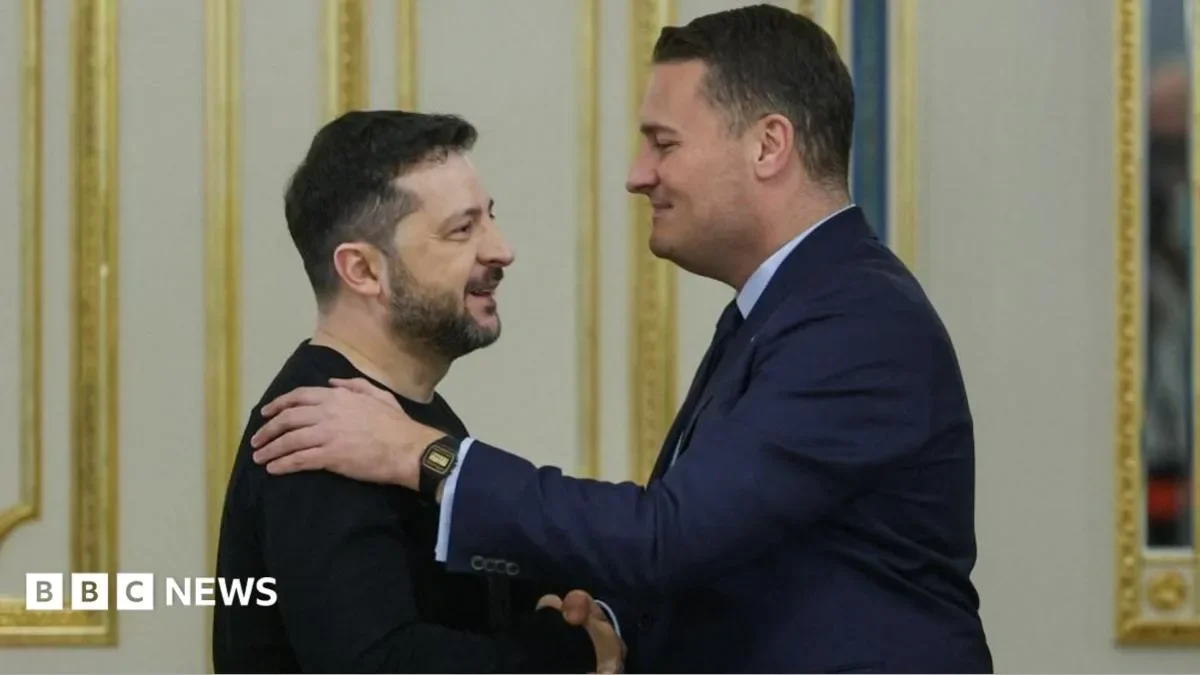
President Volodymyr Zelensky has characterized Ukraine's recent strikes on the Crimean Bridge as a "fair response" to Russia's relentless campaign against Ukrainian infrastructure. Speaking during a meeting with the United Kingdom’s Secretary of State for Environment, Food and Rural Affairs, Steve Streeting, Zelensky emphasized that Kyiv’s actions were a direct consequence of 109 separate Russian aerial attacks targeting bridges across Ukraine. This rhetorical escalation underscores Kyiv's commitment to strategic strikes deep behind Russian lines, framing them not as provocations but as essential defensive measures to disrupt Moscow's logistics and supply chains in the occupied territories.
The meeting also highlighted the deepening security partnership between London and Kyiv. By framing the bridge strikes as a matter of parity, Zelensky is signaling to Western allies that Ukraine will no longer accept a unilateral war where its infrastructure is destroyed without consequence for the occupier. This development is particularly significant as it coincides with renewed discussions in the UK about long-term trade and security deals with the EU, suggesting a broader realignment of European security architecture. For global observers, this suggests that the conflict in the Black Sea region is entering a phase of sustained infrastructure warfare, which continues to rattle energy and commodity markets worldwide.

Iran Pivots on Strait of Hormuz with 'Seven Conditions' Ultimatum
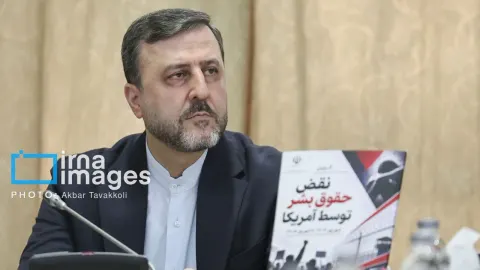
In a major shift in regional policy, Iranian Foreign Minister Abbas Araghchi has announced that the previously discussed Islamabad Memorandum of Understanding (MoU) is no longer on the table. Instead, Tehran is now proposing a framework known as the "Seven Conditions," which integrates previous US commitments under the MoU as the new baseline for negotiations and the eventual reopening of the Strait of Hormuz. Araghchi’s statement, reported by state media, suggests a more rigid and transactional approach to maritime security, effectively using the world's most critical oil chokepoint as a primary lever in broader diplomatic standoffs with Washington.
To reinforce this diplomatic pressure, the Commander-in-Chief of the IRGC, Major General Ahmad Vahidi, conducted a high-profile visit to a newly unveiled "missile city." During the visit, Vahidi vowed that "more humiliation and disgrace" await the enemies of the state, signaling that the military apparatus is fully prepared to back Araghchi’s diplomatic conditions with kinetic force if necessary. This "good cop, bad cop" routine between the Foreign Ministry and the IRGC is a classic Tehran strategy designed to project strength while leaving a narrow, albeit difficult, path for negotiations. For the Iranian economy, these developments create a complex atmosphere; while the rhetoric is escalatory, the formalization of "conditions" provides a clearer, if steeper, roadmap for market participants to gauge future risks.
Toman Gains Ground Despite Regional Rhetoric and Market Volatility
Despite the heated rhetoric coming from both the Black Sea and the Persian Gulf, the Iranian Toman showed surprising resilience in the last 24 hours. The USD sell rate moved from 272,900 to 270,300, marking a 1.0% appreciation for the national currency. This correction is even more pronounced in the gold market, where the Emami coin saw a sharp 4.0% decline, dropping from 250,000,000 to 240,000,000 Toman. Such movements suggest that the market may have been overbought during the previous week’s tensions, and traders are now taking profits or reacting to internal liquidity management by the central bank.
In the broader technology and global market space, the focus has shifted toward the "unsexy" side of the green transition. While consumer electric vehicle (EV) sales have faced headwinds, the startup Harbinger recently raised $240 million in a Series D round to focus on commercial electric trucks. With major orders from firms like FedEx and defense contracts with the US military, Harbinger represents a shift in investor sentiment toward practical, logistics-based AI and EV applications. This trend mirrors the cautious sentiment seen in global stock markets, where investors are increasingly prioritizing portfolio protection over speculative growth, a sentiment that is clearly filtering down into the Iranian gold and currency exchanges as well.

Frequently Asked Questions
چرا قیمت سکه امامی ۴ درصد کاهش یافت؟
شروط هفتگانه ایران برای تنگه هرمز چیست؟
تاثیر حملات به پل کریمه بر اقتصاد ایران چیست؟
The Geopolitical Influence on Currency Exchange Rates: The Strait of Hormuz Example
Currency exchange rates are often seen as barometers of a nation's economic health, reflecting factors like inflation, interest rates, and trade balances. However, beyond these traditional economic indicators, geopolitical events play a profound and often immediate role in shaping a currency's value, particularly for countries situated in strategically volatile regions. Understanding this interplay is crucial for deciphering market movements that might otherwise seem counter-intuitive.
A prime example of this dynamic is the Strait of Hormuz, a narrow waterway bordering Iran that is a critical global chokepoint for oil shipments. Approximately one-fifth of the world's total oil supply, and a significant portion of its liquefied natural gas, passes through this strait daily. Iran's strategic location and its historical assertions of control, sometimes encapsulated as "seven conditions" for passage, grant it significant geopolitical leverage. Any perceived threat to free passage or escalation of tensions in this area can send shockwaves through global energy markets and impact international trade.
For a country like Iran, whose economy is heavily influenced by oil exports and international sanctions, the geopolitical climate surrounding the Strait of Hormuz directly affects the value of its currency, the Toman. Heightened tensions or threats to the strait typically trigger investor apprehension, potentially leading to capital flight, reduced foreign investment, and increased risk premiums—all factors that historically exert downward pressure on the Toman. Conversely, as the headline suggests, moments where Iran is perceived to successfully assert its strategic leverage or achieve diplomatic gains related to its regional position might, paradoxically, lead to temporary gains for the Toman, as some market participants interpret this as increased bargaining power or a stronger geopolitical standing.
This complex relationship underscores that currency movements are not solely driven by internal economic fundamentals. They are deeply intertwined with international relations, security concerns, and the delicate balance of power in strategic regions. The Strait of Hormuz serves as a powerful illustration of how a physical chokepoint can become a focal point for geopolitical risk, directly influencing a nation's economic stability and the daily fluctuations of its currency.
Topics
Related Articles