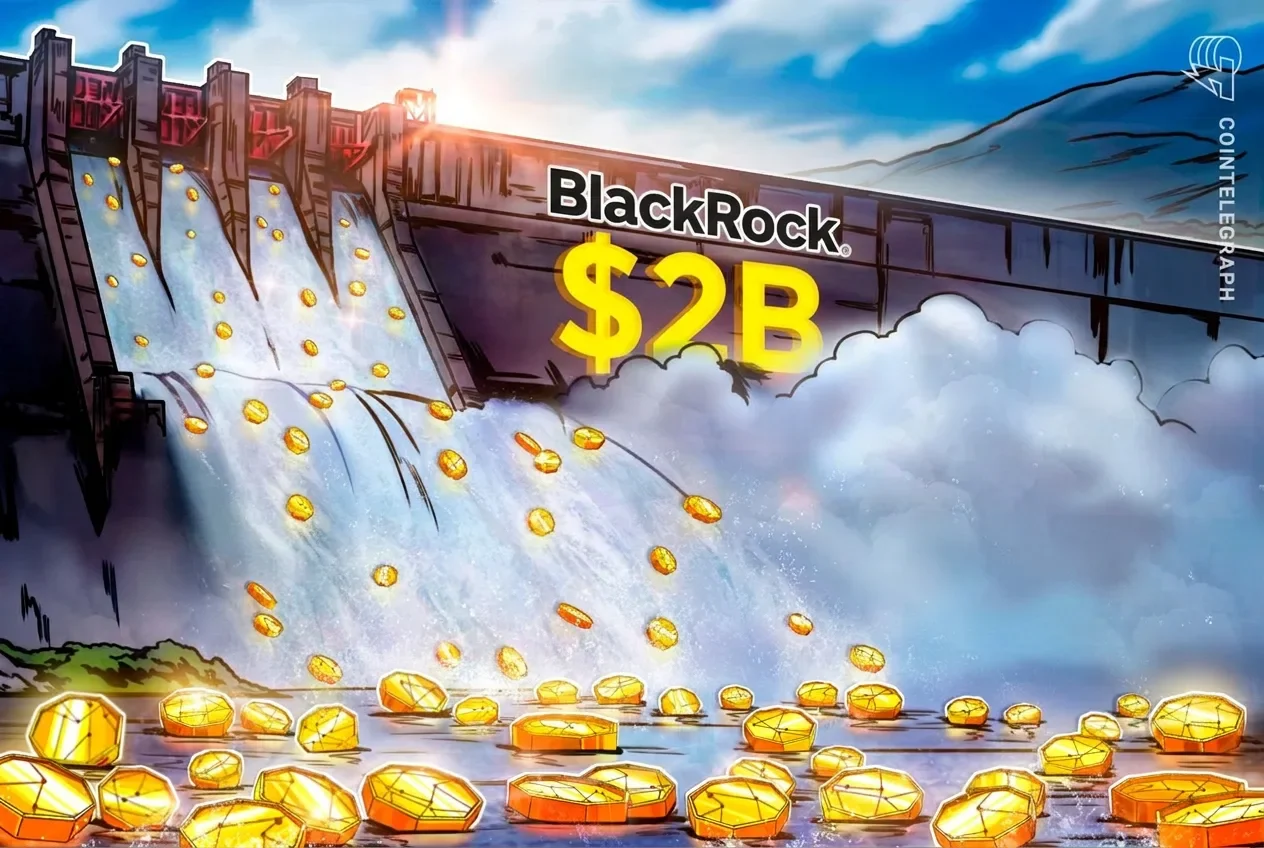
How to Spot a 'Crypto Top': Evaluating Store of Value Amid $2B BlackRock Outflows
چگونه «سقف بازار» را تشخیص دهیم؟ ارزیابی ارزش خرید در میانه خروج ۲ میلیارد دلاری سرمایه از بلکراک
With BlackRock's Bitcoin ETF seeing $2 billion in outflows over nine sessions, many Iranian investors are wondering if the 73,000 USD level is a peak or a pause. This guide breaks down how to evaluate whether your next crypto purchase is a genuine store of value or a risky late-cycle entry.
At time of publishing
USD
266,800
Toman
Gold 18K
25.76M
Toman / gram
Bitcoin
$73,348
US Dollar
Tether
267,280
Toman
Understanding the Institutional 'Exit' Signal
The cryptocurrency market is currently navigating a period of intense volatility. On Thursday, November 12, 2026, Bitcoin is trading at $73,348, but the underlying data reveals a cooling trend among major players. Specifically, BlackRock's spot Bitcoin ETF has witnessed nearly $2 billion in outflows over the last nine trading sessions. For an Iranian investor, this is a critical metric. When institutional giants like BlackRock begin to pull back, it often signals that the 'smart money' believes the current price may be overextended. In our local context, where the US Dollar has risen to 266,800 Toman, the pressure to hedge against currency depreciation is high, but buying at a global peak can lead to double losses if both the global price and the local exchange rate fluctuate.
To evaluate if a coin is a good store of value today, you must first look at institutional liquidity. The recent $300 million outflow on Wednesday alone suggests that the initial hype around US spot ETFs is facing a reality check. If you are looking to enter the market, you should not just look at the price on your screen, but at the 'net flow' of these funds. A store of value should ideally be bought during periods of accumulation, not during mass exits. In the current climate, chasing the 73k level without a clear reversal in ETF flows is a high-risk strategy that ignores the warning signs coming from Wall Street.

Security as a Pillar of Value
A digital asset is only a store of value if you can actually keep it. Recent revelations regarding a $6.3 billion hack tactic—foreshadowed by Binance's Chief Security Officer Jimmy Su—remind us that technical security is inseparable from financial value. Su explained how fake coding assessments could compromise devices, a tactic that eventually led to record-breaking losses. For Iranians, who often operate through secondary channels or VPNs, this risk is magnified. If you are evaluating a coin, you must also evaluate the infrastructure you use to hold it.
Storing your wealth on an exchange, even one as large as Binance, exposes you to systemic risks that can wipe out your 'store of value' overnight. A genuine strategy involves moving assets to self-custody (cold wallets). If the asset you are buying is too difficult to move or has high 'gas' fees that make small transfers impossible, it fails the portability test of a true store of value. In today's market, where Bitcoin remains the dominant choice, ensuring you have a secure, non-custodial way to hold it is as important as the purchase price itself. A 'safe' buy in Iran means a buy that the government or a foreign exchange cannot freeze.
Geopolitics and the Toman Hedge
While global markets focus on ETFs, the Iranian investor must weigh regional instability. Reports of 'silent genocide' in Gaza and missile strikes in Aden remind us that the Middle East remains a tinderbox. Historically, when regional tensions rise, the demand for 'portable wealth' like USDT and Bitcoin spikes in Tehran, regardless of what BlackRock is doing. Today, the USD sell rate is 266,800 Toman, a 1.0% increase in just 24 hours. This local 'premium' often forces Iranians to buy at prices higher than the global average.
To determine if a purchase is a good store of value, ask yourself: is this asset a hedge against a local crisis or a global one? If you are buying Bitcoin simply because you fear the Toman will hit 300,000, you are using BTC as a currency hedge. In this case, even a 10% drop in global BTC prices might be offset by a 10% rise in the USD/IRR rate. However, if the global market enters a prolonged 'crypto winter' due to US political shifts—such as the recent historic Senate victory of Scott Colom in Mississippi which may shift regulatory tones—your local hedge might not be enough. A true store of value survives both the local collapse of the Toman and the global volatility of the crypto market. Diversifying between physical gold (Gold 18k at 25,762,962 Toman) and digital assets remains the most balanced approach for the Iranian household in late 2026.
Concept Diagram
Frequently Asked Questions
چرا خروج سرمایه از بلکراک برای سرمایهگذار ایرانی مهم است؟
آیا در قیمت دلار ۲۶۶,۸۰۰ تومانی، خرید تتر منطقی است؟
چگونه بفهمیم یک کوین امنیت کافی برای ذخیره ارزش را دارد؟
تفاوت پوشش ریسک تومان با سرمایهگذاری جهانی چیست؟
Understanding "Store of Value" in a Volatile World
In economics, a "store of value" is an asset that can be held and exchanged at a later date for roughly the same amount of goods and services, thus preserving its purchasing power over time. This is one of the three fundamental functions of money, alongside being a medium of exchange and a unit of account. A good store of value is typically durable, scarce, easily transferable, and widely accepted. Historically, commodities like gold and silver have served this purpose due to their inherent scarcity and resistance to decay. In modern times, stable fiat currencies issued by governments with strong economic policies can act as a store of value, though their purchasing power can be eroded by inflation.
The pursuit of reliable stores of value becomes particularly urgent in environments marked by high inflation, currency devaluation, or geopolitical instability. When a national currency rapidly loses its purchasing power, individuals and institutions seek alternative assets to protect their wealth. This explains why assets like gold have consistently been favored during economic crises, as their value is not tied to the stability of any single government or financial institution. The recent interest in cryptocurrencies like Bitcoin as a potential store of value stems from a similar desire for assets independent of traditional financial systems.
Bitcoin's proponents argue it possesses many characteristics of a good store of value: it has a capped supply (21 million coins), is decentralized, immutable, and censorship-resistant. These features make it attractive to those looking to hedge against inflation or escape capital controls. However, Bitcoin's significant price volatility remains a major point of contention for its status as a stable store of value. While its long-term trend has been upward, short-term fluctuations can be dramatic, posing risks for those seeking immediate preservation of capital. The debate continues as the global financial landscape evolves, with investors weighing the unique properties of digital assets against the proven track record of traditional safe havens.