Xi's Taiwan Warning Rattles Markets as Trump Visits Beijing; Russia Pummels Kyiv
هشدار شی درباره تایوان در دیدار ترامپ با پکن، بازارهای جهانی را لرزاند؛ حمله گسترده روسیه به کییف
Chinese President Xi Jinping issued a stark warning to Donald Trump regarding Taiwan, threatening conflict if the issue is mishandled, a move that immediately amplified global geopolitical risks. Meanwhile, Russia unleashed a massive aerial assault on Kyiv and other Ukrainian cities, further destabilizing Eastern Europe. Closer to home, Iran formally protested Kuwait's detention of Iranian nationals, signaling regional diplomatic friction.
At time of publishing
USD
179,600
Toman
Gold 18K
20.38M
Toman / gram
Bitcoin
$79,801
US Dollar
Tether
17,900.3
Toman
Market Open
The morning in Tehran sees a remarkably stable start for key financial indicators. The US Dollar, often a barometer of global and regional sentiment, held its ground firmly against the Iranian Toman. Trading at 179,600 Toman for a dollar, it registered a negligible 0.0% change from its overnight close of 179,550. This stability suggests a cautious holding pattern among traders, perhaps awaiting clearer signals from the unfolding international geopolitical landscape.
Similarly, the domestic gold market reflected this calm. Both the 18k gold gram and the Emami coin remained unchanged from their previous day's closing prices, settling at 20,379,518 Toman and 196,000,000 Toman respectively. This lack of movement indicates that while global headlines might be dramatic, their immediate impact on local precious metal values has yet to materialize, or perhaps local demand and supply dynamics are currently balancing out external pressures.
In the cryptocurrency sphere, Bitcoin, a global indicator of risk appetite and digital asset trends, is currently trading around $79,801. While a 24-hour delta isn't provided for BTC, its position near the $80,000 mark indicates continued investor interest, despite the geopolitical rumblings. The stability across these key markets locally suggests that while global tensions are high, the immediate domestic financial reaction is one of measured observation.
Xi's Taiwan Warning Casts Shadow Over Trump's China Visit
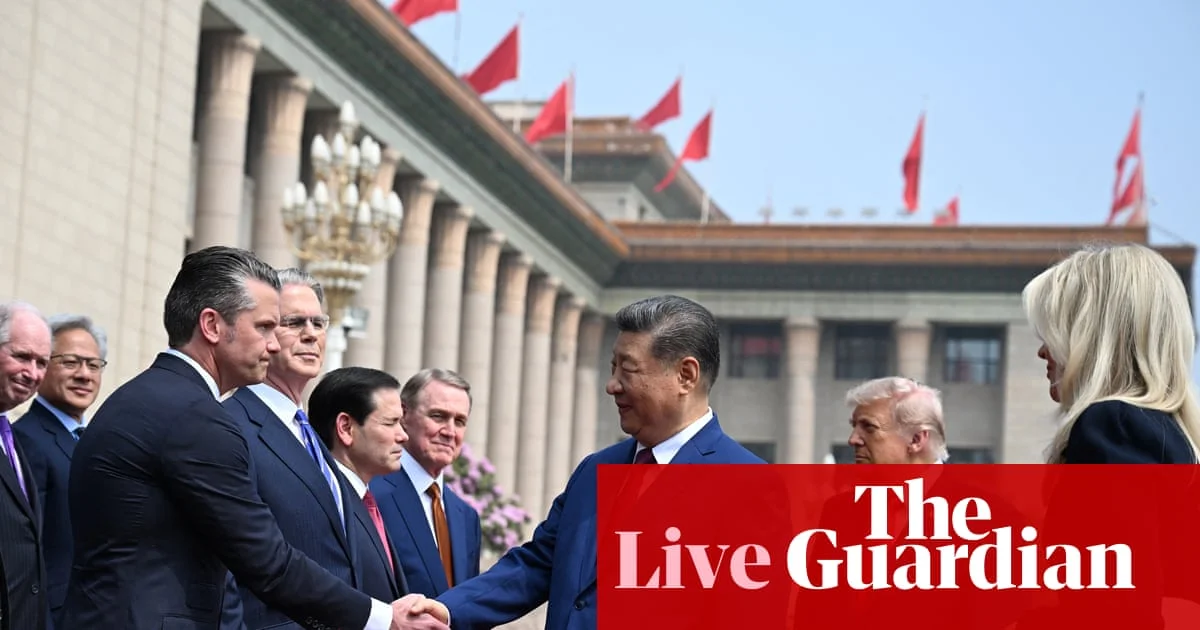
President Xi Jinping delivered a stark warning to Donald Trump during his high-stakes visit to Beijing, cautioning that mishandling the Taiwan issue could lead to "conflict," according to state media reports. The summit, which saw heightened security across the Chinese capital, was reportedly dominated by discussions on trade, artificial intelligence, and the looming "war in Iran," as per early reports. This assertive stance from Beijing underscores the deep-seated tensions surrounding Taiwan, which China views as an inseparable part of its territory, a "red line" in its foreign policy.
The timing of Trump's visit, coming after his presidency, adds a unique layer of complexity. While not a sitting president, his influence and potential future role make his interactions with global leaders closely watched. Xi's direct warning, delivered in this context, signals China's unwavering determination on Taiwan, a position that has been increasingly firm. The mention of the "war in Iran" in the context of US-China talks, while potentially a misattribution or broader framing in the original report, highlights how interconnected global flashpoints are perceived by major powers, and how regional conflicts can become part of superpower diplomatic agendas.
[IMAGE: Chinese President Xi Jinping and Donald Trump in a formal meeting, with flags of both nations in the background, a tense but diplomatic atmosphere]
For global markets, Xi's explicit warning injects a significant dose of geopolitical risk. Investors will be weighing the potential for increased friction between the world's two largest economies, which could disrupt global supply chains, impact technology trade, and dampen overall investor confidence. For Iranian readers, these US-China tensions have profound indirect effects. Escalations could influence global oil prices, affect the enforcement of sanctions, and alter the broader geopolitical calculus in the Middle East, potentially impacting trade routes and strategic alliances. The implicit message is clear: the stability of the global order hinges on managing these superpower rivalries, and any misstep could have far-reaching economic and security consequences.
Russia Unleashes Barrage on Kyiv, Intensifying Ukraine Conflict
Overnight, Russia launched a massive aerial assault on the Ukrainian capital, Kyiv, and several other regions, employing a deadly combination of drones and ballistic missiles. The coordinated attack resulted in at least one fatality and dozens of injuries, alongside significant damage to infrastructure. This extensive bombardment marks a severe intensification of hostilities, signaling Moscow's continued intent to exert pressure on Ukraine amidst the ongoing conflict.
The choice of targets and the scale of the attack suggest a strategic effort by Russia to degrade Ukraine's defensive capabilities, disrupt daily life, and potentially undermine morale. Such barrages are often a response to perceived Ukrainian advancements or increased Western military aid, aiming to demonstrate Russia's enduring capacity to strike deep into Ukrainian territory. The use of both drones for saturation and ballistic missiles for precision highlights a sophisticated, albeit destructive, military strategy.

The renewed ferocity of the conflict in Ukraine sends ripples across global markets, particularly impacting energy prices and fostering heightened risk aversion among investors. For nations like Iran, a major energy producer, the prolonged instability in Eastern Europe indirectly influences global oil and gas markets, potentially affecting revenue streams and economic planning. Furthermore, the conflict's geopolitical ramifications continue to reshape international alliances and trade dynamics, with implications for countries navigating complex global power shifts. The world watches closely as the humanitarian and economic toll of this conflict continues to mount.
Tehran Warns Kuwait Over Detention of Iranian Nationals
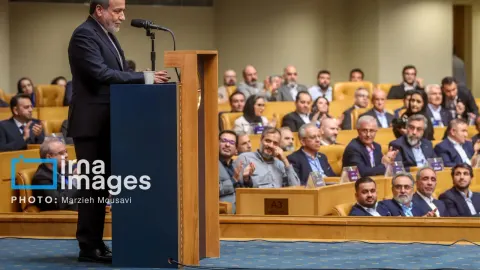
Iran's Foreign Minister Abbas Araghchi has issued a strong protest to Kuwait regarding the "unlawful detention" of Iranian citizens, asserting Tehran's right to respond to these actions. This diplomatic spat highlights a simmering tension between the two Persian Gulf neighbors, brought to the forefront by the alleged mistreatment of Iranian nationals. Such incidents, while seemingly localized, can quickly escalate and strain bilateral relations, leading to broader regional implications.
The act of formally protesting and issuing a warning signals Tehran's serious concern over the welfare of its citizens and its perception of a breach of international norms by Kuwait. Diplomatic disputes over detained nationals are a sensitive issue globally, often used as leverage or as a point of national pride. For Iran, protecting its citizens abroad is a key foreign policy objective, and a perceived affront by a neighboring state necessitates a firm response.

While this incident may not directly sway global market trends, it carries significant weight for regional stability and diplomatic relations in the Persian Gulf. For Iranian readers, it underscores the government's commitment to its citizens and the delicate balance of power and diplomacy within the region. Such diplomatic spats, if not carefully managed, can impact trade, travel, and even broader security cooperation, contributing to a general sense of unease in an already volatile part of the world. It serves as a reminder that even seemingly minor bilateral issues can contribute to the complex tapestry of regional geopolitics.
Frequently Asked Questions
What were the key topics discussed during Trump's visit to Beijing?
How might increased US-China tensions over Taiwan impact global economies?
What is the significance of Russia's recent massive aerial attacks on Ukrainian cities?
What are the potential diplomatic ramifications of Iran's protest to Kuwait regarding detained nationals?
How do these global geopolitical events affect local Iranian markets for USD and gold?
Geopolitical Risk Premium: Why Markets Jump at Taiwan and Ukraine Crises
When a headline like “Xi’s Taiwan warning rattles markets” appears, investors are not just reacting to a political statement—they are pricing in a geopolitical risk premium. This premium is the extra return that investors demand for holding assets that could be affected by sudden, large‑scale political events such as wars, sanctions, or diplomatic flare‑ups. In practice, the premium shows up as higher yields on sovereign bonds, wider equity spreads, or a flight to perceived safe‑haven assets like the U.S. dollar and gold.
The premium is not static; it expands and contracts with the perceived probability and potential severity of a geopolitical shock. For example, after Russia’s intensified attacks on Kyiv in early 2024, European bond markets saw yields rise as investors demanded compensation for the heightened risk of supply‑chain disruptions and energy price spikes. Similarly, Xi Jinping’s firm warning that “Taiwan is a core interest” caused Asian equity indices to dip, reflecting fears that any misstep could trigger a military confrontation that would destabilise regional trade.
Quantifying the geopolitical risk premium is challenging because it blends qualitative assessments (political statements, diplomatic moves) with quantitative market data (volatility indices, credit spreads). Researchers often use event‑study methodology, comparing asset price movements before and after a geopolitical event while controlling for other factors. The resulting “alpha” attributed to the event is interpreted as the market‑wide risk premium demanded for bearing that specific geopolitical uncertainty.
Understanding this concept helps investors and policymakers separate normal market fluctuations from risk‑adjusted reactions to political shocks. It also underscores why central banks monitor geopolitical developments closely: a sudden rise in the risk premium can tighten financial conditions, even if domestic inflation remains low. In a world where a single diplomatic visit—whether Trump’s in Beijing or a high‑level meeting between Iran and Kuwait—can shift risk perceptions, the geopolitical risk premium remains a crucial lens for interpreting market dynamics.
For those who want to dive deeper, the literature spans economics, finance, and international relations, offering models that integrate political risk into asset‑pricing frameworks and case studies of past crises. Mastering this idea equips you to read market headlines with a more analytical eye, recognizing when a price move reflects a genuine shift in risk versus a fleeting news buzz.
Topics
Related Articles