The Escalation Loop: Why Trump’s 'Deal' Talk Clashes with Reality as Markets Hold Their Breath
چرخه بیپایان تنش؛ تضاد ادعاهای ترامپ با واقعیتهای میدانی در روز سکون بازارها
As Tehran's markets open with a rare moment of price stability, the global geopolitical landscape tells a different story. From the 'endless escalation' in Lebanon and Iran to Zelensky's desperate pivot toward Putin, the world is navigating a high-stakes Friday.
At time of publishing
USD
173,700
Toman
Gold 18K
18.84M
Toman / gram
Bitcoin
$62,110
US Dollar
Tether
173,503
Toman
Market Open — The Calm Before the Geopolitical Storm
The Tehran market opens this Friday morning with a sense of eerie stillness that contrasts sharply with the regional noise. The US Dollar (USD/IRR) is holding firm at 173,700 Toman, showing no change (0.0%) over the last 24 hours. This stagnation reflects a broader wait-and-see approach among traders who are balancing geopolitical threats against a lack of immediate local catalysts. For the financially-aware Iranian, this 'flatline' is less about stability and more about a market holding its breath for the next major headline.
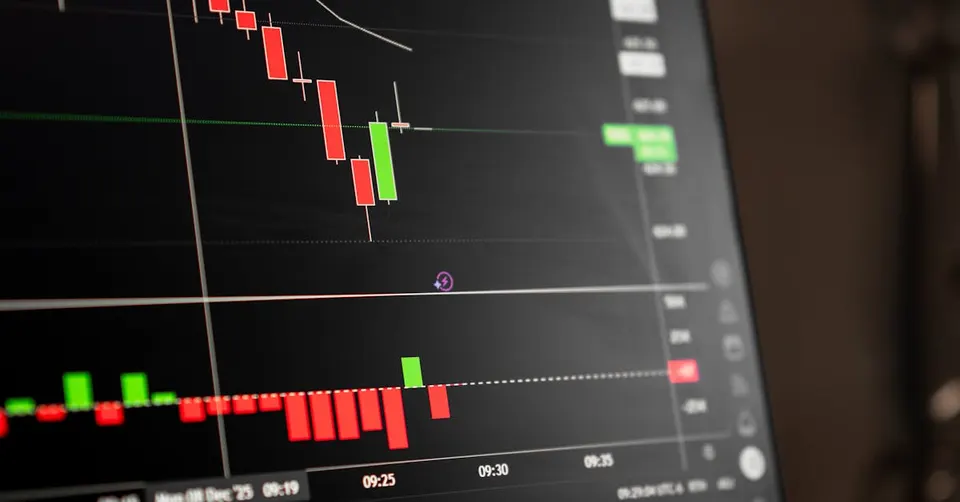
Gold is similarly frozen in the local market, with 18k gold priced at 18,843,436 Toman per gram, mirroring the 0.0% delta seen in the currency. Meanwhile, Bitcoin is hovering at $62,110, showing some resilience but failing to break out of its recent range. The global gold ounce remains elevated at $4,437.60, indicating that while the local Toman price is stable, the international 'fear hedge' remains very much in play as investors globally brace for further volatility.
The Escalation Without End — Reality vs. Rhetoric
The most significant story overnight is the deepening disconnect between political rhetoric and the reality on the ground in the Middle East. While former President Donald Trump has been active on social media claiming that a comprehensive agreement with Iran could happen 'very soon,' the actual situation in Lebanon and Gaza suggests otherwise. Global powers seem increasingly focused on managing oil prices and domestic elections, leaving those in the heart of the conflict feeling abandoned. This week has seen a surge in strikes across Lebanon, and despite talk of ceasefires, the death tolls continue to rise while national economies in the region begin to buckle under the weight of displacement and infrastructure loss.
For Iranian readers, this 'escalation loop' is the primary driver of long-term economic sentiment. The risk is that the conflict becomes a permanent background noise—a 'forever war' that drains resources and keeps the Toman under constant pressure, even on days when the price doesn't move. The IAEA’s latest warnings about increased nuclear risks only add to this tension, suggesting that the strategy of 'maximum pressure' or military deterrence has yet to produce the stability promised by international actors.
Zelensky’s Open Letter and the US Pivot to Iran
In a surprising diplomatic move, Ukrainian President Volodymyr Zelensky has issued an open letter to Vladimir Putin, proposing face-to-face talks to end the war. The timing is critical: Zelensky explicitly noted that with the United States increasingly focused on the Iran-Israel conflict and the broader Middle East, Ukraine risks losing the 'bandwidth' of its most important ally. This shift in Washington's attention is a double-edged sword; while it highlights Iran's central role in global security, it also suggests a period of heightened sanctions and military posturing as the US tries to 'solve' the Middle East problem to free up resources.

This 'direct engagement' proposal by Ukraine marks a potential turning point in the European theater, but for the Iranian economy, it signals that the US is doubling down on its regional presence. If the US successfully pivots its focus, we can expect more aggressive enforcement of oil sanctions and a tighter grip on the financial channels that Iran uses for trade. This geopolitical realignment is why the market's current stability is likely temporary; the tectonic plates of global power are shifting, and the Middle East is the new epicenter.
AI Ethics and the Long Shadow of Justice
Beyond the battlefield, a new legal front is opening up against Elon Musk’s xAI. Following a test case by UK Labour MP Jess Asato, more claimants are coming forward to sue the company over demeaning, AI-generated material created by the Grok tool. This highlights a growing global backlash against unregulated AI, which has significant implications for tech investment and the future of digital content. As AI becomes more integrated into financial analysis and social engineering, the outcome of these lawsuits will determine the 'liability cost' of the next generation of tech giants.
Finally, in a poignant reminder that some stories never truly end, the family of Melanie Hall has launched a fresh appeal 30 years after her murder in Bath. This story, though seemingly distant, resonates with the theme of 'justice delayed.' In a world where news cycles move in seconds, the persistence of this investigation serves as a reminder that institutional memory—whether in law or in markets—is longer than we often assume. For the investor, it’s a lesson that old risks, much like old crimes, can resurface when least expected.

Frequently Asked Questions
چرا با وجود تنشهای منطقهای، قیمت دلار در تهران ثابت مانده است؟
نامه زلنسکی به پوتین چه ارتباطی به بازار ایران دارد؟
آیا ادعاهای ترامپ درباره توافق سریع با ایران بر بازار تأثیر گذاشته است؟
Geopolitical Risk Premium: Why Politics Move Currency and Bond Prices
When investors talk about a geopolitical risk premium, they are referring to the extra return they demand for holding assets that could be hurt by political events – wars, sanctions, regime changes, or diplomatic crises. In practice, this premium shows up as higher yields on a country’s sovereign bonds and as pressure on its currency. For example, heightened tension between Iran and the West, or a sudden escalation in Lebanon, can push the Iranian rial (USD/IRR) lower and force Iran’s government bonds to trade at a discount because investors fear that sanctions or conflict could disrupt cash flows or even seize assets.
The premium is not a fixed number; it fluctuates with the perceived likelihood and severity of the political shock. Analysts use a blend of market data (credit default swap spreads, bond yields) and event‑driven models to estimate it. When a high‑profile figure such as former President Trump signals a possible “deal” with Iran, markets immediately reassess the risk premium: if the deal looks credible, the premium shrinks and the rial may modestly appreciate; if the rhetoric clashes with on‑the‑ground realities – like a hostile IAEA report or ongoing fighting in the region – the premium widens, pulling the currency down and pushing bond yields up.
Understanding the geopolitical risk premium helps explain why seemingly unrelated headlines – a letter from Zelensky to Putin, Elon Musk’s lawsuit against xAI, or a gold price spike in Tehran – can all ripple through the same financial instruments. Each event feeds the broader perception of stability (or instability) in a region, and that perception is priced directly into the cost of borrowing and the exchange rate. Traders therefore watch political developments as closely as they watch central‑bank policy because, in a globally connected market, politics is a key driver of risk and return.
For investors, the practical takeaway is to monitor not just the raw numbers (inflation, interest rates) but also the political narrative surrounding a country. A sudden increase in the risk premium may signal an opportunity to short a currency or buy higher‑yielding bonds, but it also carries the danger of rapid reversals if the political situation improves or deteriorates faster than expected.
Key points: - The geopolitical risk premium is the extra yield demanded for political uncertainty. - It directly affects sovereign bond yields and currency values. - Credible diplomatic moves can shrink the premium; hostile events can expand it. - Traders treat political news as a core input to pricing models.
منابع - "Geopolitical risk" – Wikipedia, https://en.wikipedia.org/wiki/Geopolitical_risk - "Sovereign credit risk" – Investopedia, https://www.investopedia.com/terms/s/sovereign-credit-risk.asp - "Iran sanctions and their impact on the rial" – Reuters, https://www.reuters.com/markets/asia/iran-sanctions-impact-rial-2024-03-15/ - "How political events affect bond yields" – IMF Blog, https://www.imf.org/en/Blogs/Articles/2023/10/02/political-events-and-bond-yields
Topics
Related Articles