Imperial Shifts in Tokyo and Fire in the Strait: Oil Surges 12% as Japan Rewrites Royal Rules
تحول در دربار توکیو و آتش در تنگه؛ جهش ۱۲ درصدی نفت همزمان با تغییر قوانین سلطنتی ژاپن
As Japan breaks centuries of tradition to save its monarchy, the Middle East faces a sixth night of strikes, sending oil prices on their biggest weekly rally since April. Meanwhile, Bitcoin slips below $63,000 as risk-off sentiment takes hold.
At time of publishing
USD
188,000
Toman
Gold 18K
18.31M
Toman / gram
Bitcoin
$62,774
US Dollar
Tether
188,916
Toman
Market Open — Friday, July 17, 2026
The Tehran market opens this morning under a cloud of significant regional tension, yet the currency remains remarkably resilient in the face of overnight escalations. The US Dollar is trading at 188,000 Toman, holding steady with 0.0% change over the last 24 hours. While the physical currency market seems to have priced in the ongoing friction, the gold market shows a slight upward bias. Gold 18k per gram rose marginally to 18,306,477 Toman (+0.1%), reflecting a global rush toward safety as the international gold ounce nears the psychological $4,000 mark, currently sitting at $3,988.50.
For the Iranian investor, the stability in the USD/IRR pair suggests a 'wait-and-see' approach by major market makers, despite the sixth consecutive night of military strikes in the region. However, the crypto market tells a different story of anxiety; Bitcoin has retreated below the $63,000 level, currently at $62,774, as global liquidity seeks refuge from the escalating rhetoric between major powers and the physical disruptions in the Strait of Hormuz.
Japan’s Imperial Survival: Tradition Meets Necessity
In a move that has captured global attention far beyond the halls of diplomacy, Japan has officially relaxed its royal succession rules. For years, the world’s oldest continuous monarchy has faced an existential crisis: a lack of male heirs. Overnight, the Japanese government enacted a law allowing the adoption of male distant relatives—specifically those aged over 15—back into the imperial family. This is a radical departure from the post-WWII rules that stripped many branches of their royal status, intended to ensure the 'Chrysanthemum Throne' does not go vacant.

However, the move remains controversial because it pointedly refuses to lift the ban on female emperors. Despite overwhelming public support for Princess Aiko to eventually take the throne, the conservative establishment has opted for this 'adoption' workaround to maintain a patrilineal line. For global observers, this represents a significant moment of internal Japanese policy shift, signaling a desperate attempt to balance ancient Shinto traditions with the practical reality of a shrinking royal family. It ensures political stability in Tokyo, a key factor for Asian markets that have been rattled by broader geopolitical instability.
What this means for the global landscape is a more predictable Japan. By solving the succession question—even through a conservative lens—the Japanese government avoids a potential constitutional crisis that could have distracted the world's fourth-largest economy. For the Iranian reader, Japan remains a critical, if quiet, partner in energy technology and a barometer for how traditional societies navigate modernity under pressure.
Oil’s 12% Weekly Surge: The Strait of Hormuz Chokehold
Energy markets are in a state of high alert as oil prices head toward their biggest weekly gain since April. Brent Crude has climbed to $85.06, marking a 12% surge in just five days. This rally is driven by the 'sixth night' of U.S. military strikes targeting infrastructure within Iran. According to reports from Iranian state media, these strikes have focused on logistical targets such as bridges and railway junctions, raising fears that the physical capacity to move goods and energy through the region is being systematically degraded.
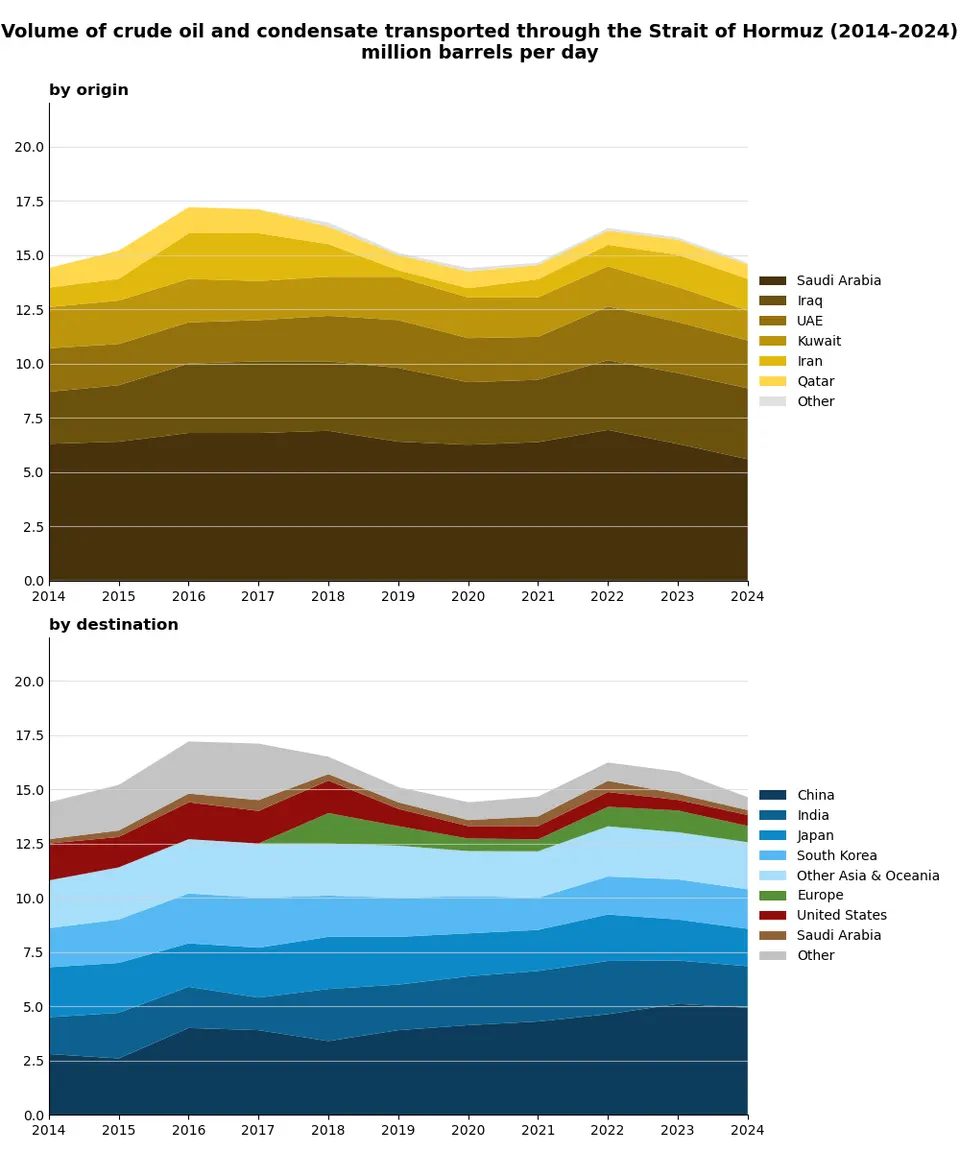
The escalation has effectively shut down the 'safety net' of supply that had kept prices stable over the early summer. Earlier in the year, a memorandum of understanding had allowed for a steady flow of crude out of the Gulf, but that window has slammed shut. With the Strait of Hormuz—the world's most vital energy artery—becoming a theater of active conflict, analysts warn that global inventories are running dangerously low. India and South Africa have already begun tapping into their strategic reserves, a move that usually signals a long-term expectation of high prices.
For Iranians, this is a double-edged sword. While higher oil prices theoretically increase the value of national resources, the destruction of infrastructure and the tightening of the blockade negate these gains. The 'war premium' on oil is now the dominant factor in global inflation, and if the strikes continue to target transport hubs, the cost of importing basic goods into Iran will likely spike, regardless of where the official Toman exchange rate sits this morning.
Bitcoin Sinks as 'DOG Mode' Emerges Amidst Chaos
Bitcoin has fallen below the $63,000 threshold, currently trading at $62,774, as the 'risk-off' trade dominates global finance. The combination of U.S. strikes in the Middle East and renewed friction in U.S.-China relations—exacerbated by recent comments from Donald Trump regarding trade—has sent investors scurrying back to the dollar and gold. Crypto, often touted as digital gold, is currently behaving more like a high-beta tech asset, selling off as geopolitical uncertainty peaks.
While the price action is bearish, the technical community is in the middle of a civil war over 'DOG Mode.' A new Bitcoin client proposal by an advocate known as Leonidas aims to bypass the restrictive 'anti-spam' filters being debated for the Bitcoin Core software. This 'DOG Mode' would allow for more complex data transactions (like Ordinals) without requiring a consensus vote from miners. It’s a classic Bitcoin drama: a battle between those who want the network to be 'pure' money and those who want it to be a robust data layer.
For the local crypto enthusiast in Iran, the immediate concern isn't the technical architecture but the Tether (USDT) rate, which sits at 188,916 Toman. The premium on USDT remains high, reflecting a local demand for liquid USD-pegged assets as a hedge against further regional escalation. While Bitcoin might be volatile, the 'digital dollar' remains the preferred sanctuary for those looking to protect their purchasing power as the drums of war beat louder.
Frequently Asked Questions
Why did Japan change its royal succession laws now?
What is driving the 12% weekly surge in oil prices?
What is 'DOG Mode' in the context of Bitcoin?
How is the Toman reacting to the overnight strikes?
Why the Strait of Hormuz Matters: The Bottleneck Behind Oil Price Surges
The Strait of Hormuz, a narrow waterway between Iran and Oman, is the world’s most critical chokepoint for crude oil. Roughly 20% of global oil consumption passes through its 21‑mile width each day, making any disruption instantly felt on the international market. Its strategic importance stems not only from geography but also from the fact that the surrounding nations control a large share of the world’s proven oil reserves, especially Saudi Arabia, Iraq, the United Arab Emirates, and Kuwait.
When vessels are delayed, rerouted, or threatened by conflict, the immediate effect is a tightening of supply. Traders react to the risk premium by bidding up futures contracts, which pushes spot prices higher. This mechanism explains why a flare‑up in the Strait—such as the July 2026 skirmishes that briefly threatened shipping—can trigger a double‑digit jump in oil prices, as seen with the 12% surge reported in the news.
Beyond the short‑term price spike, prolonged instability can reshape global energy flows. Countries may turn to alternative routes like the Cape of Good Hope or increase strategic petroleum reserves, both of which raise transportation costs and affect the balance of trade for oil‑importing nations. For economies heavily dependent on cheap energy—Japan, South Korea, and many European states—the ripple effects can be felt in everything from manufacturing output to inflation rates.
Policymakers therefore monitor the Strait closely, employing diplomatic channels, naval patrols, and multilateral agreements to keep it open. Understanding the Strait’s role helps explain why seemingly distant geopolitical events can have a direct impact on your gasoline pump and even on broader financial markets such as gold and Bitcoin, which often move in tandem with oil‑related risk sentiment.