Iran Slams US 'War Crime' at UN Amid Escalating Hormuz Tensions; Markets React Cautiously
ایران در سازمان ملل حمله آمریکا را «جنایت جنگی» خواند؛ تنشها در هرمز و واکنش محتاطانه بازارها
Iran has formally accused the United States of a 'war crime' at the UN, alleging deliberate targeting of its maritime rescue vessels, intensifying the already heated regional conflict. This development, alongside ongoing skirmishes in the Strait of Hormuz, casts a shadow over global markets, with local currencies and gold showing slight dips. The broader geopolitical landscape, from the Persian Gulf to Taiwan, signals a period of heightened uncertainty.
At time of publishing
USD
192,100
Toman
Gold 18K
18.46M
Toman / gram
Bitcoin
$63,965
US Dollar
Tether
192,000
Toman
Market Open
As Saturday dawns, the Iranian market reflects a cautious mood amidst rising geopolitical temperatures. The USD/IRR exchange rate saw a marginal decrease, settling at 192,100 Toman for sell, a -0.1% change from yesterday's 192,200. This slight strengthening of the Toman against the dollar could be attributed to a complex interplay of factors, including potential short-term liquidity shifts or a momentary absorption of recent shocks, though the underlying tensions remain palpable.
Gold prices, often a barometer of risk aversion, also registered a downturn. The 18k gold gram fell by -1.2% to 18,456,530 Toman, down from 18,687,381. Similarly, the Emami coin saw a modest dip of -0.3%, trading at 188,000,000 Toman. Bitcoin, however, maintained its position at 63,965 USD, showing resilience to the regional jitters, suggesting that crypto investors might be viewing it as a separate asset class, less directly impacted by immediate geopolitical flashes in the Middle East. The overall market sentiment, however, remains fragile, closely tied to the unfolding regional narrative.
Iran Accuses US of 'War Crime' at United Nations
Overnight, tensions between Iran and the United States reached a new peak as Tehran formally complained to the United Nations, accusing Washington of committing a 'war crime.' According to Iranian state media IRNA, Iran alleges the US deliberately targeted two Iranian maritime search-and-rescue vessels. These ships, Iran claims, were engaged solely in humanitarian operations and were not involved in any military activity at the time of the alleged attack. This grave accusation underscores the rapidly deteriorating relationship and the potential for further, more serious confrontations in the Persian Gulf.
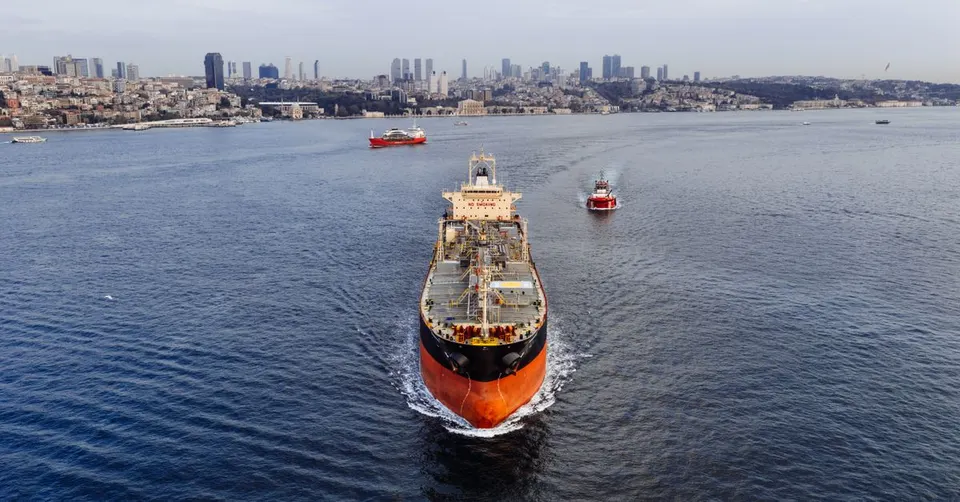
This latest development follows reports from the BBC World that Saudi Arabia and Houthis exchanged fire, and crucially, the US military attacked a tanker in the Hormuz Strait, claiming it was attempting to evade the American blockade on Iranian ports. The Iranian complaint to the UN frames the US actions as a direct violation of international law and humanitarian principles, raising the stakes in an already volatile region. Such accusations, even if disputed, fuel a narrative of aggression and could garner international attention and condemnation, complicating diplomatic efforts and potentially leading to calls for investigations into the incidents.

Strait of Hormuz Volatility Threatens Global Food Security
The ongoing military engagements and the US blockade on Iranian ports in the Strait of Hormuz are not just geopolitical flashpoints; they are having tangible, far-reaching economic consequences, particularly for global food supplies. Reports indicate that the closure and volatility in this critical shipping lane are directly contributing to an 'input crisis' in fertilizer supply chains, pushing crop prices to a three-year high. The Strait of Hormuz, a choke point for a significant portion of the world's oil and gas, is now also showing its profound impact on broader commodity markets.
This disruption stems from the broader conflict in Iran and the Black Sea region, which has intensified concerns over global grain trades. The International Food Policy Research Institute (IFPRI) has highlighted the severity of this 'input crisis,' warning that the volatility in fertilizer markets directly translates to higher agricultural production costs and, subsequently, increased supermarket prices worldwide. For Iranian households, already grappling with inflation, this means a potential further escalation in the cost of essential food items, exacerbating economic pressures and raising concerns about food security.
Trump's Security Scare Highlights Broader Regional Threats
The pervasive nature of regional instability and the reach of perceived threats from Iranian proxy forces were starkly illustrated by a recent security incident involving former US President Donald Trump. A report from The Guardian revealed that Trump switched planes in Turkey earlier this month due to a credible threat from Iranian proxy forces. He had arrived in Ankara onboard a Qatari-donated Boeing 747-8, an aircraft reportedly lacking the advanced defensive systems of the older Air Force One, and subsequently switched back to the more secure presidential plane for his return.
This incident, occurring during a NATO summit, underscores the complex and multi-layered security challenges in the region. It suggests that the conflict extends beyond direct state-on-state confrontations, encompassing a network of proxy forces capable of posing threats to high-profile international figures. Such events contribute to a heightened sense of global geopolitical risk, influencing international travel, security protocols, and investment decisions. For the Iranian public, it serves as a stark reminder of the widespread impact of regional tensions, potentially affecting everything from international trade routes to the overall economic confidence and stability within the country.
Taiwan Prepares for Chinese Naval Blockade
Far from the Middle East, another significant geopolitical flashpoint is simmering in the East. Taiwan is actively testing its resistance capabilities against a potential Chinese naval siege at sea, stepping up plans to secure vital fuel and other critical imports. This comes as Chinese government ships are reportedly practicing moves that could one day be used to enforce a blockade around the island. The drills underscore the persistent and growing military pressure from Beijing, which views Taiwan as a breakaway province that must eventually be reunified with the mainland, by force if necessary.

These escalating tensions in the Taiwan Strait represent a major global risk. A conflict in this strategically vital region would not only have devastating humanitarian consequences but would also send shockwaves through the global economy. Taiwan is a critical hub for advanced semiconductor manufacturing, and any disruption could cripple supply chains worldwide, impacting industries from automotive to consumer electronics. For global markets, including those in Iran, such a scenario would trigger significant volatility in trade, investment, and commodity prices, including oil, due to the immense economic interconnectedness of the modern world.
Frequently Asked Questions
What specifically did Iran accuse the United States of at the UN?
How do the escalating tensions in the Strait of Hormuz impact the global economy, particularly for Iran?
What was the significance of Donald Trump's plane switch in Turkey?
How did Iranian markets react to these overnight geopolitical developments?
What are the broader implications of Taiwan's military drills against a Chinese blockade?
Why the Strait of Hormuz Is a Global Oil Chokepoint
A chokepoint is a narrow geographic passage that concentrates the flow of trade, making it strategically vital and vulnerable to disruption. The Strait of Hormuz, a 21‑mile-wide waterway between Iran and Oman, is the world’s most important oil chokepoint because roughly 20% of daily global oil consumption – about 21 million barrels – passes through it every day. Its narrowness, combined with the proximity of Iranian naval bases, means that any threat to safe passage can instantly tighten global oil supplies.
Historically, the Hormuz corridor has been a flashpoint. During the 1980‑88 Iran‑Iraq War, Iran mined the strait and attacked tankers, prompting the U.S. Navy’s Operation Earnest Will to escort merchant ships. More recently, in 2019 and 2022, Iranian missile drills and drone launches near the strait sparked brief spikes in oil prices, illustrating how even the threat of closure can move markets.
The economic mechanism behind these price moves is the geopolitical risk premium. Traders price in the probability of supply interruptions, so when tension rises, futures contracts for Brent and WTI climb, sometimes by several dollars per barrel, even before any actual disruption occurs. This premium feeds into broader market sentiment, influencing everything from global food prices (since fertilizer and transport costs rise) to stock market volatility in oil‑importing nations.
Because the strait is a bottleneck, alternative routes are limited. Shipping around the Cape of Good Hope adds roughly 10‑12 days and thousands of dollars in fuel costs, making a Hormuz closure economically painful for both producers and consumers. Consequently, governments and international bodies treat the strait’s security as a matter of global economic stability, not just regional politics.
Understanding the strategic role of the Strait of Hormuz helps explain why headlines about Iran‑U.S. accusations, war‑crime language, or broader geopolitical tensions instantly ripple through commodity markets and affect everyday prices on the world’s grocery shelves.