U.S. Declares 'Economic War' on Bank Melli; Tehran Moves to Criminalize Foreign Media Contact
اعلان «جنگ اقتصادی» آمریکا علیه بانک ملی؛ طرح جدید مجلس برای قطع ارتباط با رسانههای خارجی
Treasury Secretary Scott Bessent has signaled a massive escalation by targeting Bank Melli's global footprint, while Tehran advances a 'chilling' law to sever civic ties with the international press.
At time of publishing
USD
200,500
Toman
Gold 18K
21.24M
Toman / gram
Bitcoin
$79,085
US Dollar
Tether
197,044
Toman
Market Open — Gold Recedes as USD Holds Steady
The Tehran market opened this Wednesday with a notable divergence between currency and precious metals. The US Dollar (USD/IRR) remained flat at 200,500 Toman, showing no movement over the last 24 hours. Despite the lack of immediate volatility in the exchange rate, the psychological floor remains high as traders digest overnight news regarding potential new banking restrictions.
Gold, however, saw a significant correction. 18k gold per gram fell from 21,630,730 to 21,238,284 Toman, a decline of 1.8%. This drop reflects a slight cooling in local demand after recent peaks, though the Emami coin managed a modest 0.5% gain, rising to 216,000,000 Toman. In the crypto space, Bitcoin (BTC) is showing remarkable resilience, holding the $79,085 level despite a broader cooling of the 'greed' sentiment that saw other tokens slip overnight.
The Siege of Bank Melli: Bessent’s Call for Total Isolation
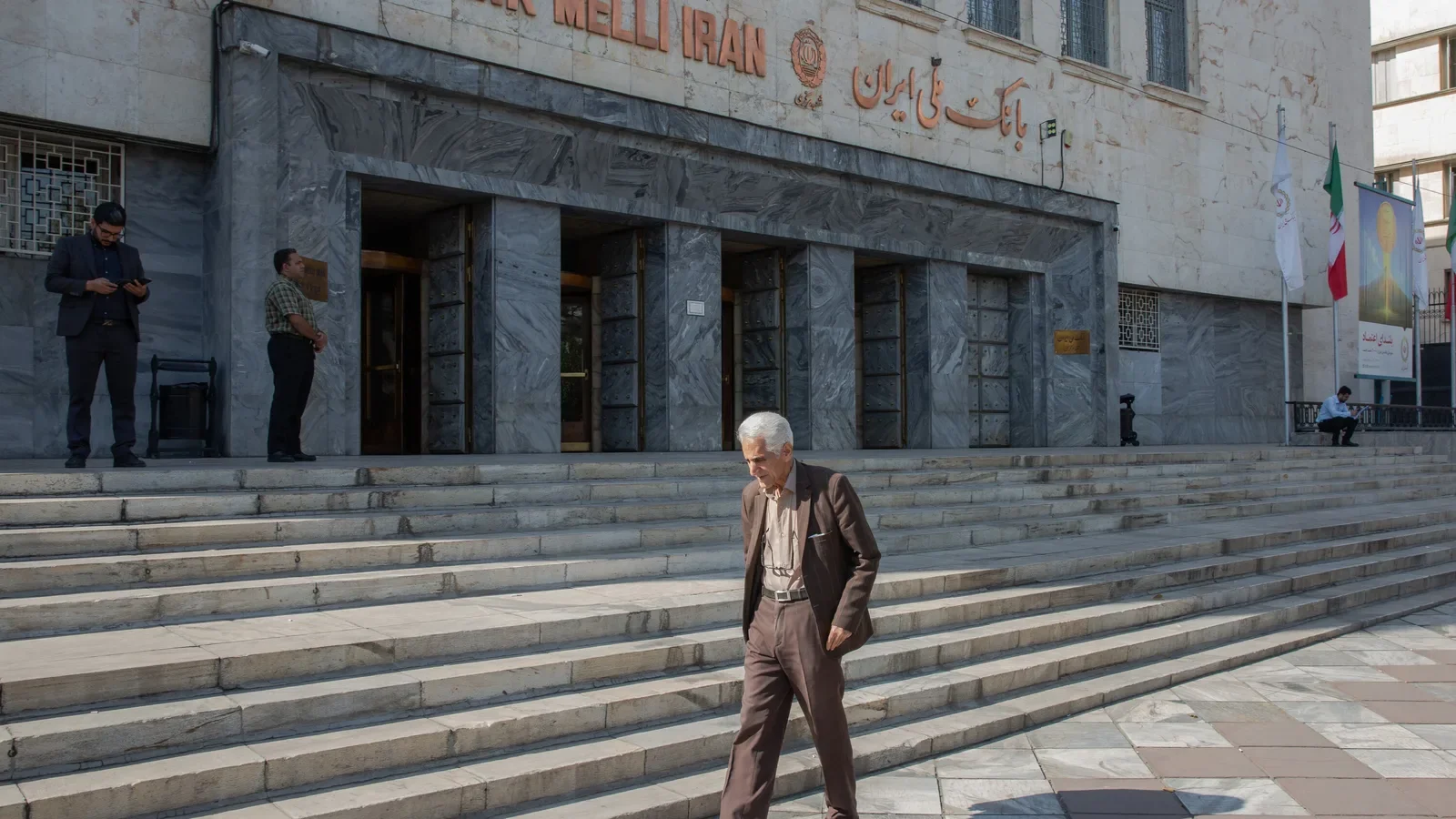
U.S. Treasury Secretary Scott Bessent has officially upped the ante in what he describes as an "economic war" against Tehran. In a move that specifically singles out Bank Melli, Iran’s largest and most critical state lender, Bessent has demanded that every remaining foreign branch of the bank be shut down immediately. While Bank Melli has lived under the shadow of sanctions for decades, this specific call for the total severance of its global physical presence marks a tactical shift toward absolute financial containment.
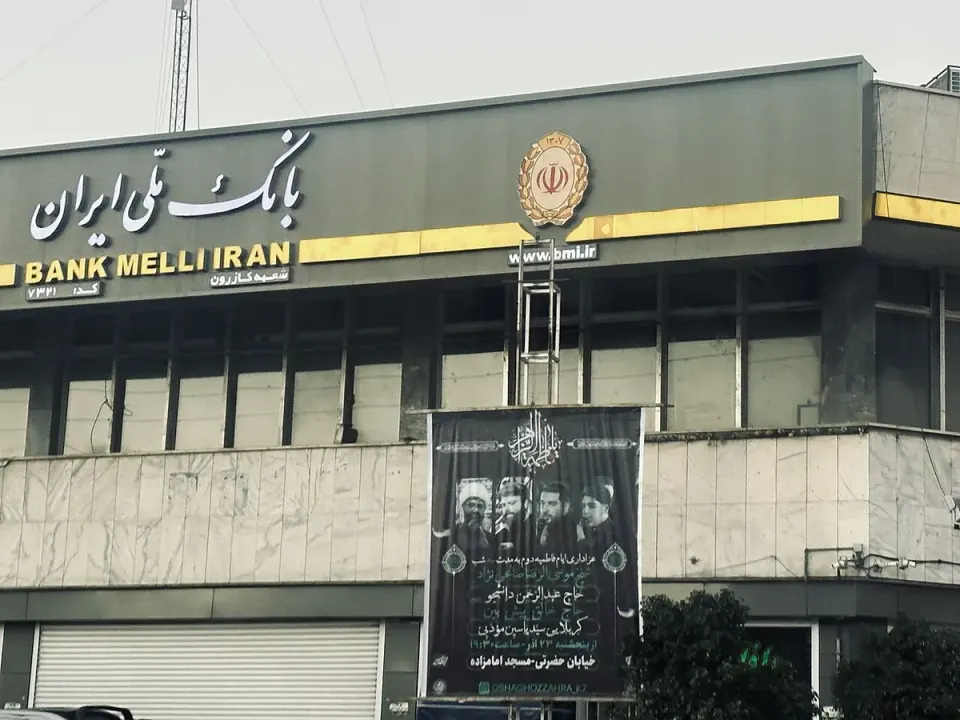
For the average Iranian, this is more than just geopolitical posturing. Bank Melli serves as a primary artery for what remains of Iran’s international trade and state-level financial transactions. If the U.S. successfully pressures third countries to shutter these branches, the cost of moving money for essential imports—from medicine to industrial machinery—will inevitably rise. This creates a feedback loop that puts long-term pressure on the Rial, even if the currency remained stable in this morning's opening trade.
What makes this escalation different is the timing. As the U.S. approaches its own political transitions, the Treasury is moving to 'bolt down' sanctions regimes so they cannot be easily reversed. By framing this as a 'war,' the U.S. is signaling that it will treat any entity facilitating Bank Melli’s operations with the same severity as a direct combatant in a financial conflict.
Tehran’s 'Chilling' Information Firewall
While the external economic pressure builds, internal legislative moves are aiming to tighten the flow of information. Iranian lawmakers are currently debating a bill that would criminalize all contact with foreign media outlets. Rights groups have labeled the move "chilling," warning that it essentially attempts to turn ordinary civic engagement or journalistic cooperation into a national security crime. The law follows the mass anti-regime protests of January and appears designed to ensure that future unrest remains undocumented by the international community.
If passed, the law would make it a criminal offense for researchers, activists, and even ordinary citizens to provide information, interviews, or visual evidence to foreign press agencies. This would effectively place a legal 'Great Firewall' around the Iranian public, making the risk of speaking out prohibitively high. For the business community, this adds another layer of risk; even sharing economic data or market analysis with foreign institutions could potentially be interpreted as a violation of this broad and vaguely defined security mandate.
This domestic policy shift suggests that the government is prioritizing information control over international legitimacy. By severing the links between the Iranian society and the global media landscape, the state is betting that it can manage domestic crises with less international scrutiny, even as the economic pain of sanctions—like those targeting Bank Melli—continues to mount.
The 100-Meter Robot: China’s Superhuman Sprint
In a display of technological prowess that has stunned the sports and tech worlds alike, a Chinese humanoid robot has reportedly broken Usain Bolt’s legendary 100-meter world record. While the feat took place in a controlled environment, the implications are vast. The robot achieved a speed and efficiency that exceeds the biological limits of the fastest human in history, signaling that the gap between experimental robotics and real-world application is closing faster than Western analysts predicted.

This isn't just about sports; it is a manifestation of the intense AI and robotics race between Washington and Beijing. For a country like China, which is facing a shrinking labor force and an aging population, the development of humanoid robots capable of superhuman physical feats is a strategic necessity. These machines are eventually intended for high-stakes environments—from manufacturing floors to potential battlefield applications—where human endurance and speed are limiting factors.
For global markets, this reinforces the dominance of the 'AI trade.' While the immediate market reaction in Tehran is focused on local currency, the broader global trend shows that capital is flowing toward the nations that can turn silicon and code into physical dominance. As China continues to hit these milestones, the pressure on the U.S. to accelerate its own tech-centric industrial policy will only increase, further fracturing the global trade landscape into competing technological blocs.
Frequently Asked Questions
What does the closure of Bank Melli's foreign branches mean for the Rial?
How will the new media law in Iran affect businesses?
Why is the Chinese robot record significant for global markets?
Understanding Economic Sanctions: A Tool of 'Economic War'
Economic sanctions are a powerful foreign policy tool, often described as a form of 'economic war' due to their intent to exert pressure without direct military conflict. They involve the imposition of restrictions on trade, finance, or travel against a target country, entity, or individual. Governments employ sanctions for various reasons, including deterring nuclear proliferation, combating terrorism, promoting human rights, or compelling a change in a target state's behavior, as seen in the case of sanctions against institutions like Bank Melli.
These measures operate through several mechanisms. They can include comprehensive trade embargoes, asset freezes on individuals or institutions, restrictions on financial transactions, and limitations on access to international banking systems. The goal is to isolate the target from the global economy, making it difficult for them to conduct international business, access foreign currency, or secure essential goods and services. This economic pressure is intended to create internal dissent or force the target government to alter its policies to alleviate the economic hardship.
However, economic sanctions often carry significant intended and unintended consequences. While they aim to compel policy changes, they can also inflict severe economic hardship on the general population, leading to humanitarian concerns. Furthermore, sanctions can inadvertently foster the development of alternative financial systems, black markets, or illicit trade routes. For instance, restrictions on a country's access to the U.S. dollar can lead to a surge in demand for alternative currencies or assets like gold, impacting local exchange rates (e.g., USD/IRR) and commodity prices as people seek stable stores of value outside the formal, sanctioned economy.
The effectiveness of economic sanctions is a subject of ongoing debate among policymakers and scholars. While some argue they are a necessary non-military option to address international challenges, others point to their mixed track record, potential for unintended harm, and the capacity of sanctioned entities to adapt and circumvent restrictions. Understanding the intricate dynamics of economic sanctions is crucial for comprehending global geopolitical and economic shifts.