
Iran-Oman Talks on Yemen, Oil Surges Amid Hormuz Threats, and Iran's Death Penalty Escalation Grip Markets
مذاکرات ایران و عمان بر سر یمن، جهش قیمت نفت با تهدیدات هرمز و تشدید مجازات اعدام در ایران، بازارهای جهانی را درگیر کرد
Overnight, diplomatic efforts between Iran and Oman regarding Yemen's future emerged as a key regional development, potentially signaling a path for de-escalation. Simultaneously, global oil prices surged past $106 a barrel following new threats from Iranian officials concerning tanker attacks in the vital Strait of Hormuz, adding a significant risk premium to energy markets. Domestically, human rights groups warned of Iran's escalating use of the death penalty, highlighted by a recent blasphemy sentence for a young woman, underscoring persistent internal pressures.
At time of publishing
USD
259,800
Toman
Gold 18K
25.73M
Toman / gram
Bitcoin
$83,400
US Dollar
Tether
259,267
Toman
Market Open
Good morning, Arzbin readers. As the market opens on this Wednesday, ۲۲ مهر ۱۴۰۵, we're seeing some interesting movements, particularly in the precious metals and coin markets, while the Toman holds steady against the dollar. The USD/IRR exchange rate remains unchanged at 259,800 Toman for a dollar, a stability that provides a moment of calm amidst regional uncertainties. This steadiness could reflect a wait-and-see approach from traders, anticipating further developments on geopolitical fronts that could shift sentiment.
Meanwhile, gold and coins have shown a slight upward trend. The 18k gold gram saw a modest increase of 0.1%, moving from 25,712,175 Toman to 25,728,334 Toman. More significantly, the Emami coin experienced a notable rise of 0.8%, climbing from 258,000,000 Toman to 260,000,000 Toman. This uptick in precious metals often signals investors seeking safe haven assets in times of perceived risk, a mood that seems to be subtly influencing the domestic market despite the dollar's static position.
Globally, Bitcoin is trading around $83,400, holding its ground without significant 24-hour directional changes indicated in overnight data. The relative stability across these key indicators suggests a cautious start to the trading day, with market participants closely watching international headlines for cues that could dictate the next major shifts. The interplay of regional diplomacy and global energy dynamics will likely set the tone for the coming hours.
Iran and Oman Discuss Yemen Amid Regional Diplomatic Push
In a significant overnight development, Iranian Foreign Minister Abbas Araghchi engaged in a phone conversation with his Omani counterpart, Sayyid Badr bin Hamad Al Busaidi, to delve into the latest regional dynamics, with a particular focus on the situation in Yemen. This dialogue, reported by IRNA, underscores Oman's enduring role as a regional mediator and highlights the ongoing efforts to address one of the Middle East's most protracted and devastating conflicts. For years, the conflict in Yemen has been a proxy battleground, drawing in regional powers and causing immense humanitarian suffering.
Oman has consistently sought to facilitate diplomatic solutions and de-escalate tensions across the Gulf, often serving as a crucial back-channel for communications between Iran and other nations. The timing of this conversation is particularly noteworthy, coming amidst heightened regional anxieties, including recent reports of Iranian officials threatening further action in critical shipping lanes. Such high-level discussions, even if exploratory, can offer a glimmer of hope for stability and could be interpreted by markets as a signal of ongoing, albeit fragile, diplomatic engagement.
The implications for the broader region are considerable. Any movement towards a resolution in Yemen could significantly reduce geopolitical risk, potentially easing pressure on oil prices and fostering a more stable environment for trade and investment in the Gulf. For Iran, engaging in such dialogue, especially with a neutral and respected neighbor like Oman, could be seen as an attempt to project a more diplomatic stance amidst increasing international scrutiny and pressure. However, the path to peace in Yemen remains complex, fraught with numerous internal and external challenges, and these talks represent just one step in a long process.

Iran's Escalating Use of Death Penalty Draws International Alarm
In a deeply concerning development, human rights groups have raised a stark alarm over the increasing number of death sentences and executions within Iran, following reports that a 23-year-old accounting student, Najmeh Amini, has been handed a death sentence for 'blasphemy' over a social media post. Amini, currently held in Vakilabad prison in Mashhad, also faces a separate 12-year prison sentence from a revolutionary and a criminal court. This case is part of a broader trend, with rights organizations warning of Tehran's regime's escalating use of capital punishment to suppress dissent, tallying at least 600 executions this year alone.
This alarming surge in executions underscores the Iranian government's relentless crackdown on perceived opposition and its tightening grip on social and political expression. The use of 'blasphemy' charges for social media activity highlights the regime's efforts to control online discourse and enforce strict religious interpretations through severe judicial penalties. Such measures are often employed to instill fear and deter public dissent, particularly in the wake of widespread protests and ongoing internal pressures against the government.
The international community is likely to react with strong condemnation to these developments, potentially leading to further diplomatic isolation for Iran and increased calls for targeted sanctions related to human rights abuses. For the Iranian populace, these reports amplify a pervasive sense of fear and injustice, which can fuel further social unrest and deepen the divide between the government and its citizens. Economically, such widespread human rights violations can deter foreign investment and trade, further exacerbating the country's already strained economic situation by diminishing international trust and goodwill.
Oil Prices Surge Above $106 as Iran Threatens More Tanker Attacks
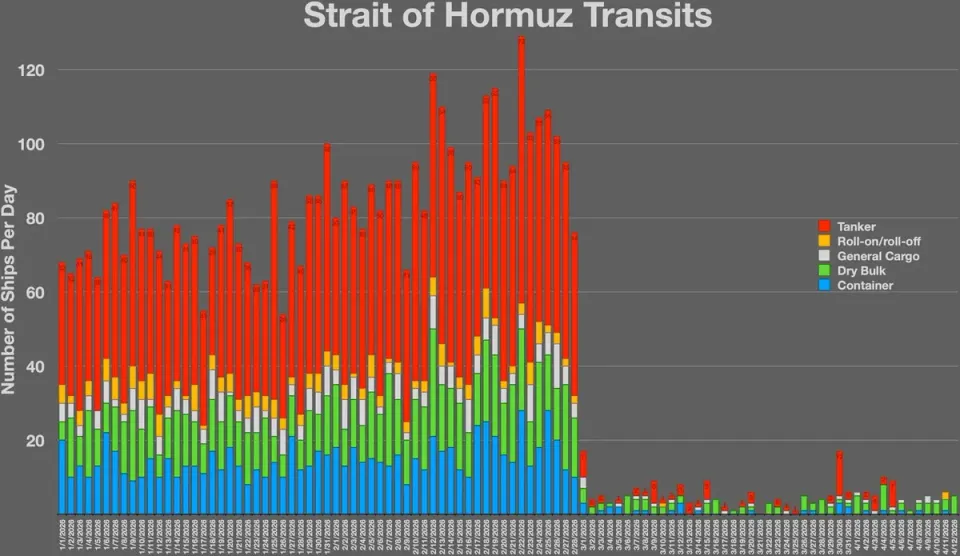
Global crude oil prices experienced a significant climb overnight, with Brent crude reaching $106.37 per barrel and West Texas Intermediate trading at $94.72. This surge was primarily triggered by reports that Iranian officials have threatened to intensify strikes on tankers in the Strait of Hormuz, deploying new tactics to disrupt one of the world's most critical shipping lanes. The Strait of Hormuz is a narrow waterway through which roughly one-fifth of the world's total oil consumption, and a substantial portion of Iran's own oil exports, passes daily, making any threat to its security a major concern for global energy markets.
The context of these threats is further complicated by geopolitical tensions, including earlier reports from Israeli media suggesting that Benjamin Netanyahu had urged former U.S. President Trump to resume bombing Iran. Such rhetoric, coupled with direct threats to shipping, injects a substantial risk premium into oil prices. Traders are factoring in the potential for supply disruptions, which can have immediate and far-reaching effects on global economies. The escalating rhetoric and actions underscore a volatile regional environment, where miscalculation could lead to significant economic and security consequences.
For consumers and businesses worldwide, this translates into potentially higher energy costs and inflationary pressures. For Iran, while it is an oil-exporting nation, persistent regional instability and the threat of international confrontation can deter foreign investment, complicate its own oil sales, and increase the cost of imports due to higher shipping insurance and overall economic uncertainty. The rise in oil prices also typically correlates with an increased demand for safe-haven assets like gold, which we observed a slight uptick in during the market open, reflecting a broader investor apprehension.
Australia's Enduring Reliance on Gas for Power and Industry
On the other side of the world, Australia's Resources Minister Madeleine King delivered a clear message to the press club, stating that Australian industry will remain "reliant on gas for the foreseeable future." This declaration comes as the government plans to implement a national gas reservation scheme, expected to take effect from 2028, which aims to reduce power prices for consumers and businesses. While the minister did not provide specific price targets, the policy underscores Australia's strategic approach to its vast natural gas reserves amidst global energy transitions.
Australia, a major liquefied natural gas (LNG) exporter, faces the dual challenge of meeting its domestic energy needs while navigating international pressures to transition to cleaner energy sources. The proposed gas reservation scheme reflects a commitment to ensuring affordable and reliable energy for its industrial sector, recognizing gas as a crucial bridge fuel. This policy aims to balance the economic benefits of gas exports with the necessity of maintaining competitive domestic energy prices, a challenge many resource-rich nations grapple with.
The implications extend beyond Australia's borders, offering a glimpse into the complex global energy landscape. As developed economies strive for decarbonization, the continued reliance on natural gas highlights the practical difficulties and economic imperatives involved in phasing out fossil fuels. This narrative contributes to the broader global energy market outlook, influencing long-term investment decisions in both conventional and renewable energy infrastructure. It also signals that while the world is moving towards green energy, the transition will be gradual and will require significant contributions from traditional energy sources for decades to come, impacting global supply-demand dynamics.
Frequently Asked Questions
Why did the Emami coin price increase significantly while USD/IRR remained stable?
How do Iran's threats to tanker attacks in the Strait of Hormuz directly impact global oil prices?
What is the significance of the Iran-Oman talks regarding Yemen?
What are the broader implications of the death sentence handed to Najmeh Amini for 'blasphemy'?
Does Australia's continued reliance on natural gas impact global energy transition efforts?
The Strategic Importance of the Strait of Hormuz and Its Influence on Global Energy Markets
The Strait of Hormuz is a narrow waterway that connects the Persian Gulf with the Gulf of Oman and the wider Indian Ocean. At its narrowest point it is only about 21 nautical miles (39 km) wide, yet it serves as the maritime gateway for virtually all of the oil and gas exports from the Gulf states, including Saudi Arabia, Iran, Iraq, Kuwait, and the United Arab Emirates.
Because of its geography, the strait handles roughly 20‑30 % of the world’s daily oil trade—about 21 million barrels per day in normal years. This concentration means that any disruption—whether a mechanical accident, a naval confrontation, or a deliberate blockage—can instantly tighten global supply and send prices soaring.
The strait has been a flashpoint for decades. During the Iran‑Iraq War (1980‑88) both sides mined the waterway, prompting the U.S. Navy’s “Operation Earnest Will” to escort tankers. More recently, in 2019 a series of missile attacks on oil tankers and, in 2020, a wave of drone and missile strikes attributed to Iran briefly halted traffic, causing Brent crude to jump by several dollars per barrel. Markets react not only to actual closures but also to the perception of risk; traders price in a “geopolitical risk premium” that lifts oil futures and often pushes investors toward safe‑haven assets such as gold.
The ripple effects extend beyond crude. Higher oil prices raise transportation and production costs worldwide, feeding into inflationary pressures that central banks must address. Simultaneously, gold prices tend to rise as investors seek stability, and regional currencies—especially those of oil‑exporting nations—experience volatility. Understanding the strait’s strategic role helps explain why diplomatic talks, such as the recent Iran‑Oman dialogue on Yemen, can have an outsized impact on global markets.
To mitigate the concentration risk, the international community has explored alternatives: expanding the capacity of pipelines, developing the Red Sea‑Suez corridor, and even considering longer routes around the Cape of Good Hope for bulk shipments. Nonetheless, as long as the bulk of Gulf oil must pass through Hormuz, the waterway will remain a key barometer of geopolitical tension and energy market dynamics.
Topics
Related Articles