Trump Signals US Restraint on Iran, Oil Prices Dip, Markets Eye Global Shifts
ترامپ بر خویشتنداری آمریکا در قبال ایران تاکید کرد؛ قیمت نفت کاهش یافت، بازارهای جهانی در تکاپو
Overnight, former US President Trump indicated a significantly lower likelihood of further US attacks on Iran, a statement that immediately impacted oil markets, sending prices downward. Meanwhile, global economic sentiment faces a jolt as mortgage holder confidence in Australia plummets to a three-decade low, raising recession fears.
At time of publishing
USD
264,200
Toman
Gold 18K
25.76M
Toman / gram
Bitcoin
$74,771
US Dollar
Tether
262,898
Toman
Market Open: Stability Amidst Shifting Geopolitics
As Tehran opens its markets this سهشنبه ۱۹ آبان ۱۴۰۵, the USD/IRR exchange rate holds steady at 264,200, showing no change in the last 24 hours. This stability in the local currency, alongside gold and cryptocurrencies, belies a significant shift in the global geopolitical landscape. The price of 18k gold per gram remains unchanged at 25,762,962 Toman, and the Emami coin is also static at 259,000,000 Toman. Bitcoin, a key indicator of risk appetite, hovers around $74,771, also showing minimal movement. This overnight calm in Iranian markets appears to be a direct reflection of a broader international narrative shift, particularly concerning US-Iran relations.
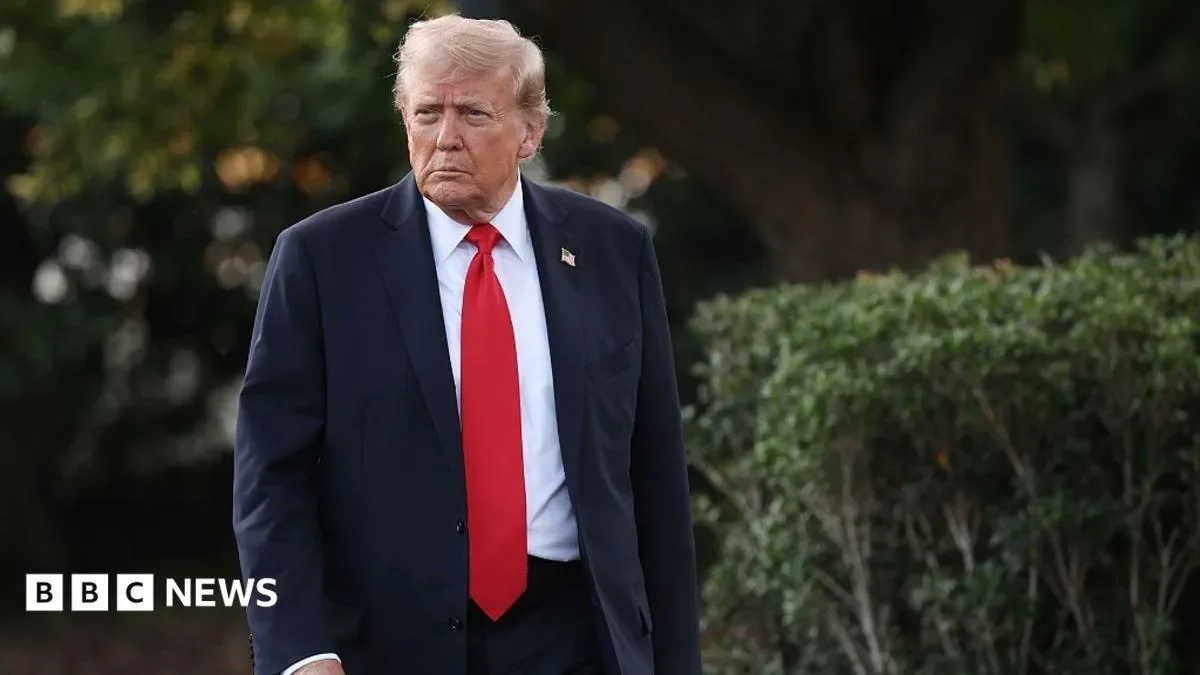
The most impactful news overnight comes from former US President Donald Trump, who stated that further US attacks on Iran are 'highly unlikely.' This signal of restraint, if maintained, could significantly alter risk premiums across various markets, from oil to currencies. While official US policy may not have formally changed, such public statements from a prominent figure can heavily influence market sentiment and investor behavior. For Iran, this could translate into a more predictable operating environment, potentially easing currency pressures and fostering greater confidence in trade and investment, though the long-term implications remain to be seen.
---
Trump Signals Restraint, Easing Geopolitical Tensions
Former US President Donald Trump's declaration that more US attacks on Iran are 'highly unlikely' has sent ripples through global markets and diplomatic circles. Speaking on the current "status quo" with Iran, Trump emphasized that while the US remains prepared for any escalation, the immediate prospect of further military action has diminished. This statement is particularly significant given the heightened tensions in the region following recent exchanges and the broader geopolitical backdrop of ongoing conflicts.
The immediate consequence of this de-escalatory rhetoric was felt in oil prices, which saw a notable plunge. Brent crude dipped below $92 per barrel, and WTI followed suit, trading around $85.81. This reaction underscores the market's sensitivity to US-Iran relations, a key factor in global energy supply stability. The implicit message from Trump's statement suggests a potential shift away from direct confrontation, possibly opening avenues for diplomatic engagement or at least a period of reduced direct military posturing. This could provide a much-needed breathing room for regional stability and influence economic forecasts.
---
Australian Mortgage Confidence Collapses Amid Recession Fears
In stark contrast to the geopolitical calm signaled by Trump's remarks, domestic economic sentiment in Australia has hit a significant low. A recent Westpac survey revealed that confidence among mortgage holders has plummeted to its lowest level since 1994. This dramatic decline reflects a growing sense of "helplessness" regarding the economic outlook, with many households anticipating a year that "feels like a recession."
This sentiment crash comes as Treasurer Jim Chalmers faces increasing pressure to manage public spending and navigate a challenging economic environment. The survey's findings signal deep-seated pessimism about near-term economic prospects. While there's a possibility of a Reserve Bank rate cut within the next year, the current mood among consumers suggests that such measures might not be enough to counteract the pervasive anxiety. For Iranians watching global economic indicators, this serves as a stark reminder of how interconnected and sensitive consumer confidence is to macroeconomic conditions, inflation, and interest rate expectations, even in seemingly distant economies.
---
Impeachment Resolution Against US War Secretary Submitted to Congress
Adding another layer to the complex US political landscape, a Republican Representative has submitted an impeachment resolution against US Secretary of War Pete Hegseth. The resolution cites Hegseth's role in US military actions, including operations against Iran, Yemen, and Venezuela. This move, while unlikely to lead to removal from office, highlights internal political divisions within the US and scrutiny over its foreign policy and military engagements.
For Iran, such domestic political maneuvers in the US, even if symbolic, can be interpreted in various ways. They might suggest a potential for shifts in US foreign policy depending on the political winds, or they could indicate a desire by some factions to hold specific officials accountable for ongoing military actions. While this particular impeachment effort focuses on actions already taken, it adds to the ongoing discourse about US military involvement and its international repercussions, a topic of constant interest for Tehran.
Frequently Asked Questions
What is the current USD/IRR rate?
How did Trump's statement affect oil prices?
What is the economic sentiment in Australia?
What is the significance of the impeachment resolution against the US War Secretary?
Political Risk Premium and Its Effect on Oil Prices
The political risk premium (PRP) is the extra return that investors demand for holding assets exposed to political uncertainty, such as changes in government, sanctions, or geopolitical conflicts. In commodity markets, especially oil, the PRP is baked into forward curves and spot prices because oil production and transportation are highly sensitive to government actions and international relations. When a country like Iran faces heightened tensions with the United States, the perceived risk of supply disruptions rises, and market participants price that risk into oil contracts, often pushing prices up even before any physical shortage occurs.
Geopolitical events create risk premiums through several channels. First, sanctions can restrict a nation's ability to export oil, directly reducing global supply. Second, the threat of conflict can jeopardize shipping routes such as the Strait of Hormuz, a chokepoint through which about a third of the world’s oil passes. Third, political instability can affect the reliability of production data, making it harder for traders to assess true market fundamentals. All these factors are quantified by analysts through risk‑adjusted discount rates, which raise the cost of capital for oil projects and lift futures prices.
The PRP is not static; it fluctuates with the intensity of political headlines. For example, when former President Trump signaled a softer stance toward Iran, markets interpreted a lower probability of renewed sanctions, and the oil price premium contracted, leading to a noticeable dip in spot prices. Conversely, when impeachment battles or election uncertainty in the U.S. raise concerns about policy continuity, the premium can widen, adding volatility to the market.
Investors and policymakers monitor the political risk premium using tools like country risk ratings, commodity forward curves, and event‑driven scenario analysis. Understanding the PRP helps traders hedge exposure, governments gauge the economic impact of diplomatic moves, and companies decide whether to invest in new oil projects under uncertain political climates.