Oil Rebounds to $92 as Houthi Strikes Hit Riyadh; Anthropic Founders Cash Out $2B in Historic IPO
بازگشت نفت به کانال ۹۲ دلار در پی حملات به ریاض؛ خروج سرمایه ۲ میلیارد دلاری موسسان آنتروپیک در عرضه اولیه تاریخی
Global energy markets are on edge after Houthi strikes targeted Saudi Arabia’s financial heart, reversing a week-long oil price decline. Simultaneously, the AI sector hit a fever pitch as Anthropic’s public debut minted new billionaires and set a $105 billion valuation benchmark.
At time of publishing
USD
270,700
Toman
Gold 18K
23.82M
Toman / gram
Bitcoin
$61,870
US Dollar
Tether
271,693
Toman
Market Open — Friday, November 20, 2026
The Tehran market opens this Friday morning, November 20, 2026, with a notable divergence between currency stability and precious metals. The US Dollar (USD/IRR) remains flat at 270,700 Toman, showing no movement over the last 24 hours despite the rising geopolitical temperature in the region. This stability suggests that local demand has yet to react to the overnight escalations, or that market makers are maintaining a tight grip on liquidity ahead of the weekend.
In contrast, the gold market is seeing a significant correction. 18-karat gold fell by 1.7%, dropping from 24,232,420 to 23,823,814 Toman per gram. This decline reflects a cooling of local gold premiums even as global spot prices remain elevated at $3,544.72 per ounce. Bitcoin continues to trade in a volatile range, currently sitting at $61,870, as institutional investors weigh the impact of new regulatory proposals in the US against a backdrop of increasing global risk.
Houthi Strikes on Riyadh Financial District Ignite Oil Rebound
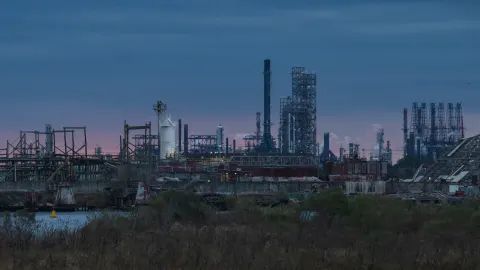
Geopolitical tensions reached a boiling point overnight following a devastating Saudi airstrike on a civilian boat near Hays, Yemen, which reportedly killed 19 displaced people. In swift retaliation, Ansarullah (Houthi) forces launched a series of strikes targeting the very heart of Saudi Arabia’s economic infrastructure. Reports indicate that the attacks reached Riyadh’s financial district and the headquarters of the Kingdom’s sovereign wealth fund, as well as key petrochemical facilities. This marks a significant escalation, shifting the focus from peripheral shipping lanes to the administrative and financial nerve centers of the world’s largest oil exporter.
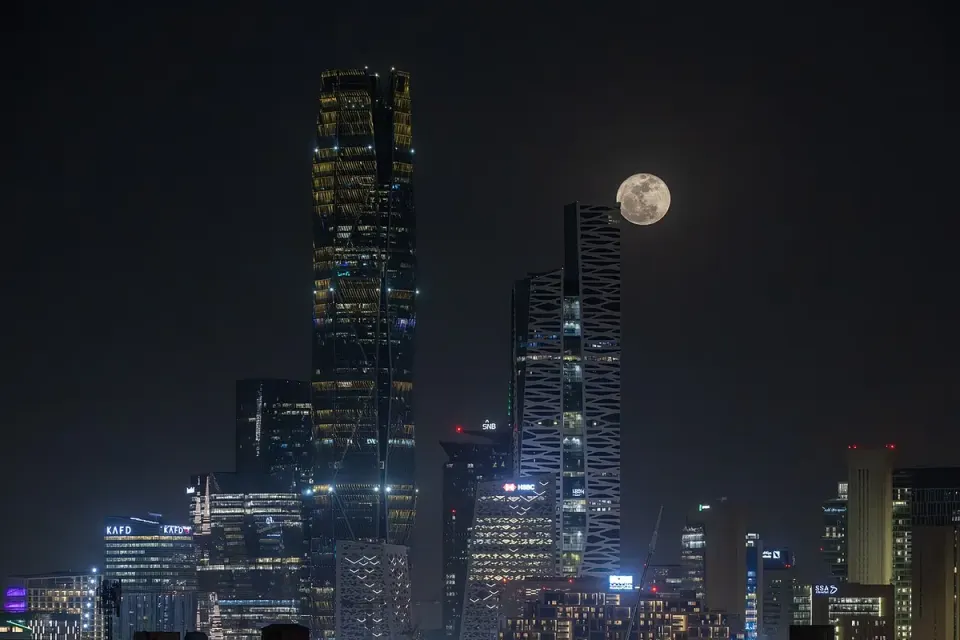
The market reaction was immediate. Brent crude prices, which had been trending downward earlier in the week, rebounded sharply to $92.67 per barrel. Investors are now pricing in a higher 'risk premium' due to the renewed threat to Middle Eastern supply chains. The fact that the strikes targeted the sovereign wealth fund’s headquarters sends a chilling message to international investors about the security of Saudi Arabia's 'Vision 2030' projects. For Iranian readers, this volatility often serves as a double-edged sword: while higher oil prices can theoretically increase national revenue, the accompanying regional instability usually exerts upward pressure on the dollar and inflation.
Anthropic’s $105 Billion IPO: A Litmus Test for the AI Era
While the Middle East grapples with conflict, Wall Street witnessed a historic milestone in the technology sector. Anthropic, the AI safety-focused startup, completed its initial public offering (IPO) at a staggering valuation of $105 billion. This event represents the first time a 'pure-play' generative AI company of this scale has hit the public markets. The stock closed its first day up 17%, signaling that despite concerns about an 'AI bubble,' institutional appetite for high-level machine learning infrastructure remains insatiable.
The IPO was also notable for the massive liquidity it provided to the company’s inner circle. Anthropic’s seven founders reportedly cashed out nearly $2 billion in shares at the upgraded price of $83 per share. This massive exit has sparked debates among market analysts regarding the long-term sustainability of such valuations. However, for the broader tech ecosystem, the success of this IPO provides a much-needed benchmark for other AI unicorns waiting in the wings. It proves that the market is willing to reward companies that can demonstrate both technical prowess and a path toward industrial-scale deployment.
Medical Breakthrough: The Pill That Makes Tumors Vanish
In a rare piece of transformative news for global health, clinical trials for a new daily pill called Daraxonrasib have shown extraordinary results in treating pancreatic cancer—one of the world’s deadliest malignancies. Data released overnight suggests that the drug has not only shrunk tumors in a significant portion of trial participants but has led to their complete disappearance in some cases. Unlike traditional chemotherapy, which ravages the body with broad toxicity, this targeted therapy focuses on specific genetic mutations that drive tumor growth.

This breakthrough could fundamentally shift the prognosis for thousands of patients who previously had very few options. Pancreatic cancer has long been a 'death sentence' due to its late-stage detection and resistance to standard treatments. While the drug is still moving through regulatory hurdles, the 'massive hope' cited by medical experts suggests a fast-track approval process may be on the horizon. For the pharmaceutical industry, this represents a multi-billion dollar shift in oncology, but for the public, it is a reminder of the quiet, persistent progress of science amidst a world often dominated by geopolitical noise.
Frequently Asked Questions
چرا قیمت نفت با وجود ثبات دلار در ایران افزایش یافت؟
ارزشگذاری ۱۰۵ میلیارد دلاری آنتروپیک چه معنایی برای بازار تکنولوژی دارد؟
دلیل کاهش قیمت طلا در بازار تهران با وجود تنشهای منطقهای چیست؟
Understanding the Geopolitical Risk Premium in Oil Prices
The geopolitical risk premium is the extra amount investors demand for holding a commodity whose price can be jolted by political events—wars, sanctions, terrorist attacks, or diplomatic disputes. In the case of crude oil, which is produced in a handful of politically volatile regions, this premium can swing dramatically, pushing prices above what pure supply‑and‑demand fundamentals would suggest.
When the Houthi rebels in Yemen launch missiles at Saudi facilities, as they did in the recent strike on Riyadh, the market immediately reassesses the likelihood of supply disruptions. Even if actual output is only temporarily affected, traders price in the possibility of longer‑term interruptions, sending the front‑month Brent contract up to $92 per barrel. This reaction is a classic illustration of the risk premium: the price includes a buffer for uncertainty, not just the current flow of oil.
The premium does not operate in isolation. Assets perceived as safe havens—gold, the U.S. dollar, and certain government bonds—often rise when geopolitical tension spikes, because investors shift capital away from riskier commodities. The recent drop in gold prices amid easing Iran‑related tensions, for example, reflects a reduced demand for that safety net, while oil prices remain buoyed by the lingering threat of Middle‑East conflict.
For policymakers and investors, recognizing the geopolitical risk premium is crucial. Saudi Arabia’s Vision 2030 aims to diversify the kingdom’s economy away from oil, but the nation’s fiscal health still hinges on oil revenues that are vulnerable to regional instability. Understanding how political shocks embed a price cushion helps governments plan fiscal buffers and assists investors in calibrating hedging strategies.
In practice, analysts estimate the premium by comparing observed oil prices to a “neutral” price derived from production‑cost curves and global demand forecasts. The gap between the two—often expressed in dollars per barrel—offers a quantitative gauge of market anxiety, guiding everything from sovereign wealth fund allocations to corporate budgeting for energy‑intensive projects.
Topics
Related Articles