
The Cease-and-Seize Paradox: Why Gold and Coins are Outpacing the Dollar’s Rise
تناقض «آتشبس و توقیف»؛ چرا طلا و سکه از دلار پیشی گرفتند؟
While the US Dollar saw a modest 0.4% rise today, Gold and Emami coins surged by up to 1.7%, signaling a deep-seated market skepticism. We analyze how the ship seizures in the Strait of Hormuz are overriding Donald Trump’s ceasefire extension in the eyes of investors.
At time of publishing
USD
154,050
Toman
Gold 18K
17.78M
Toman / gram
Key figures
US Dollar
154,050
Iranian Toman
↑ 0.39% todayThe Toman's Quiet Struggle vs. Gold's Sprint
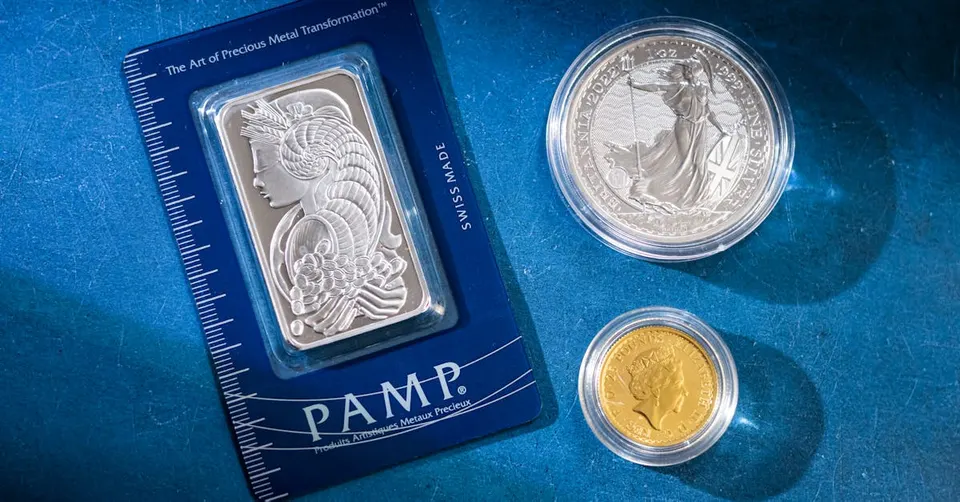
As of the evening session on Wednesday, April 22, 2026, the Iranian market is witnessing a fascinating divergence in asset performance. According to the latest 24-hour data, the US Dollar (USD/IRR) moved from 153,450 to 154,050 Toman, marking a modest increase of +0.4%. However, the real story lies in the precious metals sector. Gold 18k/gram jumped from 17,606,537 to 17,778,983 Toman (+1.0%), while the Emami coin outperformed both, rising from 174,000,000 to 177,000,000 Toman, a significant +1.7% surge. This disparity suggests that while the currency remains relatively anchored, the demand for 'hard' safe havens is accelerating rapidly.
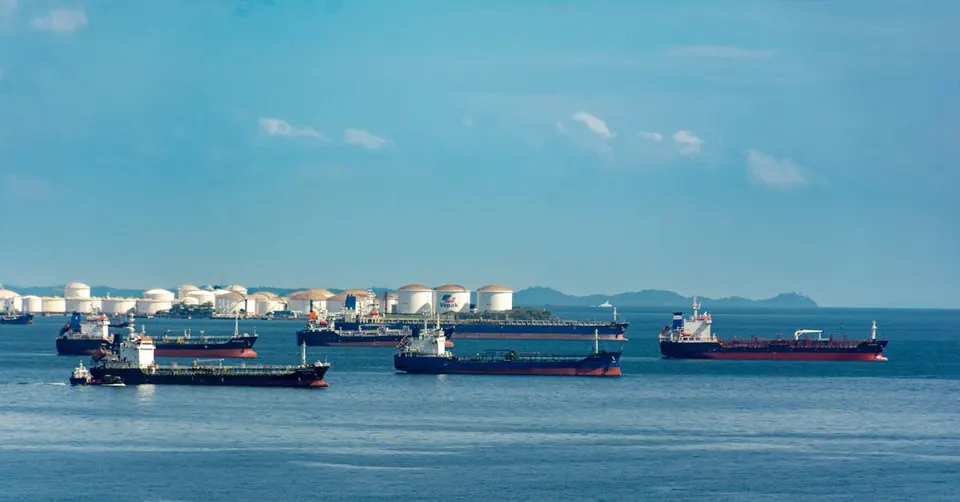
This price action occurs against a backdrop of contradictory geopolitical signals. On one hand, U.S. President Donald Trump has unilaterally extended the ceasefire with Iran, a move that theoretically should lower the risk premium. On the other hand, reports from the Strait of Hormuz indicate that Iranian forces have seized two cargo ships, citing maritime violations. For the Tehran market, the physical reality of the Strait appears to carry more weight than the diplomatic rhetoric coming from Washington. Investors are clearly hedging against a 'hot' escalation that could render the ceasefire temporary or hollow.
The Bull Case: The Strait of Hormuz Premium
The bullish argument for gold and coins rests on the increasing complexity of the 'Trumpflation' era combined with regional friction. When the Emami coin rises by 1.7% in a single day—nearly quadruple the rate of the Dollar—it signals that the 'bubble' or risk premium is expanding. This is driven by the fear that the Strait of Hormuz could become a choke point for global energy, as evidenced by the recent ship seizures. In my opinion, the market is pricing in a scenario where energy hoarding (as reported by the NYT) keeps global inflation high, making gold the only reliable store of value.
Furthermore, the global alarm triggered by Anthropic’s new 'Mythos' AI model cannot be ignored. When central banks and intelligence agencies begin emergency meetings over AI capabilities, it creates a sense of systemic instability. In such an environment, institutional and retail investors alike tend to flee toward assets that do not rely on digital infrastructure or centralized algorithms. Gold, currently trading at a staggering $4,738.40 per ounce, is benefiting from this 'tech-paranoia' that is sweeping through global financial hubs, including Tehran’s Grand Bazaar.
The Bear Case: The 'Trumpflation' Cooling Effect
Conversely, the bearish case for a continued rally in gold prices relies on the potential for a diplomatic breakthrough. While the ship seizures are provocative, they could be interpreted as a 'negotiation by deed'—a way for Tehran to exert leverage while the ceasefire is technically in place. If the 'unified proposal' Trump is waiting for actually materializes, the risk premium currently baked into the 177 million Toman Emami coin could evaporate almost overnight. In this analysis, the current 1.7% jump is a 'fear spike' that lacks the structural support of a full-scale war.
Additionally, Trump’s domestic standing is under pressure. With approval ratings slipping into the mid-30s and midterms approaching, the US administration may be forced to stabilize the Iran situation to prevent fuel prices from further fueling 'Trumpflation.' If the US military blockade is eased or if the Senate successfully passes the war powers resolution led by Tammy Baldwin, the geopolitical tension would de-escalate. A stronger-than-expected intervention by the EU, now unblocking €90bn for Ukraine, also suggests that Western powers are looking to close conflict fronts rather than open new ones, which would be fundamentally bearish for gold's safe-haven status.

The Verdict: A Market of Mistrust
My nuanced view is that we are currently in a 'Market of Mistrust.' The fact that the Dollar rose only 0.4% while gold rose 1.0% tells us that the Toman’s internal value is not the primary concern today; rather, it is the global price of risk. The market does not trust the ceasefire extension because the actions in the Strait of Hormuz speak louder than the press releases from the White House. This is a classic 'decoupling' where local currency movements are secondary to the movement of global commodities.
Looking ahead, the two macro factors that will tip the scale are the upcoming May Day protests in the US and the actual operational status of the Kharg Island oil terminal. If domestic unrest in the US forces Trump into an even more erratic foreign policy, gold will likely continue its upward trajectory. However, if the ship seizures are resolved without further military friction, we may see a 'mean reversion' where the Emami coin gives back its recent gains. As always, this is an analysis of current trends and not financial advice; the volatility of the current 'Cease-and-Seize' era remains unprecedented.
Watch
"PRAYERS IN THE SKY": Pope Leo Releases Rosary Balloons in Historic Visit to Mongomo | AK1C
DRM News
Frequently Asked Questions
Why did the Emami coin rise faster than the US Dollar today?
How does the 'Mythos' AI model affect gold prices in Iran?
Is the current ceasefire extension by Trump a bearish signal for gold?
What macro factors should I watch this week for price direction?
Gold as a Hedge Against Sanctions and Inflation in Iran
When a country faces extensive international sanctions, its official currency often loses value rapidly. In Iran, the U.S. dollar‑to‑rial (USD/IRR) exchange rate has been volatile for years, and the term “Trumpflation” has been coined to describe price spikes linked to U.S. policy and sanctions pressure. Under such conditions, investors and ordinary citizens turn to assets that are less vulnerable to government control, and gold has become the most popular choice.
Gold’s appeal lies in its intrinsic value, global recognisability, and ease of transport. Because it is not tied to any single nation’s monetary policy, a surge in gold purchases can protect wealth when the rial depreciates or when banks freeze foreign‑exchange accounts. In Tehran, the price of gold per gram often outpaces the official dollar rise, creating a “gold premium” that reflects both scarcity of hard currency and expectations of continued sanctions. This premium can be observed in market reports and in the behaviour of traders who hoard gold alongside other commodities such as oil.
The mechanism works like a feedback loop: sanctions limit Iran’s ability to earn dollars from oil exports, the rial weakens, and people scramble for gold, driving its price higher. The higher gold price, in turn, fuels inflation because gold is used as a benchmark for pricing everyday goods. Economists therefore monitor the gold‑to‑rial ratio as a leading indicator of macro‑economic stress, similar to how the U.S. monitors the dollar index.
Understanding this dynamic helps explain why headlines about “gold outpacing the dollar’s rise” are not just market gossip but a symptom of deeper geopolitical and monetary pressures. For policymakers, the lesson is clear: sanctions that cripple a nation’s foreign‑exchange earnings can unintentionally boost alternative stores of value, complicating any attempt to force economic change.
For those who want to dig deeper, the relationship between sanctions, currency devaluation, and gold demand is explored in academic papers on “sanctions evasion” and in reports by the IMF and World Bank, which track inflationary trends in sanction‑hit economies.