Iran Targets US Bases Amid Sanctions, Israel Warns of 'Desperate Steps'; Kyiv Spy Agencies Clash
ایران پایگاههای آمریکا را هدف قرار داد؛ هشدار اسرائیل درباره «اقدامات ناامیدکننده» تهران؛ درگیری سرویسهای جاسوسی در کییف
Geopolitical tensions are escalating as Iran reportedly targeted US-used air bases in the Gulf, prompting Israel to warn that sanctions could drive Tehran to extreme measures. Meanwhile, Ukraine grapples with internal discord after a "disgraceful" shootout between its own spy agencies in Kyiv, while the West Bank sees renewed violence following an Israeli military raid. Global markets are also reacting, with Broadcom's stock falling and China boycotting an art festival over Taiwan.
At time of publishing
USD
223,400
Toman
Gold 18K
23.49M
Toman / gram
Bitcoin
$79,768
US Dollar
Tether
222,200
Toman
Iran's Escalating Regional Actions Amid Sanctions Pressure
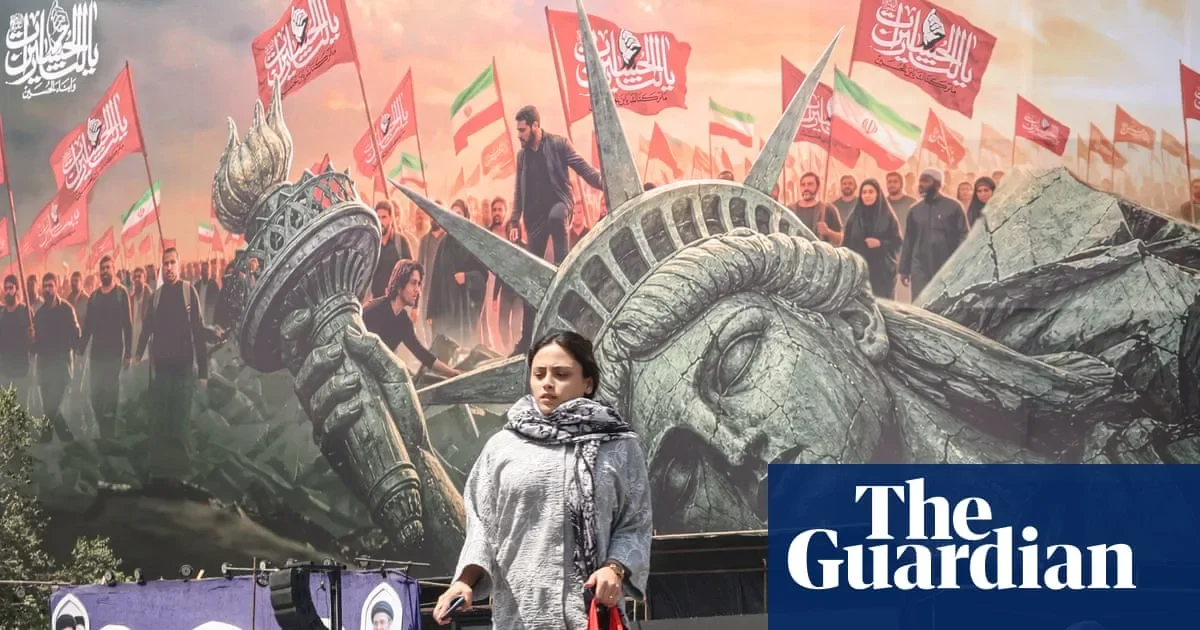
Reports indicate that Iran has targeted air bases used by the US in the United Arab Emirates and Kuwait. This development comes as Israel's defense chief issued a stark warning that mounting sanctions could push Tehran towards "desperate steps," fearing a potential regime collapse due to severe economic pressures. The Guardian reports that these actions demonstrate Iran's continued ability to project power in the Gulf, even after six months of conflict and an intensified US sanctions regime, which the Trump administration has described as an "economic D-day."
The continued targeting of US-linked assets, coupled with the threat of further escalation, significantly exacerbates regional tensions. Historically, such geopolitical volatility directly translates into increased uncertainty in domestic currency and gold markets. A more unstable regional landscape typically drives demand for safe-haven assets, which likely influenced the recent upward trend observed in gold and coin prices. Today, the USD/IRR moved from 222,300 to 223,400 (+0.5%), Gold 18k/gram from 22,784,985 to 23,489,080 (+3.1%), and Emami coin from 228,000,000 to 234,000,000 (+2.6%), reflecting this underlying anxiety and a search for value preservation among Iranian citizens.

Internal Turmoil in Ukraine: Kyiv Spy Agencies Clash
A shootout has reportedly occurred in central Kyiv between two key branches of Ukraine's security services: the domestic security service (SBU) and the military intelligence directorate (HUR). Several individuals were injured in the incident, which Ukrainian President Volodymyr Zelenskyy publicly condemned as "disgraceful," stating unequivocally that it "definitely shouldn’t have happened."
This internal clash between critical intelligence agencies underscores deep-seated tensions and potential rivalries within Ukraine's security apparatus, even as the nation faces an ongoing full-scale invasion. Such incidents raise serious questions about command and control, inter-agency coordination, and overall national unity at a time when external threats demand absolute cohesion. It suggests a vulnerability that could be exploited by adversaries, undermining public trust and international confidence in Kyiv's stability and governance.
The "disgraceful" shootout, as described by Zelenskyy, sends a troubling signal about Ukraine's internal stability. While the immediate impact on the battlefield is unclear, such public displays of discord among key security forces can significantly damage morale, divert critical resources, and create a perception of weakness. For global observers and allies providing essential aid, it could prompt concerns about the effectiveness and integrity of Ukrainian institutions, potentially influencing future support and strategic assessments of the conflict's trajectory.
Rising Tensions in West Bank: Deadly Israeli Raid
The Israeli military has reportedly killed two Palestinian youths during a raid in the village of Al Mughayir, located in the Israeli-occupied West Bank. Residents reported that the deadly confrontation originated from a dispute over livestock, highlighting the volatile nature of daily life and the pervasive tensions in the region.
Al Mughayir has become a critical flashpoint for escalating settler violence, and this latest incident further inflames an already tense situation. The recurring pattern of raids and confrontations, often stemming from seemingly minor disputes, reflects the broader, entrenched conflict over land and resources in the West Bank. The frequent involvement of military forces in such incidents often leads to Palestinian casualties, intensifying calls for international intervention and condemnation.
This deadly raid exacerbates the cycle of violence and deepens mistrust between Israelis and Palestinians, particularly in the West Bank. The deaths of two Palestinian youths are likely to fuel further unrest and protests, making the prospects for de-escalation even more challenging. For the wider geopolitical landscape, such events consistently draw international attention and criticism, complicating diplomatic efforts and potentially influencing regional stability and the positions of international actors on the Israeli-Palestinian conflict.
Market Focus: Broadcom's Stock Dip and Economic Outlook
Broadcom's stock experienced a notable decline today as Wall Street analysts and investors shifted their focus to the company's latest financial forecast. Despite the company delivering strong sales figures near the high end of its projected range, market expectations were reportedly even higher, leading to investor disappointment and a sell-off.
The reaction to Broadcom's forecast, even with robust current sales, illustrates a broader trend in the tech sector where extraordinary future growth is often already priced in. Anything less than stellar future guidance can trigger a significant market response. Analysts suggest that management might be taking a conservative stance on its potential, but the market often punishes perceived caution, especially in a high-growth sector. This intense focus on future outlook over current performance reflects investor anxieties about sustained growth in a high-interest rate environment and evolving tech demand.
Broadcom's stock performance serves as a bellwether for investor sentiment in the broader technology market, particularly concerning semiconductor and AI infrastructure companies. A dip in a major tech player like Broadcom, even if temporary, can signal caution for the entire sector and potentially influence overall market confidence. For the global economy, this highlights how investor expectations, rather than just raw numbers, often drive market movements, affecting portfolio values and potentially influencing the broader economic outlook, even as the U.S. economy, according to MarketWatch, continues to show signs of powering up.
Geopolitical Culture Clash: China Boycotts Art Festival Over Taiwan Exhibition
China has announced a boycott of the Gwangju Biennale, a prominent international art festival held in South Korea. The boycott stems from an exhibition within the festival that Beijing claims misrepresents Taiwan as an independent nation, an assertion that directly contradicts China's unwavering stance that Taiwan is an integral part of its territory.
This boycott is another clear manifestation of China's stringent "One China" policy, which vehemently opposes any international recognition or portrayal of Taiwan as a sovereign state. Beijing frequently leverages its significant economic and cultural influence to pressure countries and organizations that deviate from this established stance. The Gwangju Biennale's decision to present Taiwan in a way perceived by China as independent triggered this strong diplomatic and cultural response, underscoring the extreme sensitivity of the Taiwan issue for Beijing.
The incident at the Gwangju Biennale highlights the increasing politicization of international cultural events and the growing pressure from China on the global stage regarding its territorial claims. This move by Beijing could compel other cultural institutions and host nations to reconsider their approach to exhibiting works related to Taiwan, potentially leading to self-censorship to avoid similar boycotts or diplomatic repercussions. It underscores the ongoing geopolitical tensions surrounding Taiwan and China's unwavering commitment to its claims, impacting international relations and the freedom of artistic expression globally.

Frequently Asked Questions
What specific US bases were reportedly targeted by Iran?
What are the key reasons for the internal conflict within Ukraine's intelligence agencies?
How have market prices for USD, gold, and Emami coin reacted to the current geopolitical climate?
What is the significance of China's boycott of the Gwangju Biennale in the context of the "One China" policy?
What are the broader implications of the Israeli raid in Al Mughayir for regional stability?
Economic Sanctions: How Countries Use Financial Pressure as a Foreign‑Policy Tool
Economic sanctions are coercive measures imposed by one country—or a group of countries—against another to compel a change in policy without resorting to armed conflict. They can target entire economies, specific sectors such as oil and finance, or even individual officials and companies. By restricting access to international markets, freezing assets, and limiting trade, sanctions aim to create economic pain that translates into political pressure. The United States, for example, has maintained a complex web of sanctions on Iran for decades, seeking to curb Tehran’s nuclear program and support for militant groups.
Sanctions operate through a combination of legal authority, enforcement mechanisms, and international cooperation. In the U.S., the Office of Foreign Assets Control (OFAC) administers the sanctions regime, publishing lists of designated entities whose assets are blocked. Multilateral bodies like the United Nations can impose sanctions that enjoy broader legitimacy, but unilateral sanctions—such as those by the U.S. or the EU—often rely on secondary measures that penalize third‑party firms that do business with the target. This creates a ripple effect, forcing global banks and corporations to implement compliance programs to avoid secondary sanctions.
The effectiveness of sanctions is a subject of intense debate among scholars and policymakers. While sanctions can weaken a target’s economy and signal international condemnation, they may also entrench hard‑line positions, harm civilian populations, and push sanctioned states toward alternative partners. Iran’s pivot toward China and Russia in recent years illustrates how sanctions can reshape geopolitical alignments, as Tehran seeks to bypass restrictions on technology and finance.
Understanding sanctions is essential for interpreting headlines about military posturing, diplomatic warnings, or market reactions—such as the volatility in Broadcom’s stock when geopolitical risk spikes. By grasping how financial pressure is wielded, readers can better assess the broader strategic calculations behind actions like Iran’s threats against U.S. bases or Israel’s warnings about “desperate steps.”