
Far-Right Surge in Germany Shakes EU Stability as Toman Retreats 1.1% Amid Global Volatility
زلزله سیاسی در آلمان با پیروزی راستگرایان؛ عقبنشینی ۱.۱ درصدی دلار در بازار تهران
Germany's political landscape faces a historic shift as the AfD secures a massive state victory, signaling deep fractures in Europe's center. Meanwhile, the Iranian Toman sees a slight recovery as global markets navigate volcanic disruptions in Indonesia and speculative crypto targets.
At time of publishing
USD
224,300
Toman
Gold 18K
23.04M
Toman / gram
Bitcoin
$78,821
US Dollar
Tether
224,163.231
Toman
Germany’s Political Earthquake: The AfD’s Historic Surge
Germany is currently grappling with a political shift of seismic proportions after the Alternative für Deutschland (AfD) secured a staggering victory in the Saxony-Anhalt state elections. The far-right party, often criticized for its hardline anti-immigration stance and controversial rhetoric, captured approximately 43.8% of the vote. This result nearly doubles its previous performance and marks the most significant far-right victory in a German state election since the post-war era. The collapse of the mainstream center-right CDU, which fell to just 17.2%, and the struggle of the SPD to stay relevant at 9.3%, suggests that the traditional political 'center' in Europe’s largest economy is no longer holding.
This victory is not just a local phenomenon; it represents a broader trend of nationalist sentiment rising across the European Union. Mainstream parties are increasingly viewed as failing to address core issues such as economic stagnation, energy security, and immigration. For the global reader, this instability in Germany signals potential shifts in EU foreign policy and economic cohesion. As Germany enters a period of intense domestic soul-searching, the ripple effects could lead to more protectionist policies or a harder line on international aid and military spending, which would inevitably impact global trade and geopolitical alliances.

Toman Market Update: A Tactical Retreat Amid Regional Tension
In the Iranian domestic market, the start of the week has brought a surprising cooling period for currency and gold prices. The US Dollar (USD) sell rate moved from 226,700 to 224,300 Toman, marking a 1.1% decrease over the last 24 hours. This downward trend was mirrored in the precious metals sector, where the Emami coin dropped from 234,000,000 to 230,000,000 Toman (-1.7%). While global tensions remain high, particularly with ongoing regional conflicts, the local market seems to be engaging in profit-taking or reacting to a temporary lull in escalatory news from the Strait of Hormuz.
However, this retreat should be viewed with caution. Gold 18k/gram also saw a 1.4% decline, falling to 23,038,921 Toman, even as the global gold ounce price remains elevated at $4,414.60. The discrepancy between local cooling and global bullion strength suggests that the Toman’s current strength is driven more by local liquidity dynamics than by a fundamental shift in the economic outlook. Investors are likely watching the $80,000 resistance level for Bitcoin, which currently sits at $78,821, as a barometer for global risk appetite. If Bitcoin breaks higher, we may see a renewed flight to hard assets in the local market.
Volcanic Disruptions in Indonesia and Global Logistics
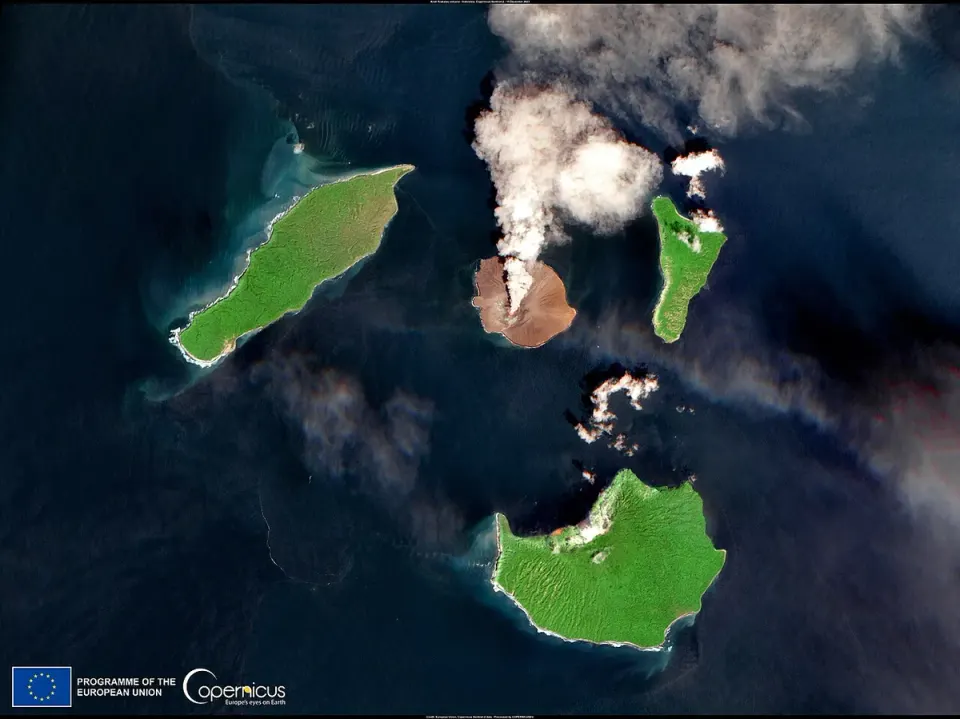
The eruption of the Anak Krakatau volcano in Indonesia has created a logistics crisis that is currently stranding over 340,000 people and forcing the closure of major airports. The volcano, located approximately 150km from the capital, Jakarta, began spewing massive amounts of lava and ash late Friday, leading to an extension of flight cancellations. This natural disaster is not just a humanitarian concern; Indonesia is a critical hub for Southeast Asian trade and shipping. The closure of airspace and potential disruptions to maritime lanes in the Sunda Strait could lead to delays in electronics and raw material shipments, further straining global supply chains that are already sensitive to geopolitical shocks.
Beyond the immediate logistical impact, natural disasters of this scale often have a secondary effect on energy markets and regional insurance premiums. As airports extend their closures, the demand for aviation fuel in the region has dipped, while the cost of rerouting cargo continues to rise. For investors, this serves as a reminder that systemic risks aren't always political or financial; environmental factors in key manufacturing hubs can trigger volatility in commodity prices and transportation stocks. The situation remains fluid, with Indonesian authorities monitoring the volcanic activity for signs of further escalation.
Bitcoin’s $1.3 Million Ambition vs. Current Stagnation
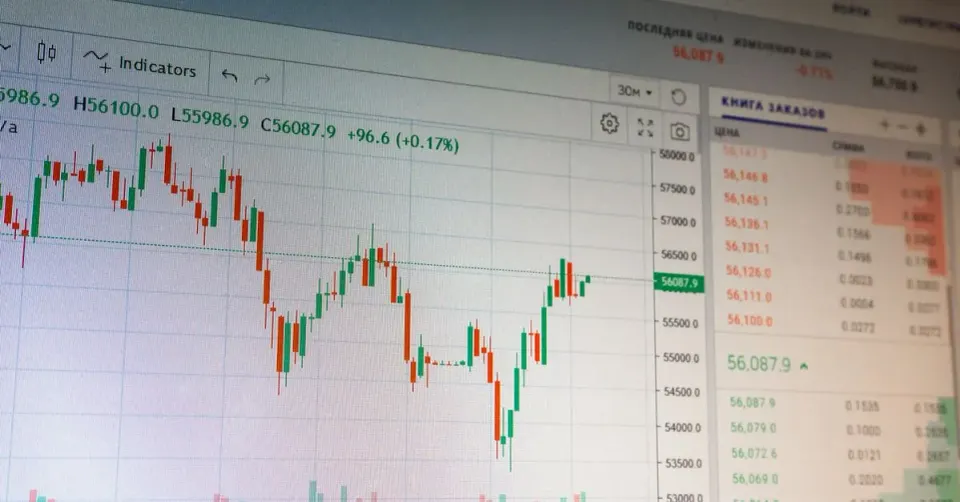
While Bitcoin currently trades around the $78,821 mark, struggling to maintain its momentum during the US Labor Day holiday, some analysts are making bold predictions of a $1.3 million price target. These high-valuation models are often based on the scarcity of Bitcoin relative to the expanding global money supply and its potential to replace a portion of the global gold market. However, the immediate reality is more grounded; low liquidity over the weekend saw the $80,000 level slip away from bulls, demonstrating that even the most optimistic long-term targets cannot overcome short-term macro headwinds.
On the technological front, real-world utility is becoming a more significant driver than pure speculation. For instance, Chainlink (LINK) has seen a surge in interest after Bottomline, a major SWIFT services provider, tapped the network to connect over 600 banks to blockchain settlement systems. This move highlights a growing trend where traditional finance (TradFi) is integrating with decentralized infrastructure to move trillions of dollars more efficiently. For the average investor, this suggests that while the $1.3 million Bitcoin target makes for great headlines, the actual value in the crypto space is increasingly being built through institutional adoption and infrastructure integration rather than just retail hype.
Frequently Asked Questions
چرا پیروزی حزب AfD در آلمان برای بازارهای جهانی اهمیت دارد؟
دلیل اصلی کاهش قیمت دلار و سکه در بازار امروز تهران چه بود؟
آیا پیشبینی ۱.۳ میلیون دلاری برای بیتکوین واقعبینانه است؟
Political Risk and its Economic Ripple Effects
In an increasingly interconnected world, political developments within one nation can send significant ripples across global markets. The concept of Political Risk refers to the uncertainty and potential for loss faced by investors, businesses, or governments due to political decisions, events, or instability. This risk can stem from a wide array of factors, including changes in government policy, civil unrest, international disputes, or, as highlighted by the recent headlines, the rise of populist or far-right movements that challenge established political and economic orders.
The emergence and growing influence of far-right parties in Europe, for instance, introduce substantial political risk by signaling potential shifts away from current trade agreements, immigration policies, and even the foundational principles of international cooperation. These movements often advocate for protectionist economic policies, increased national sovereignty over supranational bodies like the European Union, and stricter border controls. Such platforms create uncertainty about future regulatory environments, market access, and the stability of economic blocs, making it harder for businesses to plan and for investors to assess long-term returns.
The economic consequences of heightened political risk are varied and often immediate. For currency markets, political uncertainty can lead to depreciation as investors lose confidence in a nation's or bloc's economic future, as suggested by the "Toman retreat" in the headline. It can also deter foreign direct investment, increase borrowing costs for governments (as bond yields rise to compensate for perceived risk), and even trigger capital flight. Ultimately, sustained political risk can impede economic growth, disrupt supply chains, and undermine overall market stability, demonstrating how deeply intertwined politics and economics truly are.
Topics
Related Articles