
US Polarization Deepens as Araghchi Outlines Hormuz Strategy; Toman Retreasts 1.1% Amid Global Shifts
تعمیق دوقطبی در آمریکا و تبیین راهبرد هرمز توسط عراقچی؛ عقبنشینی ۱.۱ درصدی دلار در بازار تهران
The US political landscape faces new fractures over electoral policies and high-profile legal cases, while Iran's Foreign Minister briefs parliament on regional security. Meanwhile, the Iranian Toman saw a 1.1% recovery as gold prices dipped following a volatile trading session.
At time of publishing
USD
224,200
Toman
Gold 18K
23.01M
Toman / gram
Bitcoin
$79,122
US Dollar
Tether
224,001
Toman
US Political Polarization: From Legal Dramas to Electoral Strategy
The American political landscape is currently gripped by a dual crisis of cultural and procedural division. The mistrial of Lindsay Clancy has become a lightning rod for national debate, highlighting deep-seated disagreements over justice and mental health that mirror the country's broader ideological schisms. This social friction is occurring just as Donald Trump intensifies his efforts to limit mail-in voting ahead of the midterms, a move that critics argue is designed to reshape the electorate in his favor. For Iranian observers, this internal US volatility is more than just foreign news; it signals a period of unpredictable American foreign policy where domestic survival often takes precedence over international consistency.
This domestic preoccupation in Washington often leads to a 'policy vacuum' or sudden, aggressive pivots that can impact sanctions enforcement and diplomatic backchannels. When the US is distracted by internal legal and electoral battles, the enforcement of secondary sanctions can sometimes fluctuate, creating windows of opportunity or sudden risks for Iranian trade. The current polarization suggests that any long-term agreement with the US remains a high-stakes gamble, as domestic shifts could overturn international commitments overnight, keeping the Toman and local markets in a state of perpetual sensitivity to every headline from D.C.
Araghchi’s Parliament Briefing: The 'Hormuz Diplomacy' Under Pressure
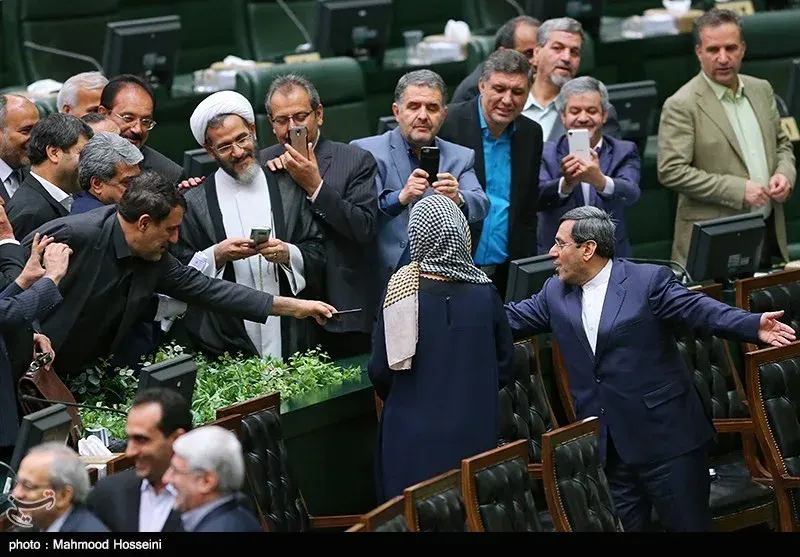
In Tehran, Foreign Minister Abbas Araghchi appeared before the Parliament’s National Security and Foreign Policy Commission to address critical regional developments. The meeting focused heavily on the Islamabad Memorandum of Understanding and Iran’s evolving relationship with Oman, a traditional mediator in the region. Araghchi’s presence at the commission underscores the government's attempt to synchronize its diplomatic maneuvers with a skeptical legislative body, particularly regarding the security of the Strait of Hormuz. As tensions in the waterway remain a focal point for global oil markets, the administration is trying to project a stance of 'controlled stability' to reassure both domestic hardliners and international partners.
This diplomatic activity has had a tangible, albeit cooling, effect on the local currency market. The USD sell rate moved from 226,700 to 224,200 Toman, marking a 1.1% decrease. This retreat suggests that the market is pricing in a temporary de-escalation or at least a period of structured dialogue. However, the underlying economic pressures remain, and while the government claims these diplomatic steps are strengthening Iran's hand, the 1.5% drop in 18k gold (moving to 23,011,219 Toman) indicates that investors are moving into a 'wait-and-see' mode rather than full confidence. The connection between Araghchi's parliamentary performance and the Toman's daily delta remains a key indicator of how much 'diplomatic capital' the current administration actually holds.
European Instability and Global Logistics Risks
Beyond the Middle East, Europe is facing its own existential challenges as the Alternative for Germany (AfD) secured a landmark victory in Saxony-Anhalt. Chancellor Friedrich Merz’s conservative CDU has been described as 'shaken to its foundations,' a phrase that captures the growing anxiety over the rise of anti-immigrant and pro-Kremlin sentiments in the heart of the EU. This political shift in Germany threatens the unity of European sanctions regimes and could lead to a fragmented approach toward Iran and Russia. For the global economy, a weakened German leadership means a less stable Euro and potentially more volatile trade relations within the Eurasian corridor.
Simultaneously, a tragic cargo plane crash in Miami involving an Amazon-contracted aircraft has raised urgent questions about global supply chain safety. With five fatalities confirmed, investigators are looking into why the plane overran the runway, an event that momentarily disrupted one of the world's busiest logistics hubs. While seemingly unrelated to geopolitics, such incidents in the US logistics infrastructure often trigger ripples in insurance premiums and shipping costs, which eventually filter down to the price of imported goods in secondary markets like Iran. The combination of European political upheaval and American logistical failures paints a picture of a global system under significant structural stress.

Crypto Crime Probes and the Search for Digital Safety
In the world of digital assets, Polish prosecutors have recently charged a suspect in a major probe involving Zondacrypto, alleging the misappropriation of over $2.1 million in user funds. This case highlights the persistent risks of centralized exchanges and the 'organized crime' elements that still haunt the periphery of the crypto world. Despite these scandals, crypto activity in the Middle East has reportedly tripled to $350 billion as regional conflicts drive citizens toward digital wealth preservation. Bitcoin currently trades at $79,122, struggling to break the psychological $80,000 barrier during the US holiday lull.
For the Iranian user, these stories are two sides of the same coin. On one hand, the Zondacrypto probe serves as a warning about platform security; on the other, the surge in regional volume reflects the reality that for many, crypto is the only viable escape from local currency depreciation. With the Tether (USDT) price in Tehran sitting at 224,001 Toman—almost perfectly aligned with the free market dollar—the digital asset remains the primary benchmark for real-time economic sentiment. As long as traditional markets remain tied to the volatile diplomacy of the Strait of Hormuz, the migration toward decentralized assets is expected to continue unabated.

Frequently Asked Questions
Why did the Toman price drop by 1.1% today?
What is the significance of the AfD victory in Germany for the global economy?
How is the US political situation affecting Iranian markets?
Geopolitical Risk and Currency Valuation
Geopolitical risk refers to the potential for political events, conflicts, or shifts in international relations to disrupt the global economy and financial markets. These risks can stem from various sources, including interstate conflicts, political instability within a country, trade wars, sanctions, or even major policy changes by influential nations. Unlike traditional economic risks, geopolitical risks are often unpredictable and can have far-reaching, systemic consequences that ripple across borders and industries. Understanding this concept is crucial for interpreting market movements, especially in volatile regions.
One of the most immediate and visible impacts of geopolitical risk is on a country's currency valuation. When geopolitical tensions rise, investors typically become more risk-averse, leading them to withdraw capital from economies perceived as unstable or vulnerable. This "capital flight" increases the supply of the local currency in international markets, causing its value to depreciate against safer currencies like the US Dollar or Japanese Yen. The mention of the Toman retreating amid "Hormuz Strategy" and "Global Shifts" in the headline is a direct illustration of how geopolitical concerns surrounding a critical chokepoint like the Strait of Hormuz can directly undermine investor confidence and weaken a nation's currency.
Furthermore, geopolitical events can disrupt trade routes, impose sanctions, or alter supply chains, directly affecting a nation's balance of payments. For instance, threats to the Strait of Hormuz, a vital artery for global oil shipments, can trigger uncertainty in energy markets, impact oil-exporting economies, and deter foreign direct investment. Such disruptions reduce a country's export revenues or increase import costs, creating downward pressure on its currency. Central banks often face immense challenges in managing monetary policy in such environments, as currency depreciation can fuel inflation and erode purchasing power.
Topics
Related Articles