Riyadh Under Fire: Houthi Strike Jolts Markets as Toman and Gold Reach New Heights
حمله موشکی به ریاض و صعود قیمتها در بازار تهران؛ سکه امامی ۲۴۰ میلیون تومانی شد
A significant Houthi missile and drone strike near Riyadh's main airport has sent shockwaves through regional markets, driving the Iranian Toman lower and gold prices to record levels. Meanwhile, the White House faces scrutiny over AI defense contracts involving the Trump family as the UK warns of the global economic cost of the ongoing Iran conflict.
At time of publishing
USD
232,700
Toman
Gold 18K
24.10M
Toman / gram
Bitcoin
$80,338
US Dollar
Tether
232,495.795
Toman
Riyadh Airport Strike Ignites Regional Market Volatility
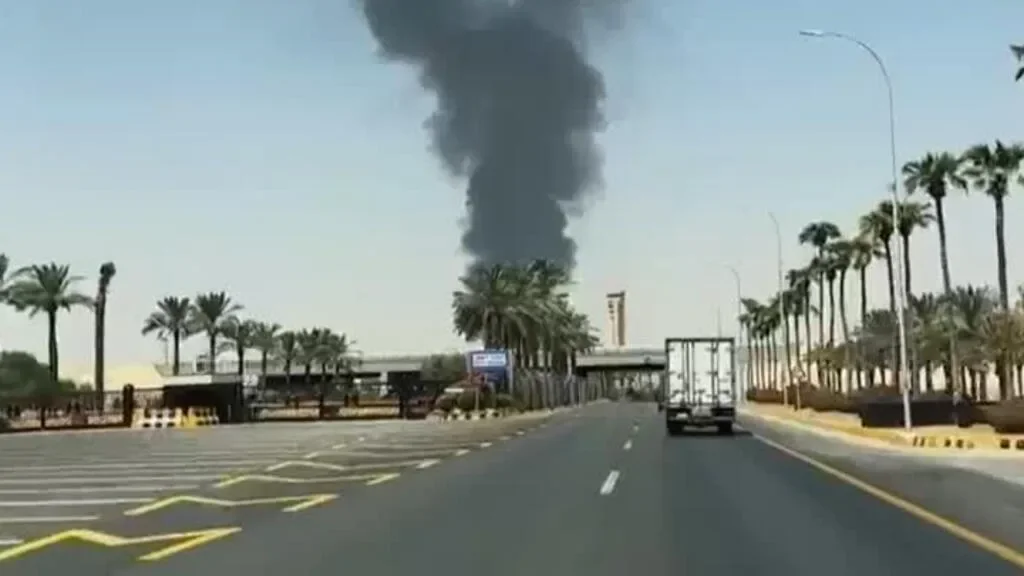
The geopolitical landscape of the Middle East shifted dramatically this Sunday morning following a bold Houthi rebel strike targeting the Saudi capital, Riyadh. According to reports from France 24, a significant fire broke out in the vicinity of Riyadh's main international airport after the Iran-backed Houthi movement launched a coordinated barrage of missiles and drones. This escalation marks a critical turning point in the ongoing conflict, as the rebels push further east on the ground while simultaneously striking deep into the heart of Saudi Arabia’s infrastructure. The immediate impact was felt not just in the smoke over Riyadh, but in the trading halls of Tehran and the global energy markets.
In Tehran, the response was swift and decisive. Investors, fearing a wider regional conflagration that could further isolate the Iranian economy, rushed toward hard currency and gold. The US Dollar (USD) in the open market rose from 230,700 to 232,700 Toman, a 0.9% increase within the last 24 hours. The psychological barrier of the greenback continues to pressure the Toman, as the market prices in the risk of intensified sanctions or direct military spillover. Gold followed suit, with the benchmark 18-karat gold rising 0.6% to reach 24,100,835 Toman per gram. The most dramatic movement was seen in the Emami coin, which surged 1.1% to hit the 240,000,000 Toman mark, reflecting a desperate search for liquid, safe-haven assets among local traders.
The Trump Family’s AI 'Gold Rush' and the Pentagon
While the Middle East burns, a different kind of fire is spreading in Washington D.C. A new investigative report has highlighted a massive surge in AI-linked defense and technology ventures tied directly to the Trump family. Within the past year, Donald Trump’s sons have reportedly secured a $620 million Pentagon loan and various robotics and drone contracts for their ventures. This "AI gold rush" is occurring under a White House policy that aggressively shields the industry from traditional regulatory guardrails. The President himself doubled down on this stance this week, posting on Truth Social that the only necessary control for AI is a "STRONG AND SMART" president, dismissing concerns over safety and data ethics as a "SICK conspiracy."
This lack of oversight has significant implications for the tech market and global defense standards. Major players like Michael Dell have also secured massive Pentagon contracts worth nearly $9 billion, signaling a consolidation of tech power within a close circle of political allies. For investors, this means the AI sector is becoming increasingly politicized, with market winners chosen not just by technological merit but by proximity to the executive branch. However, this strategy faces mounting resistance from the President’s own base, who remain skeptical of data centers and the rapid encroachment of autonomous systems into civilian life, creating a volatile environment for tech stocks in the mid-term.

UK Warns of Global Budget Crisis Stemming from Iran Conflict
The economic ripples of the Trump administration's confrontational stance toward Iran are now reaching the shores of the United Kingdom. Bridget Phillipson, a key member of the UK cabinet, warned that the upcoming national budget will be significantly more difficult to balance due to the ongoing "Trump war with Iran." The conflict has caused a sustained spike in global energy costs, which in turn has fueled inflation across Europe. Sir Ed Davey has even called for an immediate 10p cut to fuel duty to protect British consumers from the economic fallout, explicitly blaming the geopolitical tension for damaging the UK’s recovery efforts.
This warning highlights the interconnectedness of the 2026 global economy. While the conflict is geographically centered in the Middle East, the resulting uncertainty in oil supplies and shipping lanes—exemplified by the recent Houthi strikes—is forcing Western governments to make painful fiscal choices. For the Iranian reader, this signifies that the international community is increasingly viewing the regional tension through the lens of economic survival. As world leaders prepare to meet at the UN General Assembly in New York, the pressure to find a de-escalation path is mounting, though the domestic political climate in both the US and Iran suggests that a breakthrough remains elusive in the near term.
US Midterms and the Nuclear Energy Pivot
As the US primary season concludes, the political landscape for the November midterms is taking shape. Democrats are currently leading in the polls, driven by widespread economic anxiety and public fatigue over the mass deportation agenda and the costs of foreign wars. However, the rise of left-wing candidates within the Democratic party and the doubling down of Republicans on Trump’s core policies have created a deeply polarized electorate. The outcome of these midterms will be the ultimate decider for the future of US-Iran relations and the global trade environment, as a shift in Congressional power could either accelerate or restrain the current administration's hawkish foreign policy.
In a separate but related development, governments worldwide are looking for ways to insulate themselves from these energy shocks. In the Philippines, the government is revisiting the fate of the Bataan Nuclear Power Plant, which has been mothballed for 40 years. The proposal to finally switch on the facility reflects a growing global trend: a return to nuclear energy as a hedge against the volatility of oil and gas markets dominated by geopolitical conflict. For nations like Iran, which have long pursued nuclear capabilities under heavy scrutiny, this global pivot toward nuclear power as an "energy security" measure provides a complex backdrop to ongoing diplomatic disputes over its own atomic program.
Watch
Yemen's Houthis strike Saudi capital Riyadh for the first time • FRANCE 24 English
FRANCE 24 English
Frequently Asked Questions
Why did the Houthi strike on Riyadh impact the Iranian Toman?
What is the controversy surrounding the Trump family and AI?
How is the UK budget related to the US-Iran conflict?
Understanding Safe-Haven Assets in Times of Geopolitical Instability
In an increasingly interconnected yet volatile world, the concept of safe-haven assets becomes crucial for understanding market reactions to geopolitical events. A safe-haven asset is an investment that is expected to retain or even increase in value during periods of market turbulence, economic downturns, or political uncertainty. When traditional investments like stocks or less stable currencies become risky, investors and individuals alike flock to these perceived havens to protect their wealth.
The mechanism behind this "flight to safety" is straightforward. When events such as the Houthi strike mentioned in the headline create regional instability or raise fears of broader conflict, confidence in economic stability erodes. People anticipate potential economic fallout, inflation, or currency devaluation. To mitigate these risks, they shift their capital into assets believed to be more resilient and reliable stores of value, thereby driving up their demand and often their price.
Gold is the quintessential safe-haven asset, prized for its historical role as a store of value, its limited supply, and its independence from any single government or financial institution. This explains why "Gold price Iran" might reach new highs during periods of heightened tension. Similarly, strong, stable currencies like the US Dollar (USD), Japanese Yen (JPY), or Swiss Franc (CHF) also serve as safe havens. In economies under pressure, individuals might convert their local currency (such as the Iranian Rial, influencing the "USD to IRR price") into these more stable foreign currencies to safeguard their purchasing power.
For economies already facing significant challenges or sanctions, like Iran, the demand for safe-haven assets can be particularly acute. It reflects a deep-seated lack of confidence in the local currency and the broader economic outlook. This rush to convert savings into gold or foreign currency can exacerbate existing economic woes, potentially accelerating inflation and further devaluing the domestic currency. It creates a feedback loop where instability fuels safe-haven demand, which in turn amplifies local economic pressures and uncertainty.
Topics
Related Articles