Pezeshkian Takes UN Stage Amid Trump's 'Annihilation' Threat as OpenAI Deploys GPT 5.6 to Ukraine
سخنرانی پزشکیان در سازمان ملل زیر سایه تهدید ترامپ؛ استقرار مدل جدید هوش مصنوعی در جبهه اوکراین
Iranian President Pezeshkian prepares to address the UN General Assembly following a significant three-hour meeting with US envoys, while OpenAI shifts the geopolitical landscape by providing advanced cyber defense tools to Ukraine.
At time of publishing
USD
230,900
Toman
Gold 18K
23.79M
Toman / gram
Bitcoin
$85,553
US Dollar
Tether
229,009
Toman
High-Stakes Diplomacy: The Three-Hour Meeting in New York
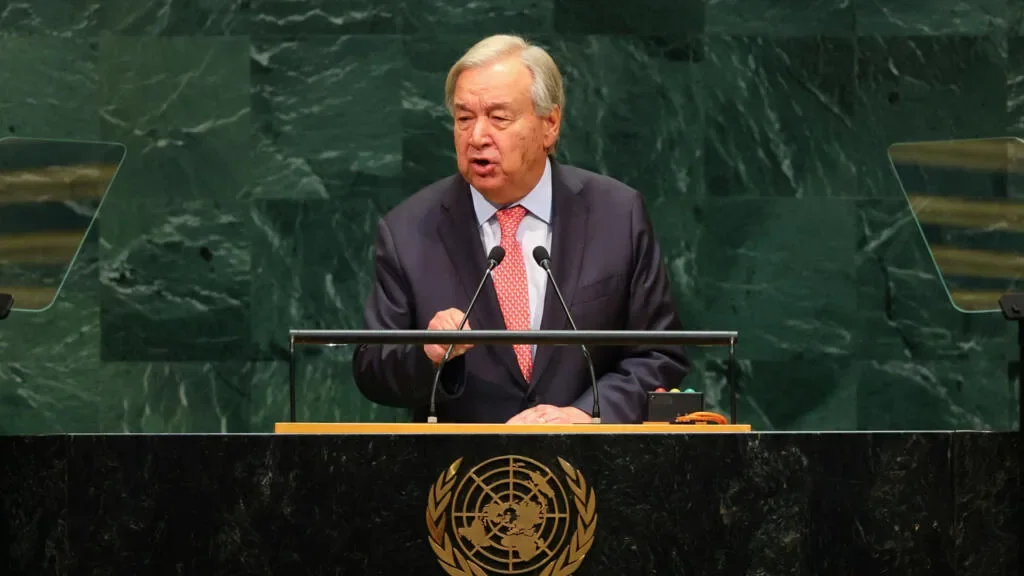
The second day of the 81st UN General Assembly has reached a fever pitch as Iranian President Masoud Pezeshkian prepares to take the podium. This appearance is framed by a jarring contrast: while Donald Trump has publicly threatened to "annihilate" the Islamic Republic if it continues its current path, his administration is simultaneously engaging in back-channel diplomacy. Reports have emerged of a three-hour meeting between the US special envoy, Steve Witkoff, and Iranian officials on the sidelines in New York. Witkoff reportedly described the session as "very good," marking the most significant direct engagement since the June meeting in Switzerland.
For the Iranian domestic market, this duality has created a state of cautious suspense. The US Dollar in the Tehran open market has seen a slight retreat, moving from 231,500 to 230,900 Toman (-0.3%). This minor correction suggests that traders are pricing in the possibility of a diplomatic "thaw" rather than immediate escalation. However, the volatility remains high, as the market awaits Pezeshkian’s actual speech and the subsequent response from the White House. The stakes are particularly high given the senior Iranian official's hint that the Strait of Hormuz could be fully reopened within a week if negotiations progress.

AI as a Weapon of War: OpenAI Deploys GPT 5.6 Sol
In a move that signals the further weaponization of artificial intelligence, OpenAI has officially provided Ukraine with access to its most advanced model yet, GPT 5.6 Sol. This deployment is specifically geared toward cyber defense, aiming to protect Ukrainian infrastructure from increasingly sophisticated state-sponsored attacks. The move places OpenAI in direct competition with Anthropic, whose Mythos and Fable models have also been integrated into various national security frameworks. This isn't just a software update; it is a fundamental shift in how modern warfare is conducted, where the speed of an AI's defensive response can be the difference between a functional power grid and a national blackout.
The implications of this partnership extend far beyond the battlefield in Eastern Europe. By choosing a side so explicitly, OpenAI is navigating a minefield of international regulation. Critics argue that providing such powerful tools to a combatant nation could lead to unintended escalations or the proliferation of dual-use technology. For tech investors, this highlights the growing "defense-tech" sector, where AI companies are no longer just providers of chatbots and creative tools, but essential components of a nation's military-industrial complex. The move has also sparked a debate at the UN regarding the ethical boundaries of AI in conflict.

Global AI Regulation and Market Resilience
Parallel to the diplomatic drama, the UN Security Council is convening an emergency session to address the "potentially uncontrollable risks" of artificial intelligence. This meeting, featuring briefings from leading AI scientists, comes after months of warnings about runaway autonomous systems. Leaders are attempting to forge a global consensus on regulation, even as the US and China remain locked in a fierce trade war. Interestingly, while high-tech sectors face heavy tariffs, low-tech Chinese exports like beauty products have remained resilient, showing that the global economy is still deeply interconnected at the consumer level even as it fractures at the strategic level.
The global gold market is currently navigating a period of consolidation, with the ounce trading at $4,304.10. In Tehran, the 18k gold price has mirrored the slight cooling of the currency market, dropping from 23,927,697 to 23,789,186 Toman (-0.6%). This downward trend is also visible in the Emami coin, which fell from 237,500,000 to 236,500,000 Toman (-0.4%). While gold remains a primary hedge against inflation for Iranians, the current diplomatic window has temporarily reduced the "panic premium" that usually drives prices upward during UNGA week.
Watch
UN General Assembly to discuss war, climate and AI • FRANCE 24 English
FRANCE 24 English
Frequently Asked Questions
What was the outcome of the meeting between Steve Witkoff and Iranian officials?
How did the Iranian currency market react to the UNGA news?
What is GPT 5.6 Sol and why is it in the news?
The Dual-Use Nature of Artificial Intelligence and its Geopolitical Implications
Artificial Intelligence (AI) stands as one of the most transformative technologies of our era, promising breakthroughs in medicine, climate science, and economic development. However, like many powerful innovations throughout history, AI possesses a dual-use nature: it can be leveraged for immense good, but also for significant harm, particularly in the realm of international security and geopolitics. The deployment of advanced AI models, such as GPT 5.6, in conflict zones like Ukraine, alongside discussions at the UN Security Council regarding AI regulation, starkly illustrate this dichotomy and the urgent need for global understanding and governance.
The dual-use challenge arises because the same AI capabilities that can enhance civilian life—like advanced data analysis, autonomous systems, and sophisticated communication tools—can also be adapted for military applications. This includes improving intelligence gathering, optimizing logistics, powering autonomous weapons systems, and conducting complex cyber warfare operations. The rapid pace of AI development, coupled with its increasing accessibility, creates a volatile landscape where the technological advantage can shift quickly, potentially escalating existing conflicts or even sparking new ones through miscalculation or algorithmic bias. This raises profound questions about accountability, control, and the very nature of future warfare.
Recognizing these profound implications, the international community, particularly through bodies like the United Nations General Assembly and the Security Council, is grappling with how to effectively govern AI. The goal is to harness AI's benefits while mitigating its risks, preventing an unregulated AI arms race, and establishing global norms for its responsible development and deployment. Achieving consensus on AI regulation is a formidable task, given the diverse national interests, technological disparities, and varying ethical frameworks among member states. Nevertheless, global cooperation is paramount to ensure that AI serves humanity's collective well-being rather than becoming a source of instability and conflict.