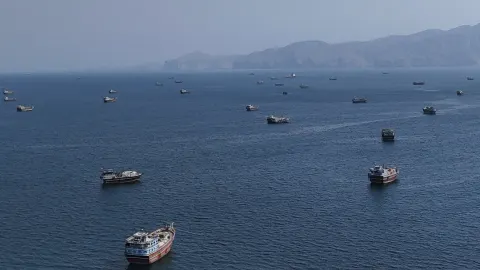
Iran's Top Official Warns of Economic Crisis as Yemen Conflict Escalates
هشدار مقام ارشد ایران درباره بحران اقتصادی همزمان با تشدید درگیریها در یمن
Iran's top security official has issued a stark warning about an impending economic crisis, citing renewed US sanctions and naval blockades as major contributors. Meanwhile, in Yemen, the Saudi-backed government has launched a significant military offensive to reclaim Houthi-held territories, raising regional tensions.
At time of publishing
USD
269,300
Toman
Gold 18K
26.64M
Toman / gram
Bitcoin
$85,921
US Dollar
Tether
269,636
Toman
Iran's Top Security Official Warns of Dire Economic Crisis
Iran's top security official, Mohsen Rezaei, has issued a rare and stark warning about a looming economic crisis within the country. This admission, coming from a high-ranking figure typically involved in national security matters, signals a significant level of concern within the Iranian leadership. Rezaei specifically pointed to the recent tightening of U.S. sanctions and an intensified naval blockade as primary drivers of this potential economic downturn. These measures, implemented by the United States, aim to cripple Iran's economy by limiting its access to global markets and financial systems, a strategy that appears to be taking a significant toll.
The implications of such a warning are far-reaching for the Iranian populace. A deepening economic crisis typically translates to soaring inflation, increased unemployment, and a general decline in living standards. For ordinary Iranians, this could mean further hardship and uncertainty about their future. The currency's performance, while showing no significant movement in the last 24 hours, remains a key indicator of underlying economic stress. The explicit acknowledgment of an economic crisis by a senior official, even if attributed to external pressures, could also erode public confidence and potentially fuel social unrest. This statement comes at a time when global energy markets are experiencing price fluctuations, potentially impacting Iran's oil revenues, though reports suggest crude oil flows out of the Strait of Hormuz remain robust.
Yemen Conflict Escalates as Saudi-Backed Forces Launch Major Offensive
The conflict in Yemen has seen a significant escalation as the Saudi-backed government announced the commencement of a broad military operation aimed at recapturing all territories currently held by the Iran-aligned Houthi movement. This offensive marks a renewed effort to assert control over the war-torn nation and counter the Houthi advances, which reportedly include the encirclement of a government-held city. The announcement, made by Rashad al-Alimi, the head of Yemen’s presidential council, signifies a critical turning point in the protracted civil war, potentially leading to intensified fighting and a further humanitarian catastrophe.
This military push by the Saudi-backed coalition occurs in parallel with reports of Houthi forces cutting a vital supply route to the besieged city of Taiz. Such actions by the Houthis underscore the ongoing strategic maneuvering and the high stakes involved in the conflict. The escalation in Yemen carries significant regional implications, particularly concerning Iran's influence in the Arabian Peninsula. While Iran officially denies direct involvement, its support for the Houthi movement is widely acknowledged. A prolonged and intensified conflict could draw regional powers deeper into the fray, further destabilizing an already volatile region and potentially impacting global energy security, especially concerning trade routes through the Strait of Hormuz.
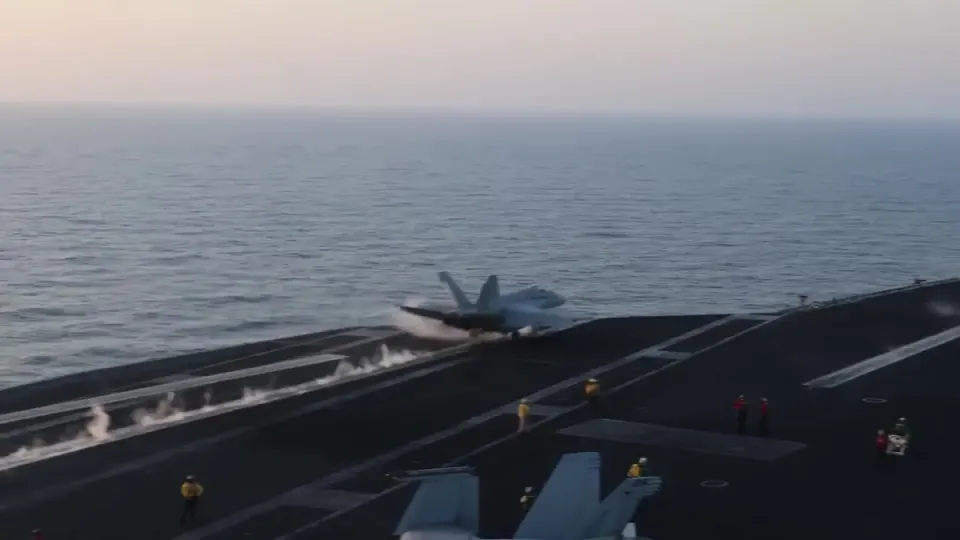
, Public domain]
Forensic Breakthrough in Ancient Egyptian 'Retainer Sacrifice'
New forensic analysis of mass burial sites from Egypt's First Dynasty has provided compelling evidence supporting the controversial theory of "retainer sacrifice." Researchers have identified signs of fatal blunt force trauma on a significant percentage—39 percent—of the skulls examined. This finding offers a fresh perspective on ancient burial practices and the social structures of one of the world's earliest civilizations, suggesting that individuals were ritually killed to accompany and serve their rulers in the afterlife.
The implications of this discovery extend beyond Egyptology, touching upon broader anthropological understandings of power, belief systems, and societal organization in antiquity. The ritualistic killing of retainers, though a grim practice, was not uncommon in ancient societies across the globe. However, the scale and systematic nature suggested by this new evidence from the First Dynasty are particularly striking. This research challenges previous interpretations and provides a more concrete, albeit disturbing, picture of the rituals and social hierarchies that characterized the dawn of Egyptian civilization.

California Woman Arrested for Alleged Espionage on Taiwan President's Son
U.S. authorities have arrested a California woman, identified as Wanying Zhang, at Los Angeles International Airport on suspicion of acting as an unregistered foreign agent for China. The Federal Bureau of Investigation (FBI) alleges that Zhang was engaged in spying activities targeting the son of Taiwan's president. The arrest occurred just before Zhang's planned departure to China, indicating a potential attempt to evade detection or to deliver sensitive information.
This incident highlights ongoing geopolitical tensions between the United States, China, and Taiwan. The U.S. has been increasingly vigilant about foreign influence operations and espionage within its borders, particularly those involving China. The specific targeting of the Taiwanese president's son suggests a sophisticated intelligence-gathering operation aimed at political leverage or information acquisition. The FBI's swift action underscores the U.S. commitment to counteracting such activities and maintaining national security. The case could further strain diplomatic relations and potentially lead to retaliatory measures or increased scrutiny of individuals with ties to China operating within the United States.

Frequently Asked Questions
What specific U.S. actions is Iran's security chief blaming for the economic crisis?
What is the significance of the new forensic evidence from Egypt's First Dynasty?
What is the immediate impact of the new military operation in Yemen?
What are the geopolitical implications of the arrest in Los Angeles?
Understanding Proxy Wars: How Iran–Saudi Rivalry Fuels the Yemen Conflict and Economic Strain
A proxy war occurs when two major powers support opposing sides in a third country's conflict, allowing them to pursue strategic goals without direct confrontation. In the Middle East, the rivalry between Iran and Saudi Arabia has turned the war in Yemen into a classic proxy battleground. Iran backs the Houthi rebels, providing weapons, training, and diplomatic support, while Saudi Arabia leads a coalition that backs the internationally recognized Yemeni government, supplying air power and ground forces.
The dynamics of proxy warfare amplify the local conflict’s intensity and duration. Both patrons seek to expand their regional influence, test military capabilities, and signal resolve to domestic audiences. For Iran, supporting the Houthis serves to project power on the Red Sea, challenge Saudi hegemony, and gain leverage in broader negotiations. Saudi Arabia, in turn, aims to prevent a hostile, Iranian‑aligned regime on its southern border and to protect vital shipping lanes. This indirect confrontation often drags on for years, creating a humanitarian disaster while draining the economies of the sponsoring states.
Economic repercussions are profound. Iran faces severe sanctions from the United States and Europe, limiting its ability to sell oil and access foreign finance. The cost of sustaining the Houthi campaign adds to an already strained budget, prompting officials like former IRGC commander Mohsen Rezaei to warn of an impending economic crisis. Saudi Arabia, despite its oil wealth, incurs massive expenses maintaining the coalition, and the war disrupts trade routes that affect global oil prices. The spill‑over effects can ripple through global markets, influencing everything from grain shipments through the Red Sea to energy prices worldwide.
Historically, proxy wars are not new; ancient empires such as Egypt often supported client states to secure borders without committing large armies. Modern examples include the Cold War, where the United States and the Soviet Union backed opposite sides in Korea, Vietnam, and Afghanistan. Understanding the mechanics of proxy warfare helps explain why regional disputes can have outsized global consequences and why diplomatic solutions are essential to break the cycle of indirect conflict.
Topics
Related Articles