Ukraine Grain Ship Attack, Iran's Regional Warnings Dominate Global Briefing
حمله به کشتی غلات اوکراین و هشدارهای منطقهای ایران در صدر خبرهای جهان
A Russian strike on a Ukrainian grain vessel has drawn condemnation from Kyiv, highlighting ongoing Black Sea tensions. Meanwhile, Iran issued a stern warning against regional territories harboring Israeli attacks, signaling a volatile geopolitical landscape.
At time of publishing
USD
269,300
Toman
Gold 18K
26.54M
Toman / gram
Bitcoin
$85,538
US Dollar
Tether
269,068.246
Toman
Ukraine Condemns 'Horrific' Russian Attack on Grain Ship
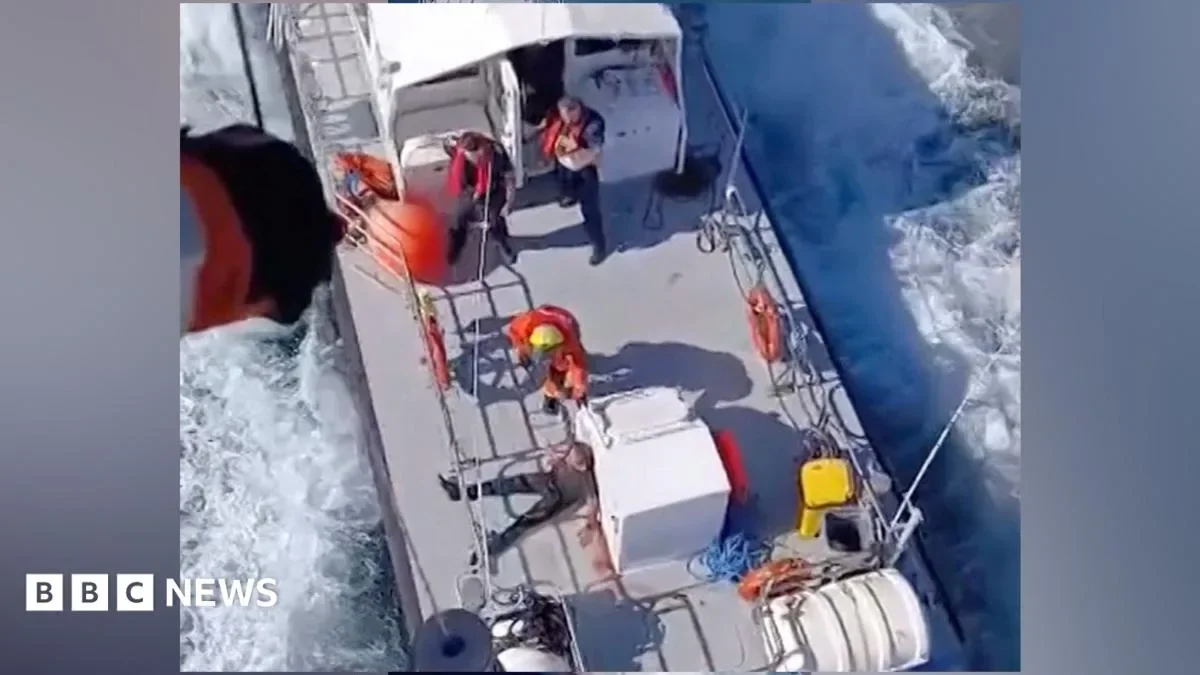
Ukrainian President Volodymyr Zelensky has condemned what he termed a "horrific" Russian strike on a Turkish-owned ship carrying corn in the Black Sea. The attack resulted in the death of the vessel's captain and the rescue of 11 crew members. This incident underscores the persistent dangers and disruptions faced by maritime trade in the region, even as Ukraine attempts to maintain its vital grain exports.
The Black Sea remains a critical artery for global food security, and such attacks directly threaten supply chains and international efforts to alleviate hunger. Russia's continued actions in the maritime space raise concerns about its willingness to abide by international norms and agreements governing safe passage, potentially leading to further escalation or retaliatory measures. The incident is likely to intensify international scrutiny and calls for de-escalation.
Frequently Asked Questions
What was the specific impact of the Russian strike on the grain ship?
What is Iran's primary concern regarding regional territory?
How might these events affect global markets?
Are there any specific economic indicators mentioned in relation to these events?
The Geopolitics of the Black Sea: A Crucible of Global Security and Trade
The Black Sea, nestled between Eastern Europe and Western Asia, is far more than just a body of water; it's a critical geopolitical hotspot with immense global implications. Bordered by key players like Russia, Ukraine, Turkey, Romania, Bulgaria, and Georgia, its strategic location makes it a vital nexus for trade, energy routes, and military influence. Historically, control over the Black Sea has been a cornerstone of regional power, and its significance has only intensified in the modern era, particularly with ongoing conflicts and economic shifts.
Its importance stems from several factors. Firstly, the Black Sea serves as a crucial maritime corridor for vast quantities of agricultural goods, notably grain from Ukraine and Russia, which are essential for global food security, especially in developing nations. Secondly, it is a significant transit route for energy resources, including oil and natural gas, connecting producers to European markets. Thirdly, its access to the Mediterranean Sea via the Turkish Straits (Bosphorus and Dardanelles), governed by the Montreux Convention, makes it a strategic chokepoint for naval power projection and commercial shipping, a fact keenly observed by both regional and global powers.
Recent events, such as attacks on grain ships and heightened regional tensions, underscore the Black Sea's volatile nature and its profound impact on international stability. Disruptions in this region can trigger ripple effects across global supply chains, exacerbate food crises, and escalate geopolitical rivalries. Understanding the intricate web of interests, historical grievances, and strategic calculations surrounding the Black Sea is therefore essential for comprehending contemporary global challenges, from economic stability to regional security and the delicate balance of power.