
Nobel Breakthrough in Chemistry Meets New US Nuclear Demands: Global Markets Pivot on Shifting Geopolitics
نوبل شیمی برای حل معمای حیات و شروط جدید آمریکا برای توافق هستهای؛ واکنش بازارها به تحولات ژئوپلیتیک
The 2026 Nobel Prize in Chemistry honors a breakthrough in molecular asymmetry, while US Vice President Vance signals new enrichment demands for any potential Iran deal. Meanwhile, the Iranian Rial sees a 1.5% gain as markets digest regional security drills and shifting US midterm narratives.
At time of publishing
USD
265,000
Toman
Gold 18K
26.20M
Toman / gram
Bitcoin
$83,340
US Dollar
Tether
264,103
Toman
The Mystery of Life’s Asymmetry: A Nobel for Molecular Precision
The 2026 Nobel Prize in Chemistry has been awarded to French scientist Henri Kagan and Japanese researcher Kenso Soai for their pioneering work in solving the mystery of asymmetric molecules. This breakthrough, often described as the 'mirror image' discovery, addresses a fundamental property of life: chirality. Most biological molecules, such as DNA and amino acids, exist in only one of two possible mirror-image forms. This asymmetry is crucial for the functioning of living organisms, but replicating it in a laboratory setting for pharmaceutical use has historically been one of the greatest challenges in chemistry.
By developing catalysts that can selectively produce one version of a molecule over its mirror image, Kagan and Soai have fundamentally transformed the manufacture of modern medicines. Before these techniques were perfected, drug mixtures often contained both 'left-handed' and 'right-handed' versions of a molecule, which could lead to devastating side effects if one version was therapeutic and the other toxic. This recognition by the Nobel Committee highlights how abstract chemical puzzles directly translate into safer healthcare and more efficient industrial processes, marking a significant milestone for the global scientific community.

Shifting Sands: US Sets New Nuclear Demands Amid Regional Drills
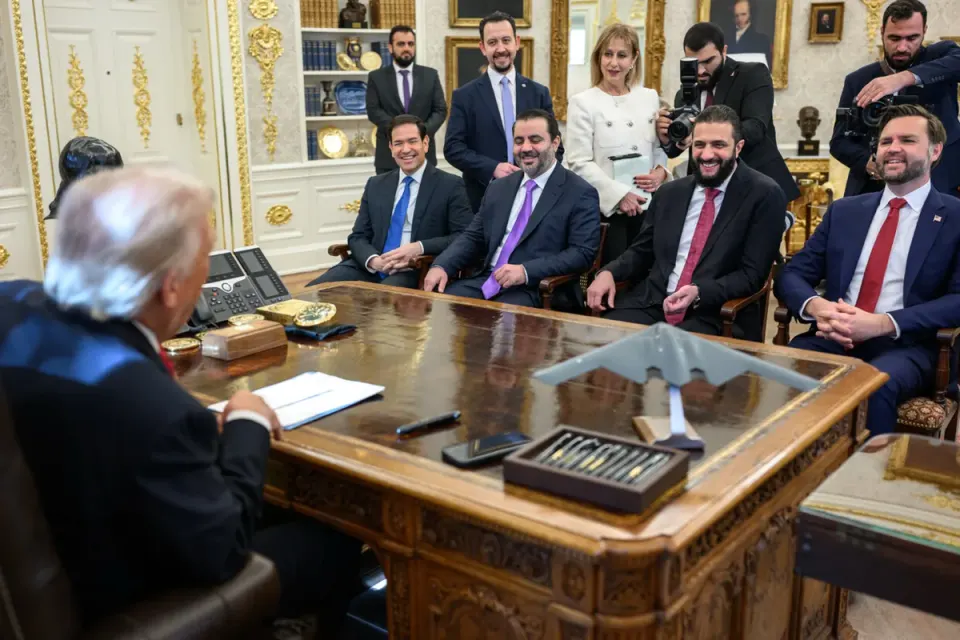
On the geopolitical front, US Vice President J.D. Vance has introduced a new layer of complexity to the stalled nuclear negotiations with Iran. Reports indicate that the US administration is now demanding a significant reduction in uranium enrichment levels as a non-negotiable prerequisite for any potential deal. This shift suggests that while the US may be open to compromise on certain economic sanctions, the floor for security guarantees has been raised. The timing of this announcement is particularly sensitive, as it coincides with the anniversary of regional conflicts that have kept the Middle East on edge for years.
In Tehran, the response to these diplomatic signals has been reflected in a cautious but visible market correction. The USD sell rate dropped from 269,100 to 265,000 Toman, a 1.5% decrease within the last 24 hours. This appreciation of the Rial suggests that local traders are pricing in the possibility of renewed dialogue, despite the heightened demands from Washington. However, the IRGC’s simultaneous announcement regarding joint anti-terrorism drills within the Shanghai Cooperation Organization (SCO) framework serves as a reminder of the competing security architectures currently at play. The IRGC claimed these drills are focused on 'security synergy' and combating extremism, yet they also project a message of regional self-reliance that challenges Western influence.
Tech Ambitions and Midterm Pressures: SpaceX’s $40 Billion Bet
While geopolitics dominates the headlines, the technology sector is witnessing an unprecedented financial maneuver by Elon Musk’s SpaceX. The company is reportedly in talks to borrow as much as $40 billion—an amount nearly equal to its annual revenue—specifically to fund the purchase of Nvidia’s high-end AI chips. This aggressive move underscores the intensifying arms race in artificial intelligence and satellite infrastructure. For investors, this signal is clear: the demand for computing power is so insatiable that even the world’s most successful private space firm is willing to leverage its entire balance sheet to secure hardware.
This corporate gamble comes as political pressure mounts in the United States ahead of the midterm elections. Leaked audio from Trump-backed candidates suggests that the domestic narrative is shifting toward blaming foreign policy entanglements and energy prices for economic struggles. As the US President heads to Texas to address these concerns, the intersection of high gas prices, the war in Ukraine, and the shadow of Iran continues to dictate the political climate. For the global economy, this means that the volatility seen in the crypto markets—where Bitcoin has slipped to $83,340—and the gold markets is not just a result of supply and demand, but a direct reflection of the uncertainty surrounding the next chapter of American policy.

Frequently Asked Questions
Why did the Nobel Prize in Chemistry matter for medicine?
What are the new US demands for a nuclear deal?
Why is SpaceX borrowing $40 billion for Nvidia chips?
How did the Iranian market react to today's news?
The Hidden Hand of Chirality: Why Molecular Asymmetry Matters
Chirality, derived from the Greek word for hand (cheir), describes a fundamental property of molecules: their ability to exist as non-superimposable mirror images of each other. Just as your left hand cannot perfectly overlap with your right hand, despite being mirror images, chiral molecules (called enantiomers) possess this "handedness." This seemingly abstract concept is profoundly important because in the biological world, molecules often interact with other chiral molecules, much like a left hand fits only into a left-handed glove.
The significance of chirality becomes critically apparent in pharmaceuticals. Many drugs are chiral, and often, only one of the two enantiomers is therapeutically active, while the other might be inactive, or worse, have harmful side effects. A tragic historical example is thalidomide, where one enantiomer was an effective sedative, but its mirror image caused severe birth defects. This stark lesson underscored the vital need for chemists to develop methods to synthesize only the desired enantiomer, rather than a 50:50 mixture (a "racemic mixture") that traditional synthesis often yields.
This challenge led to the revolutionary field of enantioselective synthesis, also known as asymmetric synthesis. This advanced chemical technique allows scientists to precisely control the "handedness" of molecules during their creation, producing overwhelmingly one specific enantiomer. Pioneering work by chemists like Henri Kagan and Kenso Soai, among others, has been instrumental in developing catalysts and methods that enable this selective production on an industrial scale. Such breakthroughs have been recognized with Nobel Prizes, highlighting their transformative impact on chemistry and medicine.
The ability to create specific chiral molecules has far-reaching implications beyond drug development. It is crucial for the agrochemical industry, where herbicides and pesticides can be made more effective and safer. It also plays a key role in the creation of advanced materials, fragrances, and flavors, where the precise three-dimensional arrangement of atoms dictates properties like smell, taste, and functionality. Understanding molecular asymmetry is thus key to unlocking new possibilities across a vast spectrum of scientific and industrial applications.
Topics
Related Articles